
Non-FictionBusiness BriefOperational Finance
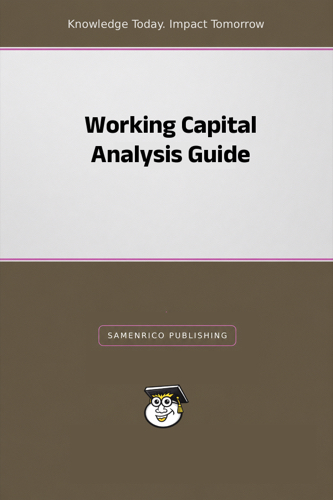
Working Capital Analysis Guide Audiobook
Track operational liquidity using this fundamental
Track operational liquidity using this fundamental analysis investing workbook.
Formats
Free sample
Chapter 1: The Frozen Engine...--–- In 2017, a company called Toys “R” Us reported $11.5 billion in revenue and $4.6 billion in gross profit. Wall Street analysts had a “buy” rating on its debt. The company had survived for nearly seven decades, through recessions, wars, and the rise of Amazon. It was profitable by every traditional accounting measure. Sixteen months later, on March 15, 2018, the company announced it would liquidate all 735 of its U.S.
stores. Thirty-three thousand employees lost their jobs. The CEO sent a memo that contained a single sentence that should haunt every investor who reads a balance sheet: “We have run out of cash.”How does a profitable giant die? Not from debt—the company had restructured its debt twice. Not from competition—the company had known about Amazon for 20 years.
The killer was something far more silent and far more common: operational illiquidity. The company had profits trapped in inventory that wouldn’t move and in leases it couldn’t escape. The engine had plenty of horsepower on paper, but the lubricant—working capital—had drained away, and the engine seized while the dashboard still showed green.This book exists because that story repeats every single year, across every industry, and most investors learn about it only after their money is gone.The Great Accounting Illusion Before we build your working capital analysis toolkit, we must first dismantle the most dangerous assumption in finance: that profitability equals health. This assumption is taught implicitly in every business school, reinforced by every earnings call, and embedded in every stock screen that sorts by P/E ratio. It is also catastrophically wrong.Profit, as defined by Generally Accepted Accounting Principles (GAAP), is an opinion.
Cash is a fact. This distinction is not academic pedantry—it is the difference between spotting a dying company and being surprised by its corpse.Consider how profit is constructed. A company recognizes revenue when it ships a product or delivers a service, regardless of whether the customer has paid. It recognizes expenses when they are incurred, regardless of whether cash has left the building. Depreciation spreads the cost of a machine over ten years even though the cash was spent on day one.
Stock-based compensation appears as an expense but never reduces cash. Inventory that sits for 300 days is still counted as an asset at its purchase price, even though its realizable value may be…
This is the end of the free sample. Get the Audiobook to keep going. Buy now
About this book
Details
- Author
- Carswell Tawnya
- Publisher
- SamEnrico
- Language
- English
- Genre
- Non-Fiction, Business Brief, Operational Finance
- Released
- 2026-06-08
- Pages (approx.)
- 154
- Available as
- eBook, Audiobook

Listen in the VoxFlicks app
Audiobooks and audio dramas wherever you go. Sign in with your SamEnrico account and press play.
More by Carswell Tawnya
 Parenting Stress Couples GuideCarswell Tawnya$11.99
 Upwork Proposal WritingCarswell Tawnya$11.99
 Letting Go of Custody AngerCarswell Tawnya$11.99
 Apex Legends Time LimitsCarswell Tawnya$11.99
 Transport Cooperative FormationCarswell Tawnya$12.99
 The Seed Library PioneerCarswell Tawnya$11.99
 Growth Mindset for ArchitectsCarswell Tawnya$11.99
 Heavens Gate VHS Tapes CollectionCarswell Tawnya$11.99
 The Rape of Nanking: A City Erased from MemoryCarswell Tawnya$11.99
 The Alchemist of Padua: Girolamo Fabrici and the Birth of Modern AnatomyCarswell Tawnya$11.99
 How to Produce JewelryCarswell Tawnya$11.99
 Service Providers Guide to Dock Building & RepairCarswell Tawnya$11.99
You may also like
 Hong Kong Handover 1997Dunn Johnnie$11.99
 Zumba For Postnatal Recovery CourseNeal Christian$11.99
 Zumba for BeginnersLadner Nikia$11.99
 YouTube Comment Mining GuideHumes Pandora$12.99
 Worry Box MeditationCarlin Rudy$11.99
 Workplace Stress MeditationNguyen Lynn$11.99
 Workplace Stress and Sleep RepairHawley Ivory$11.99
 Workplace Perfectionism CureDelaney Jeffry$11.99
 Workplace Injustice Anger GuideWallen Isabelle$11.99
 Work Addiction and Burnout LinkGreenwood Ester$11.99
 Women in Yoga and WellnessBeattie Galina$11.99
 Women in Stand Up ComedyChun Evangeline$11.99