
Non-FictionSelf-HelpWeekly Planning
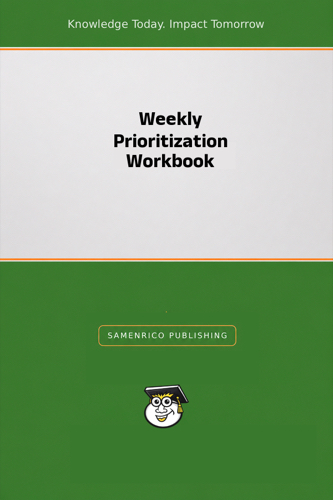
Weekly Prioritization Workbook eBook
Plan your week by applying the Eisenhower Matrix t
by Hein Ashly
Plan your week by applying the Eisenhower Matrix to every task and commitment.
Formats
Free sample
Chapter 1: The Urgency Hijack--–- You are not lazy. You are not undisciplined. And you are definitely not bad at time management. You have been hijacked.The hijacking happens so quietly that most people never notice it. One moment you are sitting down to work on something that truly matters—a project that could advance your career, an hour of uninterrupted time with your child, thirty minutes of exercise you have been putting off for weeks.
The next moment, your phone buzzes. An email arrives. A coworker taps your shoulder. A notification lights up your screen. And without a single conscious thought, you abandon your intention and react to the thing that just screamed the loudest.This is not a personal failing.
It is a neurological fact. Your brain is wired to prioritize urgency over importance every single time.For the next twelve weeks, this workbook will rewire that wiring. But before we can fix the problem, you have to see it clearly. And to see it clearly, you have to understand the invisible force that has been running your life without your permission: the Mere Urgency Effect.The Psychology of Being Hijacked In the early 2000s, psychologists conducted a series of experiments that should terrify anyone who cares about productivity. They gave participants a choice between two tasks.
One task had an immediate deadline but low long-term value. The other task had high long-term value but no deadline at all. Again and again, across multiple studies, participants chose the urgent but unimportant task over the important but non-urgent one.This is the Mere Urgency Effect. It is the reason you answer emails before writing your report. It is the reason you clear out low-priority administrative work before tackling the strategic project that could define your quarter.
It is the reason you have spent years putting off the same big goals while congratulating yourself for being "so busy."The effect is so powerful that researchers found people will choose an urgent task with negative consequences over an important task with positive consequences. Think about that for a moment. Your brain would rather do something that actively hurts you—as long as it feels urgent—than do something that helps you, simply because the helpful thing does not have a ticking clock.This is not a bug in your operating system. It is a feature. Evolution favored humans who responded immediately to threats.
A rustling bush might be a predator. A sudden sound might signal danger. The humans who stopped and asked "Is this truly important?" did not survive as often as the humans who bolted first and asked questions later.But here is the problem: your ancient brain cannot tell the difference between a saber-toothed tiger and a Slack notification. Both trigger the same urgency response. Both hijack your attention.
And both convince you that whatever just appeared in front of you is the most important thing in the universe.You have been hijacked thousands of times. You will be hijacked again today. The question is not whether urgency will knock on your door. The question is whether you will answer.The Cost of Constant Reaction Before we go any further, I need you to feel the weight of what this hijacking has cost you. Not in abstract productivity terms.
In real, lived, aching losses.Think about the past year. How many evenings did you spend catching up on email instead of playing with your children? How many weekends did you sacrifice to "urgent" work that somehow always waited until Friday afternoon? How many times did you tell yourself "I will get to that important thing next week" only to find yourself saying the same thing twelve months later?The cost is not measured in hours. It is measured in relationships that did not deepen.
Skills that were never learned. Bodies that were never moved. Books that were never written. Businesses that were never started. Versions of yourself that you never became because you were too busy fighting fires that someone else lit.Here is the cruelest irony of the Mere Urgency Effect: most of the tasks that feel urgent are not actually urgent at all.
They have simply been dressed up in urgency costumes. An email with "URGENT" in the subject line is not necessarily urgent. A coworker saying "I need this soon" does not make it important. A notification badge on your phone is not a summons from reality. It is a design feature engineered by companies that profit from your hijacked attention.By the time you finish this workbook, you will see urgency costumes for what they are.
You will learn to ask a single question before responding to anything: "Is this truly urgent, or does it just feel that way?" But first, you need data. You cannot fix what you cannot measure. And you cannot measure what you have not observed.The Three-Day Observation Log For the next three days, you are not going to change anything about how you work. You are not going to try to be more productive. You are not going to delete apps, block websites, or implement any new systems.
You are simply going to observe.Get out a notebook, open a spreadsheet, or use the log pages provided in this workbook. For every task you complete over the next three days—every email you answer, every meeting you attend, every chore you finish, every notification you respond to—record just two pieces of information:What was the task? (Be specific. Not "email" but "replied to client question about timeline.")Did this feel urgent? (Yes or No.
Trust your gut. If your heart rate increased even slightly, if you felt a pull to do it immediately, if you thought "I should do this now"—that counts as feeling urgent.)That is it. No importance judgments yet. No second-guessing. No "but was this actually important?" You do not have the tools to answer that question yet.
Chapter 2 will give you those tools. For now, you are just a witness to your own hijacking.Here is what you will likely discover by Day 3: most of your tasks feel urgent. Possibly all of them. You may look back at your log and realize that you spent three entire days reacting to things that screamed for attention, never once pausing to ask whether they deserved it.That realization is not a failure. It is the first breath of freedom.
Because once you see the pattern, you can never unsee it.The Gap Between Feeling and Reality On the evening of Day 3, before you go to sleep, I want you to do something uncomfortable. Look at your log and count how many tasks you marked as "felt urgent." Write that number down.Now look at that number and let yourself feel whatever comes up. Frustration. Exhaustion. Maybe a little shame.
That is all normal. But here is what I need you to understand: that number is not evidence that you are broken. It is evidence that you are human.Your brain is doing exactly what evolution designed it to do. It is scanning for threats and responding to anything that feels urgent. The problem is not your…
This is the end of the free sample. Get the eBook to keep going. Buy now
About this book
Details
- Author
- Hein Ashly
- Publisher
- SamEnrico
- Language
- English
- Genre
- Non-Fiction, Self-Help, Weekly Planning
- Released
- 2026-06-07
- Pages (approx.)
- 127
- Available as
- eBook, Audiobook

Read better in the ZLOADR app
Your eBooks on your phone or tablet. Sign in with your SamEnrico account and start reading.
More by Hein Ashly
 Anxiety Focus BreakHein Ashly$11.99
 Persuasive Project CharterHein Ashly$11.99
 Lutein Eye Protection GuideHein Ashly$11.99
 Police Interrogation TellsHein Ashly$11.99
 Clinical Trial SurvivorHein Ashly$11.99
 Stress and Hyperhidrosis GuideHein Ashly$11.99
 Teeth Falling Dream SymbolHein Ashly$11.99
 Loss Aversion In BusinessHein Ashly$11.99
 Tangaroa's Deep: The Oceanic Hymns of the First NavigatorsHein Ashly$11.99
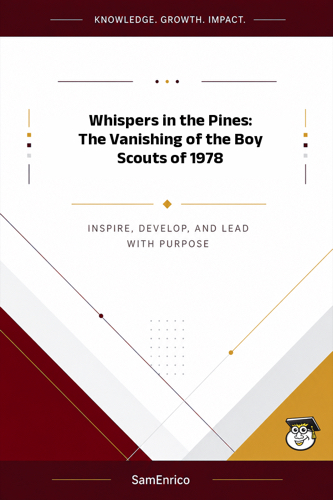 Whispers in the Pines: The Vanishing of the Boy Scouts of 1978Hein Ashly$11.99
 The Navigators of the Indian Ocean: The Swahili Maritime EmpireHein Ashly$11.99
 Employee Engagement and Culture BuildingHein Ashly$11.99
You may also like
 Hong Kong Handover 1997Dunn Johnnie$11.99
 Zumba For Postnatal Recovery CourseNeal Christian$11.99
 Zumba for BeginnersLadner Nikia$11.99
 YouTube Comment Mining GuideHumes Pandora$12.99
 Worry Box MeditationCarlin Rudy$11.99
 Workplace Stress MeditationNguyen Lynn$11.99
 Workplace Stress and Sleep RepairHawley Ivory$11.99
 Workplace Perfectionism CureDelaney Jeffry$11.99
 Workplace Injustice Anger GuideWallen Isabelle$11.99
 Work Addiction and Burnout LinkGreenwood Ester$11.99
 Women in Yoga and WellnessBeattie Galina$11.99
 Women in Stand Up ComedyChun Evangeline$11.99