
Non-FictionSelf-HelpAbstract Thinking
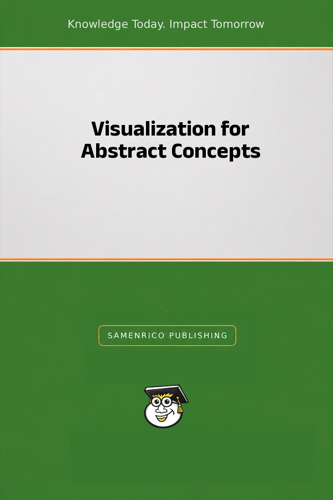
Visualization for Abstract Concepts eBook
Teaches creating mental images for abstract ideas
Teaches creating mental images for abstract ideas like physics or philosophy.
Formats
Free sample
Chapter 1: The Apple Illusion--–- Close your eyes. Really. Do it now. I will wait.Now, picture a red apple. Not the word “apple,” not a memory of eating one, but the thing itself.
See its roundness, the curve of its cheek, the way light gathers in a glossy highlight on its skin. Notice the stem, perhaps a single green leaf still attached. Rotate it in your mind. Take a bite. Hear the crack.
Taste the tartness.You did it, didn’t you? Or something like it. Maybe the image was fuzzy, or fleeting, or only half there. But you played along because this is the standard opening move of every visualization book ever written. Picture an apple.
Picture a beach. Picture a candle flame. The message is always the same: visualization works for concrete objects, so just apply the same skill to abstract ideas.Here is the problem. That advice is a lie. Not a small lie, not a harmless simplification, but a catastrophic error that has wasted thousands of hours of frustrated effort.
You cannot visualize “consciousness” the way you visualize an apple because consciousness does not have a skin, a stem, or a glossy highlight. You cannot visualize “democracy” by rotating it in your mind because democracy has no back side. You cannot taste “entropy” or hear “justice” crackle.The apple is a trap. It seduces you into believing that abstract visualization is just concrete visualization applied to harder targets. It is not.
The two activities recruit completely different cognitive systems, operate under different rules, and produce different kinds of understanding. Trying to visualize an abstraction with the same neural machinery that handles apples is like trying to hammer a nail with a paintbrush. The tool is wrong.This chapter will dismantle the apple illusion. You will learn why your mind goes blank when faced with abstractions, why that blankness is not a personal failing, and what to do instead. By the end, you will stop searching for mental pictures and start building structural maps.
The remaining chapters will give you the vocabulary, the techniques, and the domain-specific applications. But first, we must clear the rubble of bad advice.The Great Conflation Every popular visualization book makes the same move. Chapter One: Picture an apple. Chapter Two: Picture a beach. Chapter Three: Picture your ideal future self.
Chapter Four: Now picture complex systems, abstract theories, and invisible forces. The implication is that visualization is a unitary skill. If you can picture an apple, you can picture anything. You just need more practice.This is the Great Conflation. It confuses two entirely different mental operations.The first operation is Perceptual Visualization.
This is the brain’s ability to re-create sensory experiences from memory or imagination. When you picture an apple, your visual cortex activates. Neurons that normally fire when you see an apple fire when you imagine one. The same areas that process shape, color, and texture light up. This system is ancient, automatic, and deeply tied to the body.
It evolved for navigation, foraging, tool use, and social recognition. It is brilliant at concrete objects.The second operation is Conceptual Visualization. This is the brain’s ability to map non-sensory relationships onto space. When you understand that all squares are rectangles but not all rectangles are squares, you are performing a conceptual visualization, whether you draw it or not. The spatial logic of containment (a smaller set inside a larger set) structures your reasoning.
This system is newer, slower, and more flexible. It evolved for reasoning about categories, causes, and abstract social structures. It is terrible at apples.Here is the crucial distinction. Perceptual visualization is about simulating perception. Conceptual visualization is about externalizing structure.When you picture an apple, you simulate what it would be like to see one.
The simulation is private, internal, and bound to your sensory history. Your apple might be a Granny Smith; mine might be a Honeycrisp. But we both know what simulation we are running.When you visualize a logical relationship, you are not simulating anything perceptual. There is no “what it is like” to see a subset. Instead, you are mapping a structure onto a spatial layout.
You might draw two circles, one inside the other. Or you might imagine them. But the content of the visualization is not a sensory quality. It is a relational fact: containment, exclusion, overlap.The apple illusion tricks you into trying to simulate abstractions perceptually. You strain to “see” justice as if it had a color, a shape, a texture.
And when nothing comes, you conclude that you cannot visualize abstractions. But you are trying to hammer with a paintbrush. The fault is not in your mind. The fault is in the instruction.Why Perceptual Visualization Fails for Abstractions Let us be precise about why perceptual visualization collapses when applied to abstract concepts. There are four reasons, each fatal.Reason One: No Sensory Properties Abstract concepts have no color, no shape, no size, no texture, no sound, no smell, no taste.
They do not reflect light. They do not occupy space. They do not move through time in the way physical objects do. Perceptual visualization is designed to simulate sensory properties. When there are none to simulate, the system has nothing to do.
It is like asking a chef to cook without ingredients.You might protest: “But I can visualize a scale for justice, or a dove for peace.” Yes, you can visualize symbols. But a scale is not justice. It is a physical object that stands for justice by cultural convention. The scale has brass arms and weighing pans. Justice does not.
When you visualize the scale, you are visualizing a symbol, not the abstraction itself. This is a crucial distinction, and we will return to it.Reason Two: No Single Instance Perceptual visualization works best with individual objects. You picture this apple, this beach, this face. Abstractions rarely come in individual instances. Justice is not a particular court case.
Democracy is not a particular election. Consciousness is not a particular thought. Abstractions are patterns across instances, not instances themselves. Perceptual visualization cannot capture patterns. It captures snapshots.You could try to visualize an example of justice—a judge banging a gavel.
But then you are visualizing a judge, not justice. The example is concrete; the abstraction is not. And the concrete example carries irrelevant features. The judge wears a robe, but justice does not. The gavel is wooden, but justice has no material.
These irrelevant features distort your understanding.Reason Three: No Stable Boundaries Physical objects have boundaries. An apple ends where the air begins. Perceptual visualization is excellent at boundaries because boundaries matter for survival (is that a predator or a shadow?). Abstractions have fuzzy, contested, or arbitrary boundaries. Where does justice end and mercy begin?
Is procedural justice part of justice or a separate concept? Does democracy include economic equality or only political equality? Perceptual visualization forces crisp boundaries where none exist.Reason Four: No Causal Texture Physical objects interact through forces you can simulate: push, pull, break, burn. You can picture a ball rolling, a cup shattering, a leaf falling. Abstractions interact through logical, social, and mathematical relationships that…
This is the end of the free sample. Get the eBook to keep going. Buy now
About this book
Details
- Author
- Ivory Jackelyn
- Publisher
- SamEnrico
- Language
- English
- Genre
- Non-Fiction, Self-Help, Abstract Thinking
- Released
- 2026-06-09
- Pages (approx.)
- 140
- Available as
- eBook, Audiobook

Read better in the ZLOADR app
Your eBooks on your phone or tablet. Sign in with your SamEnrico account and start reading.
More by Ivory Jackelyn
 Marilyn Sheppard Autopsy ErrorsIvory Jackelyn$11.99
 Freedom Riders StrategyIvory Jackelyn$11.99
 The History Student Memory GuideIvory Jackelyn$11.99The History Student Memory GuideIvory Jackelyn$11.99
 Pet Loss and AngerIvory Jackelyn$11.99
 Nap Clothing GuideIvory Jackelyn$11.99
 Goal Setting For SalespeopleIvory Jackelyn$11.99
 Morning Planning RoutineIvory Jackelyn$11.99
 The Silk Road Strangler: The Forgotten Highway Killer of 19th-Century ChinaIvory Jackelyn$11.99
 The Third Half: How a Rugby League Film United a Divided NationIvory Jackelyn$11.99
 Service Providers Guide to Aerobics ClassesIvory Jackelyn$11.99
 How to Produce Vaulting PolesIvory Jackelyn$11.99
You may also like
 Hong Kong Handover 1997Dunn Johnnie$11.99
 Zumba For Postnatal Recovery CourseNeal Christian$11.99
 Zumba for BeginnersLadner Nikia$11.99
 YouTube Comment Mining GuideHumes Pandora$12.99
 Worry Box MeditationCarlin Rudy$11.99
 Workplace Stress MeditationNguyen Lynn$11.99
 Workplace Stress and Sleep RepairHawley Ivory$11.99
 Workplace Perfectionism CureDelaney Jeffry$11.99
 Workplace Injustice Anger GuideWallen Isabelle$11.99
 Work Addiction and Burnout LinkGreenwood Ester$11.99
 Women in Yoga and WellnessBeattie Galina$11.99
 Women in Stand Up ComedyChun Evangeline$11.99