
Non-FictionSelf-HelpDifficult Emotions
Validating Difficult Emotions eBook
Acknowledge shame, jealousy, and resentment withou
by Lash Noe
Acknowledge shame, jealousy, and resentment without making the person wrong.
Formats
Free sample
Chapter 1: The Happiness Trap...--–- It starts with a knot in your stomach. Not the gentle flutter of anticipation, but the tight, hot coil of something you cannot name without shame. You scroll through your phone and see her smiling—the ex, the coworker, the friend who got the promotion you deserved—and something ugly rises in your chest. You call it jealousy. You hate that you feel it.
You tell yourself you should be better than this. And then, because you have told yourself that, you feel a second wave: shame for being jealous in the first place.Welcome to the happiness trap.This is the opening chapter of Validating Difficult Emotions, and I am going to ask you to do something that will feel, at first, like heresy. I am going to ask you to stop trying to feel better. I am going to ask you to stop fighting your shame, your jealousy, and your resentment. And I am going to ask you to do something far harder than positivity: I am going to ask you to simply notice what you feel, without making yourself wrong for feeling it.If that sounds easy, you have never tried it.The Cultural Lie We Have Swallowed Whole We live in the age of emotional perfectionism.
Look at any social media feed, any self-help bestseller list, any corporate wellness seminar, and you will find the same message dressed in different clothes: happiness is a choice, positivity is a discipline, and negative emotions are problems to be solved. The language varies—"good vibes only," "choose joy," "don't let them steal your sunshine"—but the command is always the same: feel good, or else.The "or else" is rarely spoken aloud, but it is understood. If you are sad, you are not grateful enough. If you are angry, you are not evolved enough. If you are jealous, you are not secure enough.
If you are resentful, you are not kind enough. Every difficult emotion becomes evidence of a character flaw. You are not just feeling something unpleasant; you are failing at the project of being a good person.This is the happiness trap. The more you chase the feeling of being happy, the more you pathologize every other feeling. And the more you pathologize your emotions, the more ashamed you become of having them.
Which makes you feel worse. Which makes you chase happiness harder. Which makes you more ashamed. The trap tightens with every turn.The Two Most Toxic Sentences in Modern Culture I have spent years studying the language we use around emotion, and I have come to believe that two sentences cause more suffering than almost any others. You have heard them both.
You have probably said them both. And every time you utter them, you turn a passing storm into a permanent flood.The first toxic sentence is: "You shouldn't feel that way."It sounds reasonable. It sounds like wisdom. But look closely at what it actually does. When you tell someone—or yourself—"You shouldn't feel jealous," you are not changing the jealousy.
You are adding a second layer: shame about the jealousy. Now the person feels jealous and defective for being jealous. The original emotion remains, untouched, while a fresh wound opens on top of it.The second toxic sentence is: "Just let it go."This one is even more insidious because it masquerades as advice. But "let it go" is not a strategy; it is a demand. It tells someone that their suffering is their own fault for holding on.
It implies that if they were more enlightened, more mature, more spiritually advanced, they would simply release the feeling like a balloon drifting into the sky. But feelings do not work that way. You cannot decide to let go of jealousy any more than you can decide to stop bleeding. The feeling is there, whether you approve of it or not.Together, these two sentences form the bedrock of toxic positivity—the belief that negative emotions are dangerous and should be suppressed, ignored, or transcended. And together, they guarantee that you will never actually resolve the emotions you are trying to escape.A Brief History of How We Got Here This did not happen by accident.
The happiness trap is a relatively recent invention, and understanding its origins helps us escape it.For most of human history, emotions were understood as information. Ancient Greek philosophers spoke of the "passions" as movements of the soul—signals to be interpreted, not enemies to be conquered. Medieval Christian theologians distinguished between emotions that led toward God and those that led away, but even the "negative" ones were seen as useful warnings. The idea that sadness, anger, or jealousy were simply wrong to feel would have struck our ancestors as bizarre.The shift began in the nineteenth century with the rise of industrial capitalism. Factory owners needed workers who could suppress frustration, ignore exhaustion, and show up smiling.
The Protestant work ethic merged with early self-help movements to create a new moral framework: positive emotions signaled virtue; negative emotions signaled laziness or moral failure.But the real explosion came in the late twentieth century, with the birth of the modern self-help industry. Books with titles like The Power of Positive Thinking and Happiness Is a Choice sold millions of copies by promising that emotional suffering was optional. If you were unhappy, the logic went, you simply were not trying hard enough. This message was liberating for some—but devastating for others. For people with clinical depression, trauma histories, or even just normal human sensitivity, it became a weapon of self-blame.Then came social media.
Platforms like Instagram and Tik Tok perfected the art of curated joy. You see everyone else's highlight reel—vacations, promotions, engagements, perfect children—and you compare it to your behind-the-scenes footage: the jealousy, the shame, the quiet resentment. The gap between what you feel and what you are supposed to feel widens into a chasm. And into that chasm falls your self-worth.The Hidden Cost of Fighting Your Feelings Here is what the happiness trap does not tell you: fighting your feelings makes them stronger.Psychologists have known this for decades. It is called the "ironic process theory" or, more colloquially, the "white bear problem." In a famous experiment, participants were told not to think about a white bear.
They were instructed to push the image out of their minds whenever it appeared. The result? They thought about white bears more than a control group who were given no instructions at all. Suppression does not eliminate a thought or feeling; it amplifies it.The same is true for emotions. When you try not to feel jealous, you actually become more vigilant for signs of jealousy.
Your brain starts scanning for threats that might trigger the forbidden feeling. And because you are looking for it, you find it. Every glance your partner gives a coworker, every like on an ex's photo, every mention of someone else's success becomes evidence. You have not escaped jealousy; you have built a surveillance system dedicated to detecting it.Meanwhile, the energy you spend fighting your feelings is energy you cannot spend…
This is the end of the free sample. Get the eBook to keep going. Buy now
About this book
Details
- Author
- Lash Noe
- Publisher
- SamEnrico
- Language
- English
- Genre
- Non-Fiction, Self-Help, Difficult Emotions
- Released
- 2026-06-10
- Pages (approx.)
- 126
- Available as
- eBook, Audiobook

Read better in the ZLOADR app
Your eBooks on your phone or tablet. Sign in with your SamEnrico account and start reading.
More by Lash Noe
 4x4 HIIT Norwegian ProtocolLash Noe$11.99
 The Peasant Revolt GuideLash Noe$11.99
 The Step Parent Anger GuideLash Noe$11.99
 Twelve Step Literature GuideLash Noe$11.99
 The Siege of Chittorgarh: Rajput Blood and Fire (1567-1568)Lash Noe$11.99
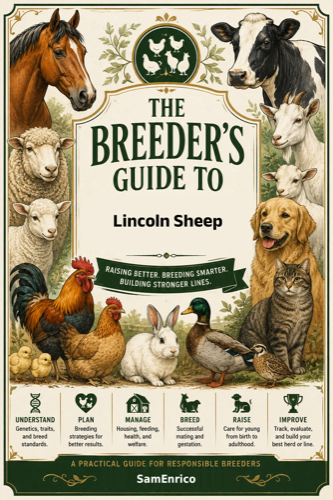 The Breeder's Guide to Lincoln SheepLash Noe$11.99
 Japanese Bunching Onion HarvestingLash Noe$11.99
 Build Media List FreeLash Noe$12.99
 AB Testing Retention GuideLash Noe$12.99
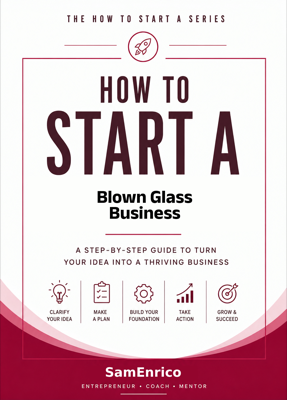 How to Start a Blown Glass Business (Beginners Guide)Lash Noe$11.99
You may also like
 Hong Kong Handover 1997Dunn Johnnie$11.99
 Zumba For Postnatal Recovery CourseNeal Christian$11.99
 Zumba for BeginnersLadner Nikia$11.99
 YouTube Comment Mining GuideHumes Pandora$12.99
 Worry Box MeditationCarlin Rudy$11.99
 Workplace Stress MeditationNguyen Lynn$11.99
 Workplace Stress and Sleep RepairHawley Ivory$11.99
 Workplace Perfectionism CureDelaney Jeffry$11.99
 Workplace Injustice Anger GuideWallen Isabelle$11.99
 Work Addiction and Burnout LinkGreenwood Ester$11.99
 Women in Yoga and WellnessBeattie Galina$11.99
 Women in Stand Up ComedyChun Evangeline$11.99