
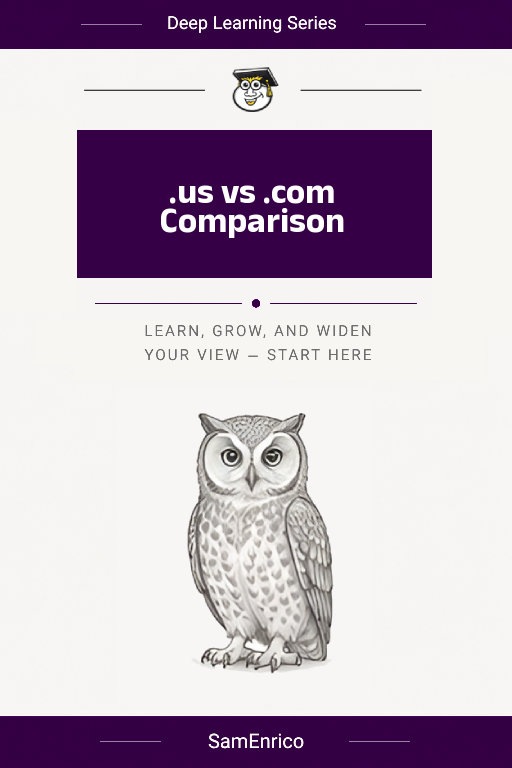
Non-FictionFirst 30 DaysUS Comparison
.us vs .com Comparison eBook
Evaluates .us versus .com for US-focused businesse
Evaluates .us versus .com for US-focused businesses considering local credibility, availability, and search engine preferences.
Formats
Free sample
Chapter 1: The Default Lie--–- Every day, thousands of American entrepreneurs, small business owners, and startup founders make a decision that costs them customers, money, and credibility before they even write their first line of code or open their doors for business. They choose a domain name for their company, and in ninety-nine percent of cases, they make that choice by reflex rather than reason. They assume, without examination, that .com is not just the default option but the only serious option. This assumption has been repeated so often and for so long that it has硬化 into what appears to be common sense. But common sense, as the saying goes, is nothing more than a collection of prejudices acquired by age eighteen.
In the case of .com versus .us, those prejudices are now actively harmful to a large and growing segment of American businesses.The lie at the heart of modern domain name selection is simple: that .com is always better. It is stated in countless blog posts, repeated in startup advice columns, and whispered in co-working spaces from San Francisco to Boston. "Get the .com," they say. "It's the only extension that matters." This advice is delivered with the certainty of a mathematical proof, yet it rests on assumptions that have not been seriously re-examined in over a decade. The internet of 2025 is not the internet of 2010.
The domain name landscape has fragmented, search engines have grown smarter, and user behavior has evolved in ways that make the old certainties dangerously obsolete.This book exists because the .com-or-bust dogma is failing real businesses. It is failing the plumber in Pittsburgh who cannot afford the fifteen thousand dollars that a premium .com domain would cost. It is failing the artisan soap maker in Oregon whose brand name is already taken by a domain squatter asking for ten thousand dollars. It is failing the civic organization in Texas that wants to project local credibility but ends up looking like another faceless .com operation. And yes, it is even failing the ambitious startup founder who blindly chooses .us without understanding its trade-offs, only to discover years later that international customers see that extension as a barrier rather than an invitation.The purpose of this first chapter is to shatter the default lie and replace it with a framework for genuine strategic thinking.
By the time you finish reading these pages, you will understand why the .com monopoly on your attention is unwarranted, how the domain landscape has fundamentally shifted, and what questions you need to ask before you spend a single dollar on any domain name. You will learn that choosing between .us and .com is not a matter of right versus wrong, but of alignment versus misalignment. The right choice depends entirely on your specific business: where your customers live, where you plan to grow, what kind of trust you need to build, and how much money you have to spend on a name.The Cost of Default Thinking Let us begin with a story. It is a composite story, drawn from dozens of real conversations the research for this book has documented, but every element of it is true somewhere. A woman named Sarah decides to start a business.
She has spent years working as a graphic designer for other companies, and she is finally ready to launch her own studio. She has a name in mind: "Lark Creative." It is memorable, distinctive, and available as a business registration in her state. She goes to register a domain name. Lark Creative.com is taken. It is not being used for anything substantial—just a parked page with advertisements—but it is registered, and the owner wants $8,000 for it.
Sarah does not have eight thousand dollars. She has three thousand dollars total for her launch budget. She tries Lark Creative Studio.com, but it feels clunky. She tries Lark-Creative.com, but the hyphen looks unprofessional. She spends three weeks agonizing over alternatives, losing momentum and confidence with each passing day.Eventually, someone suggests Lark Creative.us.
It is available. It costs twelve dollars. She registers it, but she does so with a sense of defeat. She tells herself that she will upgrade to the .com as soon as she can afford it. That day never comes.
Her business grows, her clients come to know Lark Creative.us, and she builds a thriving practice. But for years, she carries a quiet anxiety that she is running a second-rate operation because she does not have the .com.This story is tragic not because Sarah ended up with a .us domain, but because she spent years believing she had settled for something inferior when in fact she may have made the optimal choice for her business from the very beginning. Her clients are almost entirely local—small businesses and nonprofits within a fifty-mile radius of her studio. She does not ship products internationally. Her brand identity is built around local craftsmanship and community connection.
For her, a .us domain might actually send a more authentic signal than a generic .com ever could. But she did not know that. No one told her. The default lie had conditioned her to see .us as a consolation prize rather than a strategic asset.This is the cost of default thinking. It is not just financial, though the financial costs are real: Sarah could have spent that eight thousand dollars on marketing, equipment, or hiring her first employee instead of watching it disappear into a domain squatter's pocket.
The cost is also psychological and strategic. When business owners make domain decisions by reflex, they foreclose possibilities they did not even know existed. They lock themselves into assumptions that may not fit their actual circumstances. They pay premiums for .com names that bring no incremental value to their specific audience. Or, conversely, they grab a .us name without understanding its trade-offs and later discover that international customers see it as a red flag.The Three Shifts That Changed Everything To understand why the old certainty about .com superiority is now questionable, you need to understand three fundamental shifts that have occurred in the digital landscape over the past decade.
These shifts are not theoretical. They are measurable, documented, and directly relevant to anyone choosing a domain name in 2025.The first shift is the saturation of the .com namespace. In 1995, you could register almost any English word followed by .com. In 2005, good names were becoming scarce but decent options still existed. In 2025, the situation is dire.
More than 160 million .com domains are registered. Every common word, every short phrase, and virtually every brandable combination of letters has been claimed. Many of these domains are not even being used—they are held by speculators who register thousands of names and wait for someone to pay ransom. This is not a market failure; it is a structural feature of how domain registration evolved without adequate regulation. The result is that a small business with a modest budget faces an impossible choice: pay thousands of dollars for a mediocre .com name, accept a deeply awkward .com name with hyphens or extra words, or look beyond .com altogether.The second shift is the changing behavior…
This is the end of the free sample. Get the eBook to keep going. Buy now
About this book
Details
- Author
- Peoples Shonda
- Publisher
- SamEnrico
- Language
- English
- Genre
- Non-Fiction, First 30 Days, US Comparison
- Released
- 2026-05-29
- Pages (approx.)
- 137
- Available as
- eBook, Audiobook

Read better in the ZLOADR app
Your eBooks on your phone or tablet. Sign in with your SamEnrico account and start reading.
More by Peoples Shonda
 The Apology Parent GuidePeoples Shonda$11.99
 Depression Neurobiology GuidePeoples Shonda$11.99
 The Group Home YearsPeoples Shonda$11.99
 The Working Memory and Learning GuidePeoples Shonda$11.99
 The Unstoppable Run of Ella Walsh: Kenya's Forgotten Marathon PioneerPeoples Shonda$11.99
 How to Become a Gelatin Maker - UtilityPeoples Shonda$11.99
 Non-Technical CTO Hiring GuidePeoples Shonda$12.99
 Oncology Clinical DirectorPeoples Shonda$11.99
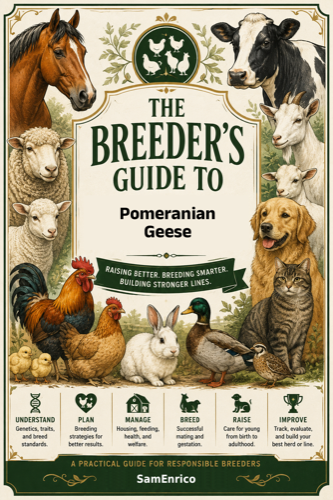 The Breeder's Guide to Pomeranian GeesePeoples Shonda$11.99
You may also like
 Hong Kong Handover 1997Dunn Johnnie$11.99
 Zumba For Postnatal Recovery CourseNeal Christian$11.99
 Zumba for BeginnersLadner Nikia$11.99
 YouTube Comment Mining GuideHumes Pandora$12.99
 Worry Box MeditationCarlin Rudy$11.99
 Workplace Stress MeditationNguyen Lynn$11.99
 Workplace Stress and Sleep RepairHawley Ivory$11.99
 Workplace Perfectionism CureDelaney Jeffry$11.99
 Workplace Injustice Anger GuideWallen Isabelle$11.99
 Work Addiction and Burnout LinkGreenwood Ester$11.99
 Women in Yoga and WellnessBeattie Galina$11.99
 Women in Stand Up ComedyChun Evangeline$11.99