
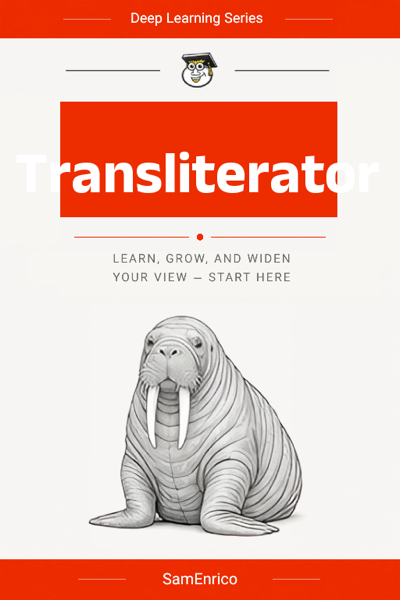
Non-FictionInformativeEducational
Transliterator Audiobook
A Coursebook on Transliterator
A Coursebook on Transliterator
Formats
Free sample
Chapter 1: The Transliteration Lie--– In 1982, a Deaf man named Michael sat in a federal courtroom, accused of embezzlement. He understood American Sign Language fluently. The court had provided a certified interpreter. By all legal standards, Michael had been given “equal access.” And yet, when the judge instructed the jury— “You must consider whether the defendant’s actions were willful and knowing”—Michael saw a different sentence: “You must consider whether the actions of the person accused were done on purpose and with knowledge.” The interpreter had done her job well. She had interpreted for meaning.
She had made the judge’s words natural in ASL. And Michael was convicted. Years later, an appeal revealed the problem. The jury had been told to find Michael guilty only if his actions were “willful and knowing.” In ASL, the interpreted version had lost a critical grammatical marker: the English suffix “-ing” on “knowing” (which implies ongoing state) had been rendered as a completed verb “to know.” Michael had not known something at the time. He had learned it later.
The difference was a single morpheme. The difference was a three-year prison sentence. The interpreter had not made an error. She had done exactly what interpreters are trained to do: convey meaning, not form. But in a legal setting, meaning is form.
The suffix “-ing” changed everything. What Michael needed was not an interpreter. He needed a transliterator. And that is the lie this chapter exists to expose: the myth that interpretation is always the right tool, and that transliteration is merely “word-for-word” grunt work. The truth is far stranger, far more essential, and far more controversial.The Four-Second Disaster Before we define what a transliterator is, let us watch one fail.
Victoria, a transliterator with nine years of experience, sat in a high school biology classroom. The teacher spoke rapidly: “The mitochondria, often called the powerhouse of the cell, convert glucose into adenosine triphosphate through a process called cellular respiration.” Victoria had 4.2 seconds to decide: Fingerspell “mitochondria”? Initialize it with an “M” handshape (Category B—field-specific, permissible with disclosure)? Use the established ASL sign for “cell engine” (interpretation, not transliteration)? She fingerspelled M-I-T-O-C-H-O-N-D-R-I-A.
Fourteen letters. At her speed of 3.2 letters per second (solid Intermediate), that took 4.4 seconds. The teacher had already moved on. Victoria missed “convert glucose into adenosine triphosphate.” The Deaf student saw a fingerspelled word he recognized, then a…
This is the end of the free sample. Get the Audiobook to keep going. Buy now
About this book
Details
- Author
- Emerson Valentin
- Publisher
- SamEnrico
- Language
- English
- Genre
- Non-Fiction, Informative, Educational
- Released
- 2026-05-04
- Pages (approx.)
- 146
- Available as
- eBook, Audiobook

Listen in the VoxFlicks app
Audiobooks and audio dramas wherever you go. Sign in with your SamEnrico account and press play.
More by Emerson Valentin
 Hidden Sugar Trap Elimination GuideEmerson Valentin$11.99
 Shopping Addiction and GriefEmerson Valentin$11.99
 IBS Caffeine Reduction GuideEmerson Valentin$11.99
 WTO Tariff Bindings ExplainedEmerson Valentin$11.99
 The Silk and the Socratic: Athens' Fashion RevolutionEmerson Valentin$11.99
 How to Start a Dish Washing Machines for Domestic Use (wholesale) Business (Beginners Guide)Emerson Valentin$11.99
 How to Produce an Antiquing GelEmerson Valentin$11.99
 Australian Study Requirement FulfillmentEmerson Valentin$12.99
You may also like
 Hong Kong Handover 1997Dunn Johnnie$11.99
 Zumba For Postnatal Recovery CourseNeal Christian$11.99
 Zumba for BeginnersLadner Nikia$11.99
 YouTube Comment Mining GuideHumes Pandora$12.99
 Worry Box MeditationCarlin Rudy$11.99
 Workplace Stress MeditationNguyen Lynn$11.99
 Workplace Stress and Sleep RepairHawley Ivory$11.99
 Workplace Perfectionism CureDelaney Jeffry$11.99
 Workplace Injustice Anger GuideWallen Isabelle$11.99
 Work Addiction and Burnout LinkGreenwood Ester$11.99
 Women in Yoga and WellnessBeattie Galina$11.99
 Women in Stand Up ComedyChun Evangeline$11.99