
Non-FictionSelf-HelpMeditation
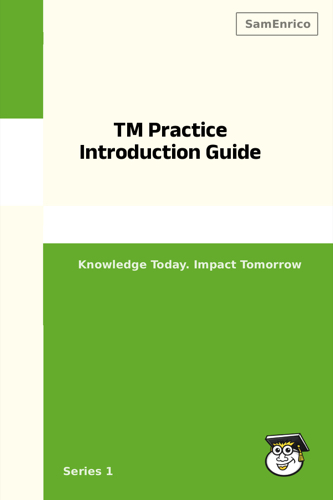
TM Practice Introduction Guide eBook
Learn the effortless technique of silent mantra me
by Mcgrath Russ
Learn the effortless technique of silent mantra meditation for deep rest and expanded awareness.
Formats
Free sample
Chapter 1: The Billion-Dollar Lie--You have tried to meditate. You sat down on a cushion, or a chair, or perhaps the floor of your bedroom. You closed your eyes. You took a deep breath. And within ten seconds, your brain started screaming about your email inbox, the argument you had three days ago, the grocery list, the weird noise the car is making, and the existential dread of your own mortality.You tried to "focus on your breath." You really tried.
But your breath was boring. Your mind had other plans. So you tried harder. You pulled your attention back to the rise and fall of your abdomen. Two seconds later, you were planning dinner.
You pulled it back again. You were now angry at yourself for being bad at meditation. You opened your eyes. You decided meditation "doesn't work for you."Here is the truth that the billion-dollar meditation industry does not want you to know: That experience was not your failure. It was the instruction that failed you.You were given the wrong map.
You were told that meditation requires "clearing your mind," "watching your thoughts," or "focusing on your breath." Those instructions are not just incomplete. For a stressed, overworked, modern human being, they are actively impossible. Telling a stressed person to "clear their mind" is like telling someone with a broken leg to "just walk normally." The equipment is not functioning correctly, and no amount of effort will fix it.This book is built on a radically different premise. It is a premise so simple, so counter to everything you have been told about meditation, that you may initially resist it. Here it is: You do not need to learn how to meditate.
You already know how. You have been doing it your entire life. You just did not know that what you were doing had a name.The Fraud of "Mindfulness"Let us be precise about what has been sold to you under the banner of "meditation."Over the past decade, mindfulness has become a $2 billion industry in the United States alone. Apps like Headspace and Calm have been downloaded hundreds of millions of times. Corporations offer "mindfulness training" to their employees.
Schools teach "mindful breathing" to children. The promise is everywhere: sit still, pay attention to the present moment, and your stress will melt away.But the data tells a more complicated story. A 2014 meta-analysis published in the Journal of the American Medical Association (JAMA) found that mindfulness meditation produced only modest improvements in anxiety and depression—smaller effects than exercise, and significantly smaller than antidepressant medication. A 2017 study from the University of Waterloo found that for people with high baseline stress, mindfulness actually increased anxiety. Why?
Because when you ask a highly anxious person to "notice" their anxiety without doing anything about it, you have essentially asked them to sit in a burning room and observe the flames. They do not become calm. They become more aware of how much they are suffering.This is not an attack on mindfulness as a whole. Mindfulness has genuine benefits. It can improve focus, reduce emotional reactivity, and help with mild to moderate anxiety.
But mindfulness is one specific technology with one specific mechanism: it trains attention. It is the gymnasium of the mind. You work the attention muscle, and over time, that muscle gets stronger.But here is the problem that no one tells you. You cannot exercise your way to deep rest.Imagine you have been running a marathon for ten years. Your legs are exhausted.
Your heart is pounding. Your nervous system is in overdrive. Someone hands you a set of dumbbells and says, "Here, lift these. That will help." Lifting weights is good for you. But it is not what you need right now.
What you need is to sit down. What you need is to stop.Mindfulness is the dumbbell. TM is the chair.The Three Meditations To understand why TM works when other meditations fail, you need a map of the territory. Scientists and meditation researchers have identified three fundamentally different categories of meditation practice. They are not variations on a theme.
They are different technologies, like a bicycle and a boat. Both are useful. They go to different places.Type One: Focused Attention (FA)This is what most people think of as meditation. You hold your attention on a single object—the breath, a candle flame, a visualized image, a word. When your mind wanders (and it will), you notice the wandering and gently return your attention to the object.
Repeat. Repeat. Repeat.Focused Attention meditation is valuable. It builds concentration. It increases working memory.
It can reduce distractibility. But it requires continuous effort. Your brain's executive control networks are active throughout the practice. Your nervous system is not resting; it is working. Think of it as bicep curls for the mind.
You will get stronger. But you will not get deeper rest.Type Two: Open Monitoring (OM)This is the second most common form of meditation, often taught as "Vipassana" or "insight meditation." Instead of focusing on a single object, you open your awareness to whatever arises—thoughts, sensations, emotions, sounds—and observe them without reacting. You become the watcher of your own experience.Open Monitoring is valuable for reducing emotional reactivity and increasing self-awareness. But it also requires effort. You must maintain a state of meta-awareness: watching yourself think.
This is not rest. It is surveillance. Your brain's salience network (the system that detects what is important) remains highly active throughout.Type Three: Self-Transcending (ST)This is the least known category, and it is the one that TM belongs to. Self-Transcending meditation does not ask you to focus on anything. It does not ask you to watch anything.
It asks you to do nothing at all. You sit comfortably, close your eyes, and allow the mind to settle inward naturally, using a specific sound (the mantra) as a gentle vehicle.In Self-Transcending meditation, effort is not just unnecessary; it is the obstacle. If you are trying, you are doing it wrong. The goal is not to concentrate. The goal is not to observe.
The goal is to get out of your own way and let the nervous system do what it already knows how to do: rest.Here is the key insight that changes everything. The mind has a natural tendency to move toward greater happiness and greater stillness. You do not need to force it. You do not need to discipline it. You just need to stop interfering.Think of a child running toward an ice cream truck.
You do not need to push the child. The child wants to go. Your job is simply not to hold the child back. The mantra is the ice cream truck. Your mind is the child.
The only thing standing between you and deep rest is the belief that you have to do something.Why Effort is the Enemy Let us pause here and let that sink in because it is the single most important sentence in this entire book.Effort is the enemy of deep rest.Every time you try to "clear your mind," you are tensing the very muscles that need…
This is the end of the free sample. Get the eBook to keep going. Buy now
About this book
Details
- Author
- Mcgrath Russ
- Publisher
- SamEnrico
- Language
- English
- Genre
- Non-Fiction, Self-Help, Meditation
- Released
- 2026-06-09
- Pages (approx.)
- 131
- Available as
- eBook, Audiobook

Read better in the ZLOADR app
Your eBooks on your phone or tablet. Sign in with your SamEnrico account and start reading.
More by Mcgrath Russ
 EQ Research ReviewMcgrath Russ$11.99
 Opioid Agonist vs AntagonistMcgrath Russ$11.99
 Async Crisis Documentation ManualMcgrath Russ$11.99
 Vegan Comparison Online TrapMcgrath Russ$11.99
 The Skywalker's Gambit: The Untold Story of the First Free Solo of El CapitanMcgrath Russ$11.99
 The Mekong Odyssey: A River of Secrets and SurvivalMcgrath Russ$11.99
 Understanding Cortical Hyperostosis SyndactylyMcgrath Russ$17.99
 How to Start a Fencing Made of Wood (assembled) Business (Beginners Guide)Mcgrath Russ$11.99
 Post COVID Commercial Lease GuideMcgrath Russ$12.99
 TikTok Organic ShopifyMcgrath Russ$12.99
 Counterterrorism AnalysisMcgrath Russ$11.99
You may also like
 Hong Kong Handover 1997Dunn Johnnie$11.99
 Zumba For Postnatal Recovery CourseNeal Christian$11.99
 Zumba for BeginnersLadner Nikia$11.99
 YouTube Comment Mining GuideHumes Pandora$12.99
 Worry Box MeditationCarlin Rudy$11.99
 Workplace Stress MeditationNguyen Lynn$11.99
 Workplace Stress and Sleep RepairHawley Ivory$11.99
 Workplace Perfectionism CureDelaney Jeffry$11.99
 Workplace Injustice Anger GuideWallen Isabelle$11.99
 Work Addiction and Burnout LinkGreenwood Ester$11.99
 Women in Yoga and WellnessBeattie Galina$11.99
 Women in Stand Up ComedyChun Evangeline$11.99