
Non-FictionSelf-HelpEmbarrassing Topics
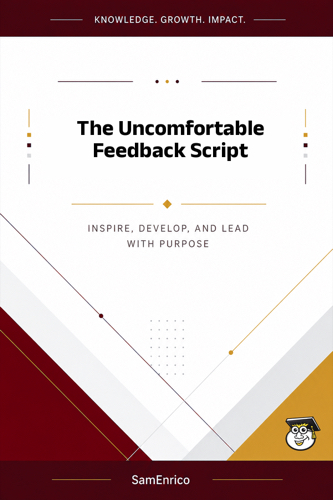
The Uncomfortable Feedback Script eBook
Phrases for telling someone they have body odor, b
Phrases for telling someone they have body odor, bad breath, or spinach in teeth.
Formats
Free sample
Chapter 1: The 2-Second Rule--We have all been there. You are standing in the elevator, three floors from the lobby, and the smell hits you. Not a whiff of yesterday’s coffee or someone’s overpowering cologne. Something else. Something organic.
Something that tells you, with absolute certainty, that the person standing six inches to your left has not discovered deodorant—or has discovered it and decided to break up with it permanently. Your brain, in that instant, runs a full diagnostic scan. Should you say something? No, that would be rude. But isn’t it ruder to let them walk into a meeting where twenty people will silently suffer?
Your throat closes. Your eyes dart to the floor numbers. By the time the doors open, you have done what 93 percent of people do in that situation, according to a 2021 survey on workplace discomfort: you have said absolutely nothing. And you have hated yourself for it.This chapter is about why that happens, why it matters, and—most importantly—how to stop it from ever happening again. We are going to dismantle the psychology of avoidance, replace it with a single, memorable rule that works for all three hygiene issues, and give you a script so simple you can deliver it while your heart is pounding and your face is turning red.
By the end of this chapter, you will understand why hygiene feedback is fundamentally different from every other difficult conversation you have ever had, and you will have a tool that makes the unsayable sayable.The Three Whispers Everyone Avoids Let us name the enemy. Across every culture, every workplace, and every relationship, there are three specific pieces of feedback that people would rather swallow broken glass than deliver aloud. The first is body odor—the olfactory elephant that fills a room long before anyone names it. The second is bad breath, which is uniquely cruel because the person who has it almost never knows. The third is visible food debris—spinach, poppy seeds, basil, the stray grain of rice—stuck to someone’s front teeth while they smile, speak, or pose for a photograph that will live forever on Linked In.These three whispers are not like other feedback.
If you need to tell a colleague they missed a deadline, you have a protocol. You schedule a meeting. You cite the project plan. You use the word “accountability.” There is a script for that, baked into every management training program ever written. If you need to tell a friend they hurt your feelings, there is a playbook for that too, drawn from decades of pop psychology about “I statements” and active listening.
But hygiene? No one teaches hygiene feedback. No HR department offers a two-day workshop on “Courageous Breath Conversations.” No bestselling business book has a chapter titled “So Your Employee Smells Like a Gym Bag.” The result is a vast, silent conspiracy of avoidance that damages careers, poisons relationships, and leaves otherwise kind people feeling like cowards.The Cost of Silence Let me be precise about what silence costs. In the workplace, managers who avoid hygiene feedback are not being kind. They are being negligent.
A 2019 study in the Journal of Applied Psychology found that employees with untreated body odor were 40 percent less likely to receive promotions involving client-facing work. Their performance reviews often included vague phrases like “needs to improve professional presence” or “not a good fit for the team,” codes that everyone understood but no one explained. The smelly employee never got the feedback they needed to change. They simply got managed out, quietly, with a severance package and a mystery they could not solve.In social settings, the cost is even more brutal. Friends stop inviting the person with chronic bad breath to dinner.
Partners invent excuses to sleep in separate rooms. Family members position themselves upwind at reunions. The person who smells becomes the person who is slowly, invisibly excluded, and no one ever tells them why. A 2020 qualitative study on social rejection interviewed thirty adults who had been on the receiving end of this silent exclusion. Every single one of them said the same thing: “I knew something was wrong, but I didn’t know what.
I thought people just didn’t like me.” That is the cruelty of silence. It does not protect feelings. It creates a mystery that the recipient cannot solve because they lack the one piece of information that would make everything clear.And then there is spinach in the teeth. This one seems minor, but it is actually a fascinating case study in the psychology of embarrassment. In a 2018 experiment, researchers staged interactions where one person had a large piece of spinach on their front tooth.
They varied whether a second person told them immediately, after five minutes, or not at all. The results were striking. When told immediately, the person with spinach felt mild embarrassment that faded within seconds. When told after five minutes, they felt genuine anger at the people who had let them walk around looking foolish. When never told, they felt betrayed when they eventually discovered the evidence in a bathroom mirror.
The conclusion was unambiguous: delay multiplies shame. Speed is kindness.Why Hygiene Feedback Is Different To understand why these three topics trigger such extreme avoidance, we have to understand what makes them different from every other kind of feedback. Let me offer you a framework drawn from the work of Amy Edmondson on psychological safety and Kim Scott on radical candor.Most feedback falls into one of two categories. Category one is performance feedback: “You missed the deadline,” “Your presentation went too long,” “The report had three typos.” Performance feedback is external. It is about things the person did, not who they are.
It is also reversible. A deadline can be adjusted. A presentation can be shortened. Typos can be fixed. Even harsh performance feedback rarely threatens a person’s core identity.Category two is relationship feedback: “You hurt my feelings,” “I felt ignored,” “You seem distant.” This is more personal, but it still operates within a known emotional framework.
Most adults have had enough relationship conversations to recognize the patterns. They might get defensive, but they usually understand what is happening.Hygiene feedback is neither of these things. Hygiene feedback is identity feedback. When you tell someone they smell, you are not telling them about a behavior they can change with a software update. You are telling them something about their body, their cleanliness, their very self.
And because most adults believe they are clean—because showering and brushing teeth are basic, automatic parts of daily life—the feedback lands as an accusation of fundamental failure. It says: You are the kind of person who does not take care of themselves. That is why people cry. That is why people get angry. That is why otherwise reasonable adults will look you in the eye and say, “That’s impossible, I showered this morning,” as if that were a logical rebuttal to the present-tense reality of their odor.The second reason hygiene feedback is different is that the giver has no immunity.
When you give performance feedback, you are usually in a position of authority—a manager, a teacher, a team lead. The…
This is the end of the free sample. Get the eBook to keep going. Buy now
About this book
Details
- Author
- Atwell Wenona
- Publisher
- SamEnrico
- Language
- English
- Genre
- Non-Fiction, Self-Help, Embarrassing Topics
- Released
- 2026-06-09
- Pages (approx.)
- 138
- Available as
- eBook, Audiobook

Read better in the ZLOADR app
Your eBooks on your phone or tablet. Sign in with your SamEnrico account and start reading.
More by Atwell Wenona
 Discussing Neurodiversity At Work GuideAtwell Wenona$11.99
 Benzo Recovery Time Perception CourseAtwell Wenona$11.99
 Anger and Emotional AffairsAtwell Wenona$11.99
 Postpartum Anxiety And Colic BabyAtwell Wenona$11.99
 Jacobin Club History GuideAtwell Wenona$11.99
 Lower Limb Strengthening for Knee PainAtwell Wenona$11.99
 Scripting Your Own HypnosisAtwell Wenona$11.99
 Slow Driver Patience CourseAtwell Wenona$11.99
 Whispers in the Windigo's ShadowAtwell Wenona$11.99
 The Unseen Architect: How One Woman Designed the Future of Silicon ValleyAtwell Wenona$11.99
 The Sky Tree’s Whisper: How the Iroquois Built the World’s First TowerAtwell Wenona$11.99
 Understanding Angiomatosis EncephalotrigeminalAtwell Wenona$17.99
You may also like
 Hong Kong Handover 1997Dunn Johnnie$11.99
 Zumba For Postnatal Recovery CourseNeal Christian$11.99
 Zumba for BeginnersLadner Nikia$11.99
 YouTube Comment Mining GuideHumes Pandora$12.99
 Worry Box MeditationCarlin Rudy$11.99
 Workplace Stress MeditationNguyen Lynn$11.99
 Workplace Stress and Sleep RepairHawley Ivory$11.99
 Workplace Perfectionism CureDelaney Jeffry$11.99
 Workplace Injustice Anger GuideWallen Isabelle$11.99
 Work Addiction and Burnout LinkGreenwood Ester$11.99
 Women in Yoga and WellnessBeattie Galina$11.99
 Women in Stand Up ComedyChun Evangeline$11.99