The Interleaving Study Guide eBook
Switches between subjects to improve discriminatio
Switches between subjects to improve discrimination.
Formats
Free sample
Chapter 1: The 3 AM Panic--The fluorescent light of the dorm room desk lamp hummed a low, steady frequency that Jenna had stopped noticing three hours ago. It was 3:17 AM. The final exam for Introduction to Cognitive Psychology would begin in exactly five hours and forty-three minutes. Spread across her desk were four highlighters (yellow, pink, green, blue), a stack of 147 handwritten notecards, a textbook opened to Chapter 9, and a laptop with seventeen open tabs. She had started studying at 2:00 PM the previous afternoon.
That was thirteen hours ago. She had taken two breaks—one to eat cold pizza, one to cry in the bathroom for seven minutes. She had not slept.Jenna turned to a fresh page in her notebook and wrote the question she knew would be on the exam: “Describe the three stages of memory according to the Atkinson-Shiffrin model.” She stared at the blank page. She knew she had read this. She had highlighted the relevant paragraph in yellow.
She had written the three stages on a notecard and reviewed that notecard eleven times. She closed her eyes and tried to pull the information from somewhere inside her skull. Nothing came. Not a single stage. Not sensory memory.
Not short-term memory. Not long-term memory. Just a white, silent void where the answer should have been.Jenna did what most students do at 3:17 AM when the void stares back. She turned back to the textbook. She re-read the paragraph.
She re-highlighted it—this time in pink, because pink felt more serious. She whispered the three stages aloud: “Sensory memory, short-term memory, long-term memory.” She wrote them down again. She felt the familiar relief of recognition. Yes, there they were. Of course she knew them.
The panic subsided. She closed the book, turned off the lamp, and crawled into bed, believing—truly believing—that she had learned something.Ten hours later, Jenna stared at the exam. Question one: “Describe the three stages of memory according to the Atkinson-Shiffrin model.” She wrote two of them. She could not remember the third. She scored a 71 percent.
She told her roommate she “just froze.” She told herself she “must have a bad memory.” She told anyone who would listen that she had studied for thirteen hours and the test was unfair.Jenna was wrong about almost everything.The Most Expensive Mistake Students Make Jenna’s story is not unusual. It is not even slightly unusual. It is the single most common pattern in academic life, repeated millions of times every semester across every university, college, and high school in the world. A student studies for hours. The student feels like the material is familiar.
The student takes the exam. The student performs poorly. The student concludes: “I’m just not good at this subject” or “I freeze under pressure” or “I have a bad memory.”All of these conclusions are wrong. The problem is not Jenna’s intelligence. It is not her memory.
It is not test anxiety. The problem is that Jenna—like nearly every student—has built her study habits around a neurological illusion. She has confused fluency with learning.Fluency is the subjective feeling of ease that comes from processing information. When you read a sentence that makes immediate sense, you feel fluent. When you re-read a paragraph you have already seen, the words feel smoother the second time, and even smoother the third time.
That feeling of smoothness is rewarding. Your brain releases small amounts of dopamine when it processes familiar information because familiarity signals safety. This is why highlighting feels productive. This is why re-reading feels like studying. This is why Jenna could review her notecard eleven times and feel increasingly confident with each repetition.But here is the brutal truth that learning science has established over fifty years of research: fluency is not learning.
The feeling of ease while processing information has almost no relationship to your ability to retrieve that information later when you need it. You can read a paragraph twenty times, feel completely fluent by the twentieth repetition, and still be unable to recall a single sentence from that paragraph twenty minutes later.Learning is not about input. It is about retrieval. You have not learned something until you can pull it out of your memory without the text in front of you. Highlighting is input.
Re-reading is input. Taking pretty notes is input. All of these activities feel productive because they feel like work. But they are the wrong kind of work. They are the academic equivalent of running on a treadmill that is not plugged in—you sweat, you exhaust yourself, but you do not move forward.This chapter is about why that treadmill feels so real, why almost every student is running on it, and how to step off for good.The Six Learning Myths That Are Sabotaging You Before we can build better study habits, we have to demolish the false beliefs that are currently running the show.
The following six myths appear in study skills books, in teacher training programs, and in the heads of nearly every student. They are all wrong. Some are harmless. Most are actively destructive.Myth 1: “Repetition guarantees memory.”This is the oldest myth in education, and it is spectacularly false. Repetition does not guarantee memory.
Tested repetition guarantees memory. There is a massive difference between seeing something ten times and retrieving something ten times. When you simply re-read your notes, you are repeating the experience of seeing the information. Your brain becomes more fluent at recognizing it. But recognition is not recall.
You can recognize your neighbor’s face on the street without being able to describe it from memory. The same principle applies to your notes. The chapter opens with a demonstration you can try right now. Think of a penny. Without looking at one, try to draw it from memory.
Which way does Lincoln face? What words are on the front? What words are on the back? Where is the date located? Most people cannot answer these questions despite having seen thousands of pennies.
They have repeated the experience of seeing pennies hundreds of times. They have never been forced to retrieve the details. Repetition without retrieval is worthless.Myth 2: “I learn best when I focus on one thing for a long time.”This feels true because focused attention produces fluency. When you spend three hours on Chapter 4, the material becomes increasingly familiar. That familiar feeling tricks your brain into believing you have mastered it.
But the research is clear: massed practice (studying one topic for a long continuous block) produces rapid forgetting. The students who perform best on cumulative exams are not the ones who marathoned each chapter. They are the ones who rotated between chapters, returning to each one multiple times over the semester. This is the core insight of this entire book, and we will spend the next eleven chapters proving it. For now, just hold the suspicion that your intuition about “focusing on one thing” might be exactly backwards.Myth 3: “Highlighting is effective.”Highlighting is the most popular study technique in the world.
It is also one of the least effective. Dozens of studies have compared highlighting to other techniques, and the results…
This is the end of the free sample. Get the eBook to keep going. Buy now
About this book
Details
- Author
- Langford Mikaela
- Publisher
- SamEnrico
- Language
- English
- Genre
- Non-Fiction, Self-Help, Interleaving
- Released
- 2026-06-06
- Pages (approx.)
- 137
- Available as
- eBook, Audiobook

Read better in the ZLOADR app
Your eBooks on your phone or tablet. Sign in with your SamEnrico account and start reading.
More by Langford Mikaela
 Flow State Mastery GuideLangford Mikaela$11.99
 Meeting Agenda MasteryLangford Mikaela$11.99
 Dopamine Fasting for FoodLangford Mikaela$11.99
 Venture Debt Due DiligenceLangford Mikaela$12.99
 Contempt Prevention Under StressLangford Mikaela$11.99
 Quantum Echoes: The Lost Symphony of HypatiaLangford Mikaela$11.99
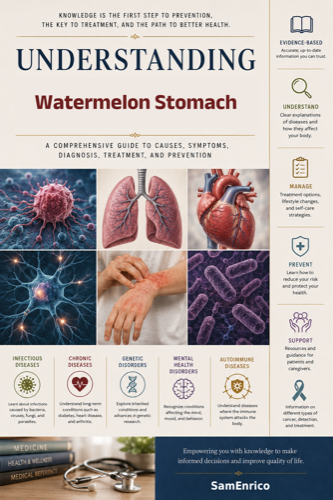 Understanding Watermelon StomachLangford Mikaela$17.99
 Silver MiningLangford Mikaela$11.99Venture Debt Due DiligenceLangford Mikaela$12.99
 UK via Madrid SystemLangford Mikaela$12.99
 How to Start a Bare Printed Circuit Boards Business (Beginners Guide)Langford Mikaela$11.99