
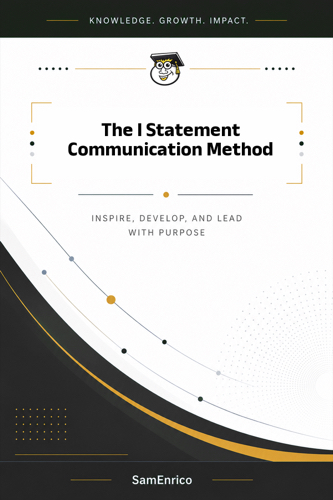
Non-FictionSelf-HelpNonviolent Communication
The I Statement Communication Method
Replaces blaming language with 'I feel' statements
by Loftis Sanda
Replaces blaming language with 'I feel' statements to reduce defensiveness.
Formats
About this book
Free sample
Chapter 1: The Blame Trap...--–- You are not a bad person for blaming. You are a human being with a nervous system that has not yet realized you are not being chased by a saber-toothed tiger.Let that land for a moment. Every time you have snapped at your partner, criticized your child, or silently fumed at a coworker, your brain was doing exactly what evolution designed it to do: protect you from a perceived threat. The problem is not your character. The problem is that your amygdala—that almond-shaped cluster of neurons deep in your brain—cannot tell the difference between a verbal accusation and a physical attack.
To your nervous system, “You never listen to me” lands the same way as a rock thrown at your head.This is not metaphor. This is neurobiology.When you hear a “you” statement directed at you, your body releases cortisol and adrenaline. Your heart rate increases. Blood flows away from your prefrontal cortex (the part of the brain responsible for rational thought and empathy) and toward your limbs, preparing you to fight, flee, or freeze. This entire cascade happens in less than a second.
By the time you have consciously registered the words, your body has already decided you are under attack.And here is the cruel irony: the person who spoke those words was probably not trying to attack you. They were likely trying to get a need met. But because they used a “you” statement, both of you are now trapped in a physiological reaction that makes productive conversation nearly impossible.This is the Blame Trap. And this chapter is your way out.The Invisible Architecture of Accusation Before we can dismantle the Blame Trap, we have to see its architecture. Most people go their entire lives without understanding that the words they choose literally shape the biology of the people around them.
A “you” statement is not merely rude or impolite. It is a biological trigger.Consider the difference between these two sentences:“You left the dishes in the sink again.”“When I see dishes in the sink at 10…
This is the end of the free sample. Get the eBook to keep going. Buy now
Contents
- Chapter 1
- Chapter 2
- Chapter 3
- Chapter 4
- Chapter 5
- Chapter 6
- Chapter 7
- Chapter 8
- Chapter 9
- Chapter 10
- Chapter 11
- Chapter 12
Details
- Author
- Loftis Sanda
- Publisher
- SamEnrico
- Language
- English
- Genre
- Non-Fiction, Self-Help, Nonviolent Communication
- Released
- 2026-06-05
- Pages (approx.)
- 150
- Available as
- eBook, Audiobook

Read better in the ZLOADR app
Your eBooks on your phone or tablet. Sign in with your SamEnrico account and start reading.
More by Loftis Sanda
 Gaslighting Anger Triggers HandbookLoftis Sanda$11.99
 TTC After Vasectomy GuideLoftis Sanda$11.99TTC After Vasectomy GuideLoftis Sanda$11.99
 Walking Meditation for PTSDLoftis Sanda$11.99
 Mountain Path Walking PracticeLoftis Sanda$11.99
 Beneath the Sands of Time: The Lost Codex of AlexandriaLoftis Sanda$11.99
 Understanding Omenn SyndromeLoftis Sanda$17.99
 Trello Remote Internship SecretsLoftis Sanda$12.99
 Teladoc Health SWOTLoftis Sanda$12.99
 Field Operations Team LeadLoftis Sanda$11.99
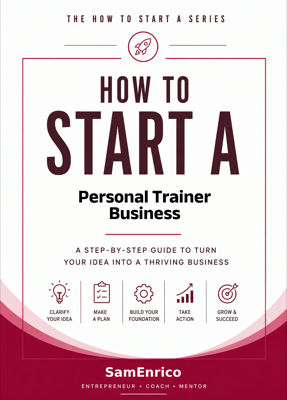 How to Start a Personal Trainer Business (Beginners Guide)Loftis Sanda$11.99
You may also like
 Hong Kong Handover 1997Dunn Johnnie$11.99
 Zumba For Postnatal Recovery CourseNeal Christian$11.99
 Zumba for BeginnersLadner Nikia$11.99
 YouTube Comment Mining GuideHumes Pandora$12.99
 Worry Box MeditationCarlin Rudy$11.99
 Workplace Stress MeditationNguyen Lynn$11.99
 Workplace Stress and Sleep RepairHawley Ivory$11.99
 Workplace Perfectionism CureDelaney Jeffry$11.99
 Workplace Injustice Anger GuideWallen Isabelle$11.99
 Work Addiction and Burnout LinkGreenwood Ester$11.99
 Women in Yoga and WellnessBeattie Galina$11.99
 Women in Stand Up ComedyChun Evangeline$11.99