
Non-FictionHealth & WellnessDiagnostic Tests
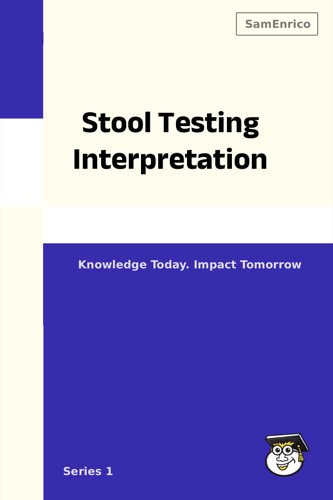
Stool Testing Interpretation eBook
Reads microbiome analysis reports and translates t
Reads microbiome analysis reports and translates to action.
Formats
Free sample
Chapter 1: The Hidden Ecosystem--–- The human gut contains approximately 100 trillion microbial cells—outnumbering human cells by a factor of ten. If you lined up the microbial DNA from a single person’s digestive tract end to end, it would stretch around the Earth two and a half times. Yet most people walk around completely unaware that they are carrying a complex, dynamic, and deeply influential ecosystem within their abdomen. This ecosystem—collectively known as the gut microbiome—is not a passive passenger. It is an active organ, one that influences metabolism, immune function, neurological health, hormone balance, and even gene expression.
Understanding this hidden world is the first step toward understanding what a stool test can actually tell you.The average person who orders a comprehensive stool test receives a forty-page PDF filled with scientific names, columns of numbers in scientific notation, and cryptic abbreviations. Most never finish reading it. Those who do often find themselves more confused than before they started. Is a high level of Akkermansia good or bad? Does E.
coli at one million copies per gram require treatment? Why does the reference range say “normal” for a value that research associates with disease? These questions are not signs of intellectual failure—they are signs that the current paradigm of stool test reporting is fundamentally broken.This book exists to fix that problem. It is not a textbook of microbiology, though you will learn microbiology. It is not a clinical reference manual, though clinicians will find it useful.
It is a translation guide—a decoder ring that takes the raw, intimidating output of laboratory science and converts it into actionable strategies for better health. By the time you finish this chapter, you will understand why the gut microbiome matters more than most doctors realize. By the time you finish this book, you will be able to look at any stool test report and know exactly what to eat, what to supplement, and what to change.The Rainforest Within Imagine a rainforest. Not the tidy, manicured garden of a botanical exhibit, but a real rainforest—chaotic, dense, teeming with life at every scale. In the canopy, monkeys and birds compete for fruit.
On the forest floor, fungi break down fallen logs while insects scavenge through leaf litter. In the soil, billions of bacteria and archaea cycle nutrients, fix nitrogen, and maintain the chemical balance that allows everything above ground to survive. The rainforest is not a collection of individual organisms. It is a system—a web of relationships where the health of any single species depends on the health of the whole.Your gut is a rainforest.The comparison is not merely poetic. Ecologists and microbiologists have increasingly recognized that the principles governing natural ecosystems apply directly to the microbial communities living inside the human digestive tract.
There are keystone species whose presence determines the stability of the entire system. There are niche competitors that fight for resources. There are predators and prey, symbionts and parasites, and a constant cycle of birth, death, and renewal. When the system is healthy, it is resilient—able to withstand disturbances like infections or dietary changes without collapsing. When the system is damaged, it enters a state that ecologists call dysbiosis, a term you will encounter repeatedly in this book.The Three Roles: Commensals, Symbionts, and Pathogens To understand the gut ecosystem, you must first understand the three roles that microorganisms can play.
These roles are not fixed identities—many organisms can shift between roles depending on context—but they provide a useful framework for interpretation.Commensals are the neutral residents of the gut. The term comes from the Latin com mensa, meaning “sharing a table.” Commensals neither help nor harm their host in any direct way. They eat what you eat, occupy space, and go about their business. Why do they matter? Because space is a limited resource.
A gut occupied by commensals is a gut that cannot be colonized by pathogens. This phenomenon, known as colonization resistance, is one of the most important functions of a healthy microbiome. When antibiotics wipe out commensal populations, the resulting ecological vacuum allows opportunistic organisms like Clostridium difficile to take hold and cause devastating illness.Symbionts are the beneficial partners. The term is often misused to mean “mutually beneficial,” but in strict ecological terms, symbiosis simply means “living together.” In common usage within microbiome science, however, symbionts refer to organisms that actively contribute to host health. These bacteria produce vitamins—including vitamin K and several B vitamins—that the human body cannot synthesize on its own.
They ferment dietary fiber into short-chain fatty acids, particularly butyrate, which serves as the primary fuel source for colonocytes, the cells lining the large intestine. They train the immune system, teaching it to distinguish between friend and foe. They produce neurotransmitters like serotonin and GABA that influence mood and cognition. Key examples include Faecalibacterium prausnitzii, Akkermansia muciniphila, and various Bifidobacterium and Lactobacillus species.Pathogens are the harmful invaders. These organisms cause disease directly through toxin production, tissue invasion, or immune system manipulation.
Some, like Salmonella and Shigella, are frank pathogens—their presence almost always indicates illness. Others, like certain strains of Escherichia coli, are opportunists: harmless at low levels but dangerous when overgrowth occurs. Still others, like Clostridium difficile, are environmental organisms that become pathogenic only when the normal gut ecosystem has been disrupted.The critical insight—and one that many practitioners miss—is that the same organism can function as a symbiont in one context and a pathogen in another. Escherichia coli is the classic example. Most strains are harmless commensals.
The Nissle 1917 strain is actually used as a probiotic to treat ulcerative colitis. But enterohemorrhagic strains like O157:H7 produce Shiga toxin and can cause fatal kidney failure. The stool test result “E. coli detected” is meaningless without additional information about strain, quantity, and patient symptoms.Defining Dysbiosis: More Than Just “Bad Bugs”The term dysbiosis appears in virtually every microbiome research paper and clinical report, yet it is rarely defined with precision. Most people interpret dysbiosis to mean “too many bad bacteria.” This is incorrect and, more importantly, leads to flawed treatment strategies.Dysbiosis is a structural breakdown of the gut ecosystem.
It can manifest in three distinct patterns, each requiring a different therapeutic approach.Pattern One: Low Diversity. Diversity is the single best predictor of microbiome health. A diverse ecosystem is resilient—if one species declines, others can step in to perform similar functions. A low-diversity ecosystem is fragile; a single disturbance can trigger a cascade of failures. Low diversity is associated with obesity, inflammatory bowel disease, type 2 diabetes, colorectal cancer, and even depression.
The action for low diversity is not antimicrobials—which would further reduce diversity—but dietary interventions that increase microbial variety: diverse plant fibers, fermented foods, and reduced exposure to antimicrobial chemicals.Pattern Two: Keystone Species Loss. Keystone species are organisms that play a disproportionately large role in maintaining ecosystem structure. In the gut, Akkermansia muciniphila is a keystone species. It lives in the mucus layer that lines the intestine, consuming mucin as its primary nutrient source. This might sound harmful—why would you want an organism eating your protective mucus?—but Akkermansia stimulates the…
This is the end of the free sample. Get the eBook to keep going. Buy now
About this book
Details
- Author
- Crist Phyliss
- Publisher
- SamEnrico
- Language
- English
- Genre
- Non-Fiction, Health & Wellness, Diagnostic Tests
- Released
- 2026-06-10
- Pages (approx.)
- 160
- Available as
- eBook, Audiobook

Read better in the ZLOADR app
Your eBooks on your phone or tablet. Sign in with your SamEnrico account and start reading.
More by Crist Phyliss
 Whole Body Breathing GuideCrist Phyliss$11.99
 Meditation for Performance AnxietyCrist Phyliss$11.99
 Meditation For Shingles PainCrist Phyliss$11.99
 The Golden Scribes of Timbuktu: Africa's Intellectual RenaissanceCrist Phyliss$11.99
 How to Start a Architectural and Related Technical Consultancy Business (Beginners Guide)Crist Phyliss$11.99
 US LLC Formation for Non Resident Course CreatorsCrist Phyliss$12.99
 Fossil HuntingCrist Phyliss$11.99
 How to Produce Business Forms and ReceiptsCrist Phyliss$11.99
You may also like
 Hong Kong Handover 1997Dunn Johnnie$11.99
 Zumba For Postnatal Recovery CourseNeal Christian$11.99
 Zumba for BeginnersLadner Nikia$11.99
 YouTube Comment Mining GuideHumes Pandora$12.99
 Worry Box MeditationCarlin Rudy$11.99
 Workplace Stress MeditationNguyen Lynn$11.99
 Workplace Stress and Sleep RepairHawley Ivory$11.99
 Workplace Perfectionism CureDelaney Jeffry$11.99
 Workplace Injustice Anger GuideWallen Isabelle$11.99
 Work Addiction and Burnout LinkGreenwood Ester$11.99
 Women in Yoga and WellnessBeattie Galina$11.99
 Women in Stand Up ComedyChun Evangeline$11.99