
Non-FictionStartup GuideMVP Planning
Startup Sprint Zero Planning eBook
Run your first sprint before writing code to valid
Run your first sprint before writing code to validate assumptions. Define backlog, estimate tasks, and deliver a testable prototype in two weeks with zero budget.
Formats
Free sample
Chapter 1: The $50k Lie--–- It was 3:47 AM when the email arrived. "We've decided to pause the investment until you have a technical co-founder and a working prototype." Twelve weeks of pitching. Forty-seven investor meetings. Three thousand dollars spent on incorporation, legal fees, and coffee with venture capitalists who never called back. And the result was a politely worded rejection that blamed him for not having exactly what he was trying to raise money to build.His name was Marcus.
He had been a product manager at a mid-sized Saa S company for eleven years. He had watched three startups get acquired. He had read every blog post, every book, every Twitter thread about fundraising. He had done everything "right." He had a deck. He had a market size slide.
He had a five-year financial projection that he knew was fiction but that investors expected to see. And he had nothing to show for it except exhaustion and an empty bank account.Marcus did not know it yet, but he was about to discover something that would save him eighteen months and roughly two hundred thousand dollars. The discovery would not come from a mentor or a book or a startup accelerator. It would come from desperation. With no money left and no co-founder in sight, he decided to do the one thing every investor had told him not to do: he decided to build something anyway, without code, without budget, without permission.
And he decided to do it in two weeks.What he built was ugly. It broke constantly. It required him to manually answer emails at 2 AM. But when he showed it to fifteen potential customers, seven of them asked how to pay. Seven.
He had not even added a payment button yet. They were literally asking to give him money for a prototype that barely worked.Marcus had stumbled onto the central truth that this entire book is built upon. The truth is not complicated, but it is deeply uncomfortable for anyone who has ever raised money, hired engineers, or spent months writing a business plan. Here it is: You do not need a co-founder. You do not need fifty thousand dollars.
You do not need six months. You need two weeks and the willingness to look stupid.This chapter is going to prove that statement to you. Not with theory. Not with inspirational quotes. With a dismantling of the three biggest lies in startup culture, followed by a reframing that will change how you think about risk, speed, and the entire purpose of an early-stage company.
By the end of this chapter, you will understand why the most dangerous thing you can do is raise money before you have validated your riskiest assumption. And you will be ready to commit to your own Sprint Zero.The Three Lies That Keep You Stuck Before we can build anything, we have to clear the wreckage of bad advice that has been piled onto aspiring founders for the past decade. These lies are repeated so often that they have become invisible. They are the background noise of startup culture. And they are keeping you from starting.Lie #1: "You Need a Technical Co-Founder"This is the most damaging lie in entrepreneurship.
It sounds reasonable. How can you build a technology company without someone who can write code? The logic seems airtight. But it is built on a false assumption: that the first version of your product needs to be built with code at all.Let me tell you about Nick Swinmurn. In 1999, he had an idea for an online shoe store.
He did not have a technical co-founder. He did not have inventory. He did not have a warehouse. What he had was a camera and a local shoe store. He walked into the store, took photos of shoes, posted them on a simple website, and waited.
When someone ordered a pair, he walked back to the store, bought the shoes at retail price, and shipped them. His "technology" was a human being walking back and forth.That company was Zappos. It sold for over one billion dollars.Nick did not need a technical co-founder because he did not need to build software. He needed to test whether people would buy shoes online. The software came later, after the assumption was validated.The same pattern repeats over and over.
Buffer started as a landing page with two pricing plans. The "Pro" plan cost more. The founder waited to see which plan people clicked. When they clicked the Pro plan, he built it. Groupon started as a Word Press blog.
The founder manually emailed PDF vouchers to customers. The "technology" was copy-paste and Gmail.Here is the truth that venture capitalists will never tell you: You do not need a technical co-founder to validate a technical product. You need a technical co-founder to scale a validated product. Those are two completely different problems. Trying to solve the scaling problem before you have validated the product is like buying a fleet of delivery trucks before you know if anyone wants what you are selling.If you cannot build a testable version of your idea using the no-code and manual techniques in this book, your idea is not too technically complex.
Your idea is too complex, period. Simplify it until you can test it without code.Lie #2: "You Need to Raise Money to Start"This lie is seductive because it shifts responsibility away from you. If you need money, then your failure to start is not your fault. It is the investors' fault for not writing the check. You get to keep your ego intact while waiting for someone else to save you.But the data tells a different story.
According to a study by CB Insights, the number one reason startups fail is not lack of funding. It is "no market need." Forty-two percent of failed startups built something nobody wanted. Not "ran out of money." Not "couldn't hire engineers." Built something nobody wanted.Money does not solve the problem of building something nobody wants. Money makes that problem worse, because money allows you to build faster and more beautifully in the wrong direction. Money is a multiplier.
If you multiply zero demand by a million dollars, you still get zero demand.Consider the story of Webvan. They raised four hundred million dollars. They built a glorious, automated, technologically perfect grocery delivery system. They spent millions on robots and warehouses and custom software. And they went bankrupt because not enough people wanted groceries delivered in the way Webvan delivered them.
The money did not save them. The money killed them faster.Now contrast Webvan with Instacart. Instacart started with a founder walking into a grocery store, buying groceries, and delivering them himself. No robots. No warehouses.
No custom software. Just a human being testing whether the problem was real. When he proved that it was, he raised money to scale the solution.Here is the inversion: Fundraising is not a milestone. It is a consequence. You do not raise money to start validating.
You validate, then you raise money to scale what you have validated. If you reverse that order, you are not…
This is the end of the free sample. Get the eBook to keep going. Buy now
About this book
Details
- Author
- Stackhouse Diego
- Publisher
- SamEnrico
- Language
- English
- Genre
- Non-Fiction, Startup Guide, MVP Planning
- Released
- 2026-06-01
- Pages (approx.)
- 148
- Available as
- eBook, Audiobook

Read better in the ZLOADR app
Your eBooks on your phone or tablet. Sign in with your SamEnrico account and start reading.
More by Stackhouse Diego
 Caregiver Stress and Meal DeliveryStackhouse Diego$11.99
 Meme Stock SentimentStackhouse Diego$11.99
 Career Longevity Field ManualStackhouse Diego$11.99
 Resentment Letter WritingStackhouse Diego$11.99
 The Sands of Troy: Rommel’s Desert Gambit (1941-1943)Stackhouse Diego$11.99
 Provider Relations RepresentativeStackhouse Diego$11.99
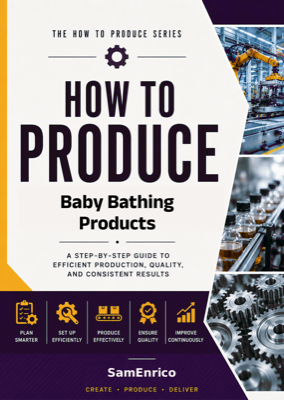 How to Produce Baby Bathing ProductsStackhouse Diego$11.99
 How to Start a Photographic Chemicals Business (Beginners Guide)Stackhouse Diego$11.99
You may also like
 Hong Kong Handover 1997Dunn Johnnie$11.99
 Zumba For Postnatal Recovery CourseNeal Christian$11.99
 Zumba for BeginnersLadner Nikia$11.99
 YouTube Comment Mining GuideHumes Pandora$12.99
 Worry Box MeditationCarlin Rudy$11.99
 Workplace Stress MeditationNguyen Lynn$11.99
 Workplace Stress and Sleep RepairHawley Ivory$11.99
 Workplace Perfectionism CureDelaney Jeffry$11.99
 Workplace Injustice Anger GuideWallen Isabelle$11.99
 Work Addiction and Burnout LinkGreenwood Ester$11.99
 Women in Yoga and WellnessBeattie Galina$11.99
 Women in Stand Up ComedyChun Evangeline$11.99