
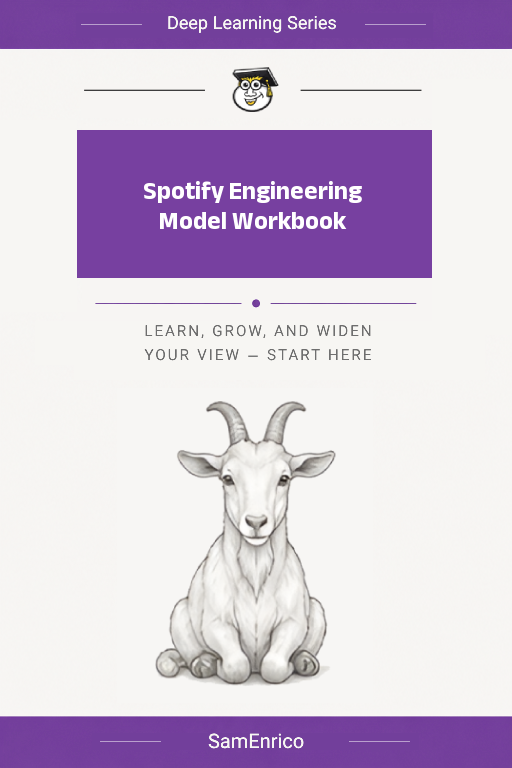
Spotify Engineering Model Workbook eBook
Implement Spotify's squad and tribe framework adap
by Bonds Nakita
Implement Spotify's squad and tribe framework adapted for early stage startups including autonomous teams, guild knowledge sharing, and lightweight agile rituals.
Formats
Free sample
Chapter 1: The Org Chart Trap--–- It was a Tuesday afternoon when the CEO of a 28-person fintech startup called me, panicked. "We did it," she said. "We reorganized into squads and tribes. We have the Spotify model. Why is everything worse?"She had every right to be confused.
Her engineering team had dutifully renamed their groups. They had squad T-shirts. They had a tribe logo. They had bought Jira Enterprise and hired an agile coach. And six months later, their shipping velocity had dropped 40%, their best engineer had quit, and the daily standups—now with 14 people—took 45 minutes.This is not an isolated story.
It happens every week in startups around the world. Smart, well-intentioned founders read about Spotify's success, attend a conference talk by someone who once visited Spotify's Stockholm office, and decide to copy the structure without understanding the soul. They build the scaffolding of autonomy without the muscle of trust.Here is the hard truth that no consultant will tell you: the Spotify model was never designed as a prescriptive framework. It is a case study of what worked for one company at a specific point in its growth (roughly 2012-2015, when Spotify had already survived near-bankruptcy and had hundreds of engineers). Henrik Kniberg, the agile coach who popularized the model, has repeatedly said: "This is not a framework.
Don't copy it. Understand the principles and adapt them to your context."But startups don't adapt. They copy. And they pay the price.This chapter exists to save you from that fate. Before we build anything, we must first demolish the myths.
Before we form a single squad, we must understand why most implementations fail. And before you invest another minute in this workbook, you must honestly assess whether your startup is ready for what comes next.Because here is the promise of this book: you can benefit from Spotify's lessons. You can build autonomous, motivated teams that ship faster without burning out. But only if you stop trying to copy Spotify and start building your own model—one that fits your size, your culture, and your constraints.Let's begin by understanding why the Spotify model fails so spectacularly in small companies.The Great Misunderstanding: Artifacts vs. Principles Every failed implementation shares the same root cause: confusing what Spotify did with why they did it.Let me define these terms clearly:Artifacts are the visible structures and practices: squads, tribes, chapters, guilds, the Trio, hack time, weekly syncs, retrospectives.
These are what most people see in the famous diagrams—the colorful circles and boxes that look so orderly and appealing.Principles are the invisible beliefs that make those artifacts work: autonomy with alignment, trust over control, minimal viable bureaucracy, psychological safety, mission-driven teams, and a culture that rewards intelligent failure.Here is the problem that destroys startups: you can copy artifacts in a week. You can rename your teams, update your Slack channels, and print new business cards. But principles take years to build. They require founders to let go of control. They require teams to learn how to make decisions without permission.
They require a culture where mistakes are analyzed, not punished.When you copy artifacts without principles, you get what I call the "Zombie Spotify Model"—a walking corpse of process that looks like agility but feels like bureaucracy.Let me give you a concrete example. At Spotify, squads are autonomous. They choose their own methodology, their own tools, their own workflow. The company trusts them to make good decisions. In failed implementations, squads are "autonomous" in name only.
They have squad meetings and squad T-shirts, but every decision still requires founder approval. The founder is in every meeting. The squad cannot change its own workflow without permission.This is not autonomy. This is "decorative agility"—the worst of both worlds. You have the overhead of autonomous teams without the benefits.The Specific Ways Startups Get This Wrong Through studying dozens of startup implementations (and watching many fail), I have identified three failure modes that appear again and again.
(For a complete catalog of failure modes, see Appendix B.)Failure Mode #1: Squad-Silo Syndrome This happens when autonomous teams become so autonomous that they stop talking to each other. Squad A builds a login system. Squad B, unaware, builds a different login system. Squad C builds a third. Three months later, you have three incompatible authentication methods, and customers are furious.The root cause is copying squad autonomy without copying the alignment mechanisms that Spotify uses: chapters, guilds, weekly alignment syncs, and architectural ownership patterns.
Startups see "autonomy" and think "no coordination needed." That is a fatal error.Failure Mode #2: Agile Theater This is the most common failure mode in startups under 30 people. The team adopts all the ceremonies of agile—daily standups, sprint planning, sprint review, retrospective, backlog grooming—without any of the decision-making authority.The daily standup becomes a status report to the founder. The retrospective produces action items that never get implemented. The squad has no power to change its own workflow, so the rituals become hollow performances. Engineers quickly learn that agile meetings are where work goes to be discussed, not done.Failure Mode #3: Product Owner Overload In Scrum, the Product Owner is a single person who prioritizes the backlog and makes the final call on what to build.
In a startup, that person is usually the founder or the head of product. And they become a bottleneck.Every decision routes through one person. The squad cannot move forward without approval. The Product Owner attends every meeting, reviews every ticket, and works 70-hour weeks. Meanwhile, the squad waits.
This is the opposite of autonomy. It is single-point failure disguised as process.Spotify solved this by creating the Trio (Product, Tech, and Design Leads working together). But startups that copy the squad structure without the Trio end up with the Product Owner bottleneck amplified across multiple teams.The 10-50 Person Startup Paradox Here is the unique challenge this workbook addresses: startups with 10-50 people are too big for founder-led chaos and too small for the full Spotify model.At 10 people, you don't need squads. Everyone knows what everyone is doing. The founder can make most decisions in real time.
Process is overhead.At 50 people, you cannot function without structure. Communication paths become too complex. The founder becomes a bottleneck. You need lightweight coordination.But here is the trap: most startups try to implement the *50-person solution* when they have 15 people. They over-engineer.
They create more process than they have work. They add overhead that slows them down rather than speeding them up.The solution is not to copy Spotify's structure. It is to understand Spotify's principles and build a lightweight adaptation that grows with you. That is exactly what this workbook provides.The Minimum Viable Starting Point Before we go further, let me tell you what you actually need on Day 1. (For the complete master table of what to add and when, see Chapter 2.)You do not need tribes.
You do not need chapters. You do not need guilds. You do not need a dedicated agile coach. You do not need Jira. You do not need sprint planning.
You do not need estimation poker. You do not need backlog grooming. You do not need a Scrum Master.What you…
This is the end of the free sample. Get the eBook to keep going. Buy now
About this book
Details
- Author
- Bonds Nakita
- Publisher
- SamEnrico
- Language
- English
- Genre
- Non-Fiction, Startup Guide, Agile Methods
- Released
- 2026-06-01
- Pages (approx.)
- 146
- Available as
- eBook, Audiobook

Read better in the ZLOADR app
Your eBooks on your phone or tablet. Sign in with your SamEnrico account and start reading.
More by Bonds Nakita
 EQ In Customer Service GuideBonds Nakita$11.99
 Growth Mindset Failure GuideBonds Nakita$11.99
 Vince Gill Gentle Giant MemoirBonds Nakita$11.99
 Thunberg Autism Pride Activism GuideBonds Nakita$11.99
 Chocolate Flavanols Brain GuideBonds Nakita$11.99
 Excalibur of the Cherry Blossoms: The Samurai’s Quest for the Celestial SwordBonds Nakita$11.99
 The Clockwork Cartographer: Ancient Robots and the Lost Maps of the Australian InteriorBonds Nakita$11.99
 Understanding Fraxa SyndromeBonds Nakita$17.99
 Work Package ManagerBonds Nakita$11.99
 How to Become a Naphthalene-operator HelperBonds Nakita$11.99
 AI Data Integration GuideBonds Nakita$12.99
You may also like
 Two Pizza Team ScrumHammett Diamond$12.99Two Pizza Team ScrumHammett Diamond$12.99Two Pizza Team ScrumHammett Diamond$12.99Two Pizza Team ScrumHammett Diamond$12.99Two Pizza Team ScrumHammett Diamond$12.99Two Pizza Team ScrumHammett Diamond$12.99Two Pizza Team ScrumHammett Diamond$12.99Two Pizza Team ScrumHammett Diamond$12.99
 Story Points EstimationLindgren Trinh$12.99
 Shape Up vs ScrumBarbour Randy$12.99
 Shape Up vs KanbanMcfadden Sun$12.99
 Shape Up for StartupsDelarosa Marine$12.99