
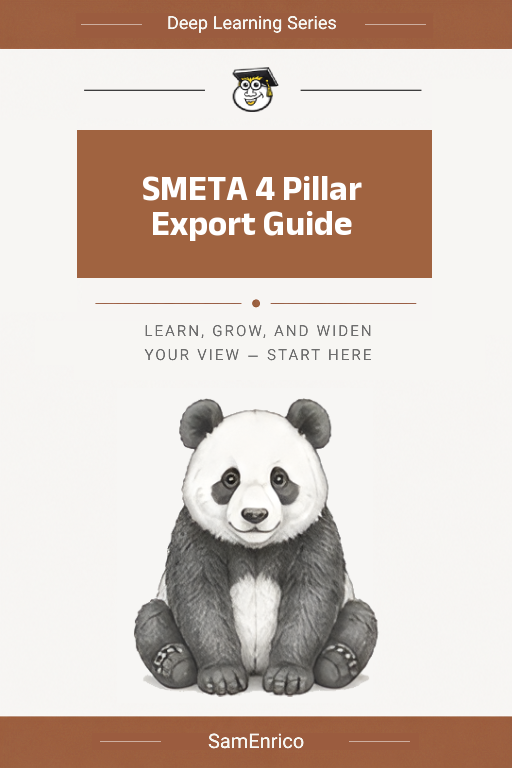
SMETA 4 Pillar Export Guide eBook
Complete SMETA 4-pillar audit covering labor, heal
Complete SMETA 4-pillar audit covering labor, health safety, environment, and business ethics, meeting UK retailer ethical trading requirements.
Formats
Free sample
Chapter 1: Beyond the Barcode...--The first time a buyer cancelled a six-figure order because of a missing fire drill log, the factory owner didn’t believe it. He held the purchase order in one hand—print still fresh—and the auditor’s report in the other. “We make good products,” he said. “We ship on time. Our prices are fair.
What does a fire drill have to do with exporting?” The auditor, who had seen this confusion a hundred times before, gave the same answer: “Everything.”That conversation, repeated in thousands of factories across Asia, Africa, Eastern Europe, and Latin America, marks the single greatest shift in global trade over the past two decades. It is no longer enough to produce quality goods at competitive prices. The barcode on your product—that scannable symbol of commerce—now carries invisible weight. Behind it, buyers see not just a shirt, a toy, or a circuit board. They see a supply chain.
They see workers, safety records, environmental permits, and ethical conduct. And they have decided that they will not look away.This book exists because that decision is final, non-negotiable, and accelerating. For exporters targeting the United Kingdom—and increasingly the European Union, North America, and beyond—the SMETA 4-Pillar audit has become the universal language of ethical trade. Passing it is no longer a differentiator. It is a ticket to play.The New Reality of Retail Walk into any Tesco, Sainsbury’s, or M&S in the United Kingdom.
Pick up a garment, a food item, or an electronic device. You are holding a product that has been traced, questioned, and verified—not just for quality or safety, but for the conditions under which it was made. That verification comes through a framework called SMETA, the Supplier Ethical Data Exchange Audit Methodology.SMETA is not a law. No government mandates it. Yet it governs hundreds of billions of pounds in annual trade.
It is a private standard, developed by the Ethical Trading Initiative (ETI) and hosted on the Sedex platform, that has become the de facto requirement for UK retail. If you sell to a British retailer—directly or through an agent, importer, or distributor—you will eventually face a SMETA audit. The only question is whether you will be prepared when it arrives.The retailers themselves are not acting alone. They respond to consumers who, after decades of scandals—collapsed factories in Bangladesh, forced labor in fishing fleets, child labor in cocoa farms—have lost patience. A 2023 survey by You Gov found that 68% of UK adults believe retailers are responsible for working conditions in their supply chains.
Nearly half said they would stop buying from a brand found to use forced labor. These are not fringe activists. They are ordinary shoppers.And they are voting with their wallets.The Cost of Looking Away To understand why SMETA matters, one must first understand what happens without it. The history of ethical trade is written in disasters.In 2013, the Rana Plaza building in Dhaka, Bangladesh, collapsed. The structure housed five garment factories supplying major global brands.
Over 1,100 workers died. Thousands more were injured. In the aftermath, investigators discovered a cascade of failures: blocked exits, ignored safety warnings, forced overtime, and wages so low that workers returned to a trembling building because they could not afford to lose a day’s pay. The brands whose products were found in the rubble—Primark, Matalan, Bonmarché—faced global outrage. Lawsuits followed.
Reputations never fully recovered.Rana Plaza was not an isolated event. Before it came the 2012 fire at Ali Enterprises in Karachi, Pakistan, where 289 workers died in a factory making apparel for Walmart and other brands. Fire exits had been locked to prevent theft. Afterward came the 2020 discovery of forced labor in seafood supply chains serving Thailand and the United States. Workers were held on fishing boats for years, never allowed ashore, paid in debt.
The brands implicated—including major UK retailers—scrambled to audit their suppliers, but the damage was done.Each disaster triggered a new layer of requirements. Each requirement became a new line in the auditor’s checklist. And each checklist brought the industry closer to the SMETA 4-Pillar standard we have today.The lesson is brutal but clear: retailers do not audit because they want to. They audit because they have learned, through catastrophe, that they cannot trust what they do not verify.The ETI Base Code: Nine Sentences That Changed Trade At the heart of every SMETA audit lies a short document: the Ethical Trading Initiative Base Code. It contains nine clauses, each derived from International Labour Organization (ILO) conventions.
Together, they form the ethical constitution of modern supply chains.1. Employment is freely chosen. No forced, bonded, or prison labor. No withholding of passports or identity documents. Workers can leave after reasonable notice.2.
Freedom of association and the right to collective bargaining are respected. Workers may join unions or form worker committees. They cannot be punished for doing so.3. Working conditions are safe and hygienic. Clean facilities, safe machinery, adequate lighting, fire exits, first aid, training, and—for those who live on site—safe dormitories.4.
Child labor shall not be used. No workers below the legal working age (typically 15, or 14 in some developing countries per ILO Convention 138). No workers below 18 for hazardous work. Remediation plans for any child found.5. Living wages are paid.
Wages must meet legal minimums and be enough to cover basic needs. Overtime must be voluntary and paid at a premium rate. Deductions must be legal and transparent.6. Working hours are not excessive. Maximum 60 hours per week under SMETA 7.0, including overtime.
At least one day off per seven-day period. Overtime voluntary.7. No discrimination is practiced. Equal pay for equal work. No discrimination based on race, caste, religion, age, disability, gender, marital status, sexual orientation, union membership, or political affiliation.8.
Regular employment is provided. Work done on a regular basis must be through a direct employment relationship. No circumventing labor laws through short-term contracts or false apprenticeships.9. No harsh or inhumane treatment is allowed. No physical abuse, sexual harassment, verbal abuse, intimidation, or threats of any kind.These nine clauses are not suggestions.
Every line of a SMETA audit traces back to one of them. The auditor’s job is to ask: is this factory complying? And the retailer’s job is to refuse to buy from those that are not.Sedex: The Platform Behind the Standard If the ETI Base Code is the constitution, Sedex is the court system. Founded in 2004, Sedex (Supplier Ethical Data Exchange) is a global online platform where suppliers upload their audit data and buyers access it. As of 2025, over 60,000 supplier sites are registered.
More than 1,500 corporate members—including virtually every major UK retailer—use the platform to manage ethical trade.Sedex does not perform audits. It hosts them. A supplier pays for a SMETA audit conducted by an approved, independent audit firm (such as SGS, Intertek, Bureau Veritas, or LRQA). The auditor uploads the report to Sedex. The supplier grants access to specific buyers.
The buyers review the findings—and decide whether to place orders.This creates efficiency. Before Sedex, a supplier might face ten different audits from ten different buyers, each with slightly…
This is the end of the free sample. Get the eBook to keep going. Buy now
About this book
Details
- Author
- Lindley Delicia
- Publisher
- SamEnrico
- Language
- English
- Genre
- Non-Fiction, Business Brief
- Released
- 2026-06-01
- Pages (approx.)
- 158
- Available as
- eBook, Audiobook

Read better in the ZLOADR app
Your eBooks on your phone or tablet. Sign in with your SamEnrico account and start reading.
More by Lindley Delicia
 Gary Player World WandererLindley Delicia$11.99
 South Korea Workcation VisaLindley Delicia$11.99
 Masked Hypertension GuideLindley Delicia$11.99
 Luxury Goods Precedent GuideLindley Delicia$11.99
 Ayurvedic Pulse DiagnosisLindley Delicia$11.99
 Postpartum Alcohol RecoveryLindley Delicia$11.99
 Therapy For PPDLindley Delicia$11.99
 OHS Master GuideLindley Delicia$11.99
 The Oracle of Delphi: Where Gods and Men Spoke in RiddlesLindley Delicia$11.99
 The Great BMX Hoax: How a British Stuntman Fooled the WorldLindley Delicia$11.99
 Service Providers Guide to Home StagingLindley Delicia$11.99
 How to Produce Thermal Imaging CamerasLindley Delicia$11.99
You may also like
 Hong Kong Handover 1997Dunn Johnnie$11.99
 Zumba For Postnatal Recovery CourseNeal Christian$11.99
 Zumba for BeginnersLadner Nikia$11.99
 YouTube Comment Mining GuideHumes Pandora$12.99
 Worry Box MeditationCarlin Rudy$11.99
 Workplace Stress MeditationNguyen Lynn$11.99
 Workplace Stress and Sleep RepairHawley Ivory$11.99
 Workplace Perfectionism CureDelaney Jeffry$11.99
 Workplace Injustice Anger GuideWallen Isabelle$11.99
 Work Addiction and Burnout LinkGreenwood Ester$11.99
 Women in Yoga and WellnessBeattie Galina$11.99
 Women in Stand Up ComedyChun Evangeline$11.99