
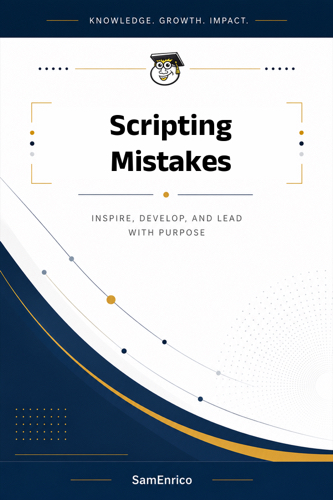
Free sample
Chapter 1: The Compiler's Lie...--The compiler said your code was fine. It ran without errors. The tests passed—all twelve of them. You deployed on a Friday afternoon, high-fived your teammates, and went home feeling like a champion.Then the pager went off at 2:47 AM.Not a crash. Not an exception.
Just a slow, creeping degradation. The system was still running, but it was getting slower by the hour. By Monday morning, the database connection pool was exhausted. The payment queue had 40,000 stalled transactions. Your "working code" had cost the company $87,000 in failed charges and customer support tickets.The code worked.
That was never the problem.The problem was that "working" is the lowest possible bar. A sandwich that won't kill you is technically "working." A car that starts but has no brakes is technically "working." Your code compiled, and you mistook that for goodness.This chapter dismantles the most expensive mistake in software development: the belief that correct execution equals correct design. You will learn why your colleagues secretly hate maintaining your code, why technical debt is compound interest on laziness, and how one broken window invites a thousand more. Most importantly, you will learn to distinguish between tactical programming (shipping features today) and strategic programming (building systems that last for years).By the end of this chapter, you will never look at a green test suite the same way again.The Day Working Code Bankrupted a Rocket Let us begin with a cautionary tale that costs $370 million to tell.On June 4, 1996, the European Space Agency launched the Ariane 5 rocket. It was the rocket's first flight.
Onboard were four scientific satellites worth half a billion dollars. The launch was flawless for the first 36 seconds. Then the rocket veered off course, triggered its self-destruct mechanism, and exploded in a fireball over French Guiana.The cause? A single line of code that worked perfectly.Here is what happened. The Ariane 5 used guidance software inherited from the Ariane 4 rocket.
The software contained a routine that converted a 64-bit floating point number (the rocket's horizontal velocity) into a 16-bit signed integer. On Ariane 4, this conversion was safe because the horizontal velocity never exceeded the 16-bit limit. On Ariane 5, the horizontal velocity was much higher. The number overflowed. The software threw an exception.
The exception crashed the guidance computer. The backup computer was running the same software. It crashed too. The rocket had no…
This is the end of the free sample. Get the Audiobook to keep going. Buy now
About this book
Details
- Author
- Estrada Molly
- Publisher
- SamEnrico
- Language
- English
- Genre
- Non-Fiction, Self-Help / Mistakes
- Released
- 2026-06-06
- Pages (approx.)
- 129
- Available as
- eBook, Audiobook

Listen in the VoxFlicks app
Audiobooks and audio dramas wherever you go. Sign in with your SamEnrico account and press play.
More by Estrada Molly
 I Statements for AssertivenessEstrada Molly$11.99
 Weekly Interruption Audit GuideEstrada Molly$11.99
 Napoleon Death Theories GuideEstrada Molly$11.99
 Fluency Persuasion GuideEstrada Molly$11.99
 Charlie Munger PartnerEstrada Molly$11.99
 Fishing Trip Alibi CheckEstrada Molly$11.99
 Golfer's Elbow Rehabilitation PlanEstrada Molly$11.99
 The Freelance Automated InvoicingEstrada Molly$11.99
 The Great Unmasking: How the Internet Outed a Secret SocietyEstrada Molly$11.99
 The Battle of the Bulge: Hitler's Last Gamble in the ArdennesEstrada Molly$11.99
 The Complete Guide to the No Fad DietEstrada Molly$11.99
 US Visa Interview For Art StudentsEstrada Molly$12.99
You may also like
 Pain Meditation MistakesBourque Jolyn$11.99
 Remote Work MistakesSherill Paris$11.99
 Parent Time MistakesSimpson Marian$11.99
 Chunking MistakesDoan Sarina$11.99
 Grit Mistakes GuideChandler Natalie$11.99
 Memory Palace MistakesAmmons Jina$11.99
 Interruption MistakesEdmonds Darcy$11.99
 Habit Mistakes GuideStrauss Asha$11.99
 Goal Setting MistakesLemieux Arnetta$11.99
 Difficult Conversation MistakesChamberlain Sharron$11.99
 Anticipatory Grief MistakesMarcum Talisha$11.99