
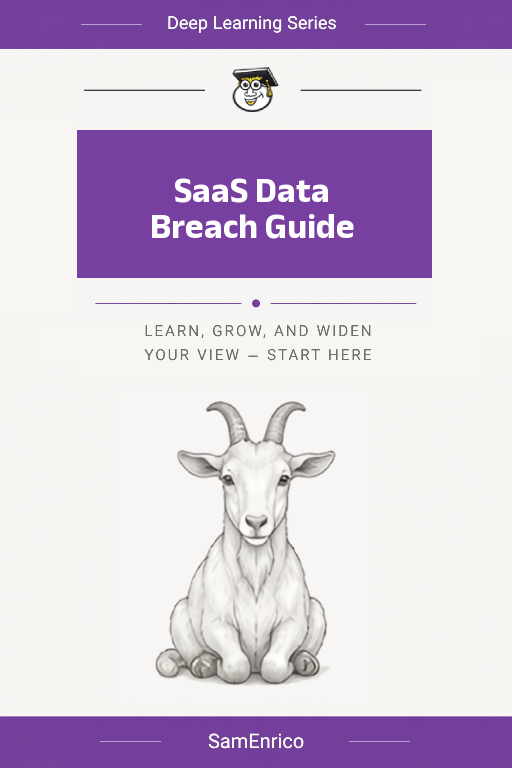
Non-FictionCompliance & Risk ArchiveSaaS
SaaS Data Breach Guide eBook
SaaS provider breach notification obligations and
SaaS provider breach notification obligations and customer responsibilities under data protection laws.
Formats
Free sample
Chapter 1: The 2 AM Call--–- The phone rang at 2:14 AM on a Tuesday. Sarah Chen, CFO of a mid-sized e-commerce company with $47 million in annual revenue, was in the middle of a dream about spreadsheets – which told you everything about her life – when the ringtone she reserved for emergencies dragged her out of sleep. Her hand fumbled for the i Phone on her nightstand. The caller ID read: "Vendorpilot – Support Emergency." Vendorpilot was her company's Saa S payroll and HR platform. They processed every paycheck, every W-2, every direct deposit authorization for 1,200 employees.
Sarah answered."Ms. Chen, this is Derek from Vendorpilot Security. I'm required to inform you that we are investigating a potential security incident involving your account's data partition."Sarah sat up, her heart now beating at a pace that felt dangerous. "What does that mean? What data?""I can't share details while the investigation is ongoing.
But I needed to notify you per our contractual obligations. We'll send a follow-up email within 48 hours.""48 hours? You called me at 2 AM to tell me you'll email me in two days?""I'm sorry, ma'am. That's our protocol."The line went dead.Sarah didn't sleep for the remaining four hours before dawn. She sat in the dark, staring at her phone, refreshing her email every thirty seconds.
Nothing came. By 8 AM, she had called her legal counsel, her insurance broker, and the company's CISO – who reminded her that they didn't actually have a full-time CISO; they had a part-time contractor who came in on Thursdays.By Thursday, the email finally arrived. It was three paragraphs of carefully crafted ambiguity: "We have determined that unauthorized access may have occurred. Based on our preliminary analysis, we believe no sensitive data was exfiltrated. We are continuing to investigate.
We recommend you monitor your employees' accounts for unusual activity."Sarah read it four times. "May have occurred." "Preliminary analysis." "We believe." These were not words that inspired confidence. She forwarded it to her lawyer, who responded with a single sentence: "Call me immediately."That phone call changed everything. The lawyer explained that Sarah's company – not Vendorpilot – was legally responsible for notifying the 1,200 employees whose data might have been stolen. Under the California Consumer Privacy Act (CCPA), if the breach involved California residents, Sarah's company faced potential fines of up to 7,500perintentionalviolation.Underthe Health Insurance Portabilityand Accountability Act(HIPAA),ifanyhealthbenefitdatawasinthosepayrollfiles,thefinesstartedat7,500 per intentional violation.
Under the Health Insurance Portability and Accountability Act (HIPAA), if any health benefit data was in those payroll files, the fines started at 7,500perintentionalviolation.Underthe Health Insurance Portabilityand Accountability Act(HIPAA),ifanyhealthbenefitdatawasinthosepayrollfiles,thefinesstartedat50,000. And under their contract with Vendorpilot, the provider's total liability was capped at twelve months of service fees – which came to roughly $18,000. Eighteen thousand dollars. For a breach that could cost her company millions.Sarah learned a brutal lesson in what this book calls the Shared Responsibility Paradox. She had moved her company's most sensitive employee data to the cloud because Vendorpilot promised bank-level security, SOC 2 certification, and 24/7 monitoring.
She believed – as most executives do – that using a Saa S provider meant transferring risk. It did not. The software was in the cloud. The accountability was still on her desk.This book is written for everyone who has received that 2 AM call, or who will. By the time you finish these twelve chapters, you will understand exactly what your Saa S provider is obligated to do when a breach occurs – and, more importantly, what they are not obligated to do.
You will learn how to read a breach clause the way a litigator reads it, not the way a salesperson wrote it. You will know which regulatory deadlines apply to your specific data and your specific customers. You will have model contract language, checklists, and tabletop exercises that transform passive fear into active preparation.But before any of that, you must internalize the single most important sentence in this book: You can outsource the software, but you cannot outsource accountability. The cloud does not absolve. The vendor's insurance does not protect you.
The contract's liability cap is designed to protect the vendor, not you. Your job is not to trust your Saa S providers. Your job is to verify, negotiate, and prepare.Let us begin with the statistical reality that makes this book necessary.The Numbers That Should Keep You Awake The 2024 Verizon Data Breach Investigations Report, which analyzes thousands of confirmed breaches annually, contains a finding that should be laminated and taped to every CFO's monitor: 69 percent of large-scale breaches now involve third-party supply chains. That means in more than two out of three major data breaches, the point of entry was not the victim's own systems but a vendor, contractor, or Saa S provider they trusted.Think about that number for a moment. If you are a company of any size, the most likely way a hacker will steal your customer data is not through your firewall, your VPN, or your employee's laptop.
It is through a Saa S vendor you invited into your ecosystem. You paid them. You signed a contract with them. You probably never negotiated the security terms because you assumed they were standard and you were in a hurry to get the software deployed.The 2023 IBM Cost of a Data Breach Report adds another layer of alarm: breaches originating through a third party take an average of 74 days longer to identify and contain than breaches originating on internal systems. Why?
Because the victim company is dependent on the vendor to detect the breach, investigate it, and report it. If the vendor is slow, the victim pays the price. And vendors have every incentive to be slow.The Ponemon Institute's 2024 Data Risk in the Third-Party Ecosystem study found that 53 percent of companies have experienced a data breach caused by a third party, but only 32 percent maintain an up-to-date inventory of all third parties with access to their sensitive data. Put differently: most companies cannot name all the Saa S vendors who hold their customer data, but most have already been breached through one of them.These statistics are not abstract. They are the product of thousands of hours of forensic investigation, millions of dollars in regulatory fines, and careers destroyed by reputational collapse.
They are also the reason this book exists.From On-Premise to Saa S: The Migration of Risk To understand why Saa S breaches create such confusing liability, you must understand the evolution of enterprise software risk. In the era before cloud computing – let us call it the Jurassic Period of IT, roughly 1995 to 2010 – companies ran software on their own servers in their own data centers. If you wanted payroll software, you bought a license, installed it on a server in a locked room, and hired someone to maintain it.In that world, risk was clear. You owned the hardware, the operating system, the network, the physical access controls, and the data. If a breach occurred, it was your fault, your problem, and your fine.
No ambiguity. No finger-pointing at vendors. The buck stopped at your own data center door.Then came the cloud. Saa S vendors promised that they would handle the hardware, the security patches, the backups, the disaster recovery, and…
This is the end of the free sample. Get the eBook to keep going. Buy now
About this book
Details
- Author
- Lavigne Dotty
- Publisher
- SamEnrico
- Language
- English
- Genre
- Non-Fiction, Compliance & Risk Archive, SaaS
- Released
- 2026-05-29
- Pages (approx.)
- 156
- Available as
- eBook, Audiobook

Read better in the ZLOADR app
Your eBooks on your phone or tablet. Sign in with your SamEnrico account and start reading.
More by Lavigne Dotty
 Binge Eating Self Compassion CourseLavigne Dotty$11.99
 Deep Sleep Hypnosis Script GuideLavigne Dotty$11.99
 Personal Ing For Success Remote WorkersLavigne Dotty$11.99
 Morning Routine Distraction ShieldLavigne Dotty$11.99
 Cortisol and Brain Fog RecoveryLavigne Dotty$11.99
 The Last Oracle of Delphi: A Demand for TruthLavigne Dotty$11.99
 The Tides of Calculus: How a Forgotten Mathematician Charted the South China SeaLavigne Dotty$11.99
 How to Start a Fats (edible) Business (Beginners Guide)Lavigne Dotty$11.99
 Electric Linear Dichroism TechnicianLavigne Dotty$11.99
 Understanding Ectrodactyly PolydactylyLavigne Dotty$17.99
You may also like
 Hong Kong Handover 1997Dunn Johnnie$11.99
 Zumba For Postnatal Recovery CourseNeal Christian$11.99
 Zumba for BeginnersLadner Nikia$11.99
 YouTube Comment Mining GuideHumes Pandora$12.99
 Worry Box MeditationCarlin Rudy$11.99
 Workplace Stress MeditationNguyen Lynn$11.99
 Workplace Stress and Sleep RepairHawley Ivory$11.99
 Workplace Perfectionism CureDelaney Jeffry$11.99
 Workplace Injustice Anger GuideWallen Isabelle$11.99
 Work Addiction and Burnout LinkGreenwood Ester$11.99
 Women in Yoga and WellnessBeattie Galina$11.99
 Women in Stand Up ComedyChun Evangeline$11.99