
Non-FictionTrue CrimeCyber Warfare
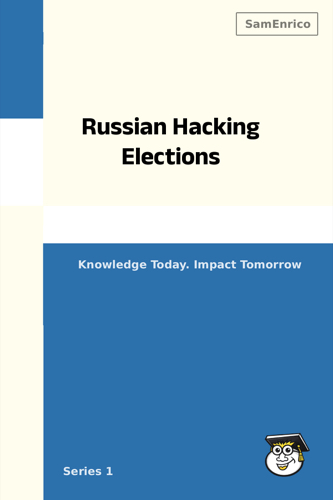
Russian Hacking Elections eBook
Trace the cyber operations interfering with US and
Trace the cyber operations interfering with US and European democratic processes.
Formats
Free sample
Chapter 1: The Thousand Cuts...--It began not with a bang, not with a crashing server or a blaring alarm in a CIA war room, but with a single, almost laughably mundane click of a mouse. The date was March 19, 2016. The location was a campaign office in Brooklyn, New York, though the click itself could have happened in a thousand identical offices across America—a staffer rushing through emails, a tired aide trying to clear an inbox before dinner. The target was John Podesta, the chairman of Hillary Clinton’s presidential campaign. He was a seasoned Washington operative, a man who had served as White House chief of staff under Bill Clinton and counselor to Barack Obama.
He was not a fool. He was not technically illiterate. He was, by any measure, a sophisticated consumer of information. And yet, at 4:27 PM Eastern Time on that spring Saturday, he did exactly what the men in Moscow had spent months betting he would do.He trusted an email.The message appeared to come from Google Security. It warned that someone had tried to access Podesta’s Gmail account from an unfamiliar device in Ukraine.
“We recommend you change your password immediately,” the email read, with a helpful blue button labeled “Change Password.” It was clean, professional, and utterly fake. Behind that button sat a server controlled by a unit of Russian military intelligence known to the cybersecurity community as Fancy Bear, or APT 28. But on that March afternoon, none of those names mattered. What mattered was a single human decision: Podesta forwarded the email to a campaign aide, who mistakenly replied, “This is a legitimate email.” Podesta clicked. In less than sixty seconds, the door to the Democratic Party’s most sensitive communications swung open.
And for the next six months, the men in Moscow would read every word.This is the story of that click, and of the hundred years of history, the thousand smaller intrusions, and the systematic exploitation of democratic vulnerability that made it possible. It is a story that has been told in fragments—in indictments, in intelligence reports, in congressional testimony, and in the best-selling books that have traced the arc of Russian interference from the Cold War to the age of social media. But those fragments have rarely been assembled into a single, coherent narrative. What follows is an attempt to do just that: to trace the cyber operations that disrupted the 2016 US presidential election, that tested the defenses of European democracies, and that continue to threaten the very idea that free and fair elections are possible in an age of digital warfare.This book argues a simple but uncomfortable thesis: the Russian hacking of the 2016 election was not an isolated incident, not a one-off act of espionage, and not a product of Donald Trump’s unique political vulnerabilities. It was the culmination of a 100-year history of what Russian intelligence calls aktivnyye meropriyatiya—active measures.
It was a playbook written in the KGB’s Fifth Directorate, refined during the Cold War, adapted for the internet age, and executed with chilling precision by an intelligence apparatus that understands democratic societies better than those societies understand themselves. And unless democracies learn the lessons of that history, the click that doomed Hillary Clinton’s campaign will be repeated—again, and again, and again.The Long Shadow of Active Measures To understand what happened in 2016, one must first understand that Russia did not invent election hacking. What Russia invented was a doctrine of political warfare designed to break adversaries without firing a single shot. The term aktivnyye meropriyatiya emerged from the Soviet KGB in the 1950s, but its roots run deeper—to the 1920s, when the Bolsheviks created a fake anti-communist organization called the Trust. The Trust was a masterpiece of deception.
It claimed to be a network of Russian émigrés plotting to overthrow the Soviet regime. In reality, it was a Soviet intelligence operation designed to lure real anti-communists back to Russia, where they were arrested or killed. The Trust’s most famous victim was the British novelist and spy Somerset Maugham, who was fed disinformation for years. But the Trust’s true legacy was methodological: it proved that the most effective way to destroy an enemy was to make him destroy himself.The KGB institutionalized this insight. Throughout the Cold War, active measures included forgeries, propaganda, manipulation of media, and the cultivation of “useful idiots”—Western intellectuals and politicians who unknowingly served Soviet interests.
The KGB’s Fifth Directorate, where Vladimir Putin served as a young officer in the 1970s and 1980s, was specifically tasked with suppressing dissent at home and destabilizing democracies abroad. Its playbook was simple: identify existing social divisions—race, class, religion, ideology—and exploit them. In the United States, the KGB funded anti-war movements, spread false rumors that AIDS was a CIA weapon, and forged letters purporting to show American racism. In Europe, the KGB funneled money to far-left and far-right parties alike, calculating that any faction that weakened the political center served Soviet interests.By the time Putin became president in 1999, he had absorbed these lessons. But he also recognized that the Cold War playbook needed updating.
The collapse of the Soviet Union had been caused not by military defeat but by a loss of ideological legitimacy—by the realization that Soviet citizens had been lied to for generations. Putin’s conclusion, drawn from his own experience as a KGB officer in East Germany during the fall of the Berlin Wall, was that Western democracies were vulnerable to the same fate. They believed their own propaganda about freedom, democracy, and the rule of law. They assumed that their institutions were robust enough to withstand external pressure. They were wrong.In 2013, Russia’s chief of the General Staff, Valery Gerasimov, published an article that laid out the new doctrine.
“The very ‘rules of war’ have changed,” Gerasimov wrote. “The role of non-military means of achieving political and strategic goals has grown, and in many cases they have exceeded the power of force of weapons in their effectiveness.” He described a form of warfare that blurred the lines between peace and conflict, between soldiers and hackers, between war and information. It was a doctrine perfectly suited to the internet age, where a single well-placed leak could do more damage than a battalion of tanks. And it was a doctrine that America, in its post-Cold War complacency, had forgotten how to counter.The Architecture of Deception The Russian interference campaign that unfolded in 2016 was not the work of a single agency or a single technique. It was a symphony of coordinated operations, each designed to complement the others.
Understanding that architecture is essential to understanding the full scope of what happened.At the highest level, the operation was directed by the Russian state, with Vladimir Putin at its apex. The evidence for this is now overwhelming. The Mueller investigation, the Senate Intelligence Committee, and multiple intelligence agencies have all concluded that Putin personally authorized the campaign. The goal was not merely to help Donald Trump, though that was certainly a consequence. The goal was to undermine faith in American democracy—to prove that the United States was…
This is the end of the free sample. Get the eBook to keep going. Buy now
About this book
Details
- Author
- Woody Chasity
- Publisher
- SamEnrico
- Language
- English
- Genre
- Non-Fiction, True Crime, Cyber Warfare
- Released
- 2026-06-10
- Pages (approx.)
- 150
- Available as
- eBook, Audiobook

Read better in the ZLOADR app
Your eBooks on your phone or tablet. Sign in with your SamEnrico account and start reading.
More by Woody Chasity
 The Beginner Mindful ExerciseWoody Chasity$11.99
 Shopping Addiction Recovery Milestones ManualWoody Chasity$11.99
 Name Recall for Networking EventsWoody Chasity$11.99
 TikTok Perfectionism Escape PlanWoody Chasity$11.99
 The Silent Senate: How Hiram Rhodes Revels Broke Barriers in a Divided AmericaWoody Chasity$11.99
 How to Start a Avocado Growing Business (Beginners Guide)Woody Chasity$11.99
 China Student Visa ExtensionWoody Chasity$12.99
 Health Product Fit BoPWoody Chasity$12.99
 Understanding Congenital Dyserythropoietic AnemiaWoody Chasity$17.99
 Nursing AssistantWoody Chasity$11.99
You may also like
 Hong Kong Handover 1997Dunn Johnnie$11.99
 Zumba For Postnatal Recovery CourseNeal Christian$11.99
 Zumba for BeginnersLadner Nikia$11.99
 YouTube Comment Mining GuideHumes Pandora$12.99
 Worry Box MeditationCarlin Rudy$11.99
 Workplace Stress MeditationNguyen Lynn$11.99
 Workplace Stress and Sleep RepairHawley Ivory$11.99
 Workplace Perfectionism CureDelaney Jeffry$11.99
 Workplace Injustice Anger GuideWallen Isabelle$11.99
 Work Addiction and Burnout LinkGreenwood Ester$11.99
 Women in Yoga and WellnessBeattie Galina$11.99
 Women in Stand Up ComedyChun Evangeline$11.99