
Non-FictionSelf-HelpReading Skills
Reading Comprehension Working Memory eBook
Retain earlier sentences while reading longer pass
by Noel Lonnie
Retain earlier sentences while reading longer passages.
Formats
Free sample
Chapter 1: The Vanishing Sentence--–- You have just read the first sentence of this chapter. Do not look back at it. Without scrolling, without cheating, answer this question: What did the first sentence say?If you hesitated, if you felt a small lurch of uncertainty, if you found yourself thinking "It was something about... no, wait, what was it?" — then you have just experienced the single most common and least understood frustration in all of reading. You have met the leaky bucket.This book is about why that happens, why it is not your fault, and what you can do about it starting today.The Universal Experience No One Talks About Let us begin with an experiment.
Read the following paragraph one time only. Read it at your normal pace. Do not reread any sentence. When you finish, close your eyes.*"The 1924 expedition, led by the British mountaineer Edward Norton, reached a record altitude of 8,573 meters without supplemental oxygen, a feat that would not be surpassed for thirty years. Norton's route traversed the treacherous North Face, where a band of yellow limestone, later dubbed the 'Yellow Band,' presented nearly vertical climbing at 8,000 meters.
Above this band, Norton encountered a geological formation known as the 'Geneva Spur,' which forced him to traverse laterally across loose scree while his vision began to blur from hypoxia. Despite turning back only 300 meters from the summit, Norton's climb demonstrated that the human body could survive extreme altitude without bottled oxygen, fundamentally changing how physiologists understood acclimatization. Yet when Tenzing Norgay and Edmund Hillary finally stood on the summit in 1953, they used supplemental oxygen, igniting a decades-long debate about whether their ascent was 'pure' compared to Norton's unsupported effort."*Now. Without looking back, answer these three questions:What altitude did Norton reach?What was the name of the geological feature that forced him to traverse laterally?Who ignites the debate at the end of the paragraph?If you answered 8,573 meters, the Geneva Spur, and Tenzing and Hillary, you have an exceptionally strong working memory for this type of text. You are in the minority.
Most readers will recall perhaps one of those three details. Many will recall none. And here is the crucial insight: this has nothing to do with how smart you are.I have watched Ph D students in English literature fail this test. I have watched medical residents forget the Geneva Spur two seconds after reading it. I have watched a professional book editor — someone who reads for a living — correctly answer zero of three questions after reading the same paragraph.They are not stupid.
They are not lazy. They are not "bad readers."They are leaking.The Leaky Bucket: A Mental Model for Your Memory Imagine you are holding a bucket. This bucket has a fixed size — it cannot expand no matter how hard you try. Now imagine that every word, every phrase, every clause you read is a drop of water. You pour these drops into your bucket as you read.
But here is the problem: the bucket has holes. Small holes, at first. But as you keep reading, the holes get larger. By the time you reach the end of a long sentence, the water from the beginning of that sentence has already drained out.This is the leaky bucket phenomenon. Your working memory is the bucket.
The text is the water. And the holes are the natural, inevitable limits of how your brain holds and manipulates verbal information.But let me refine this metaphor because the bucket is actually worse than you think. Your working memory is not just a bucket that leaks slowly over time. It is a bucket that gets kicked every time you encounter a new word. Every new sentence is a kick.
Every difficult vocabulary word is a kick. Every time you have to figure out what a pronoun refers to — another kick. Each kick sloshes water out. And once the water is gone, it is gone. You cannot get it back by trying harder.
You cannot will the water to stay. You can only stop kicking so much, or you can learn to carry a different container.This chapter is about understanding the container. Subsequent chapters will teach you how to replace it.Decoding Versus Comprehension: The Critical Distinction Before we go any further, I need you to understand a distinction that most people never consciously make. It is the difference between decoding and comprehension.Decoding is the mechanical process of turning written symbols into sounds and words. When you see the letter sequence "c-a-t," decoding is what allows you to say "cat" — either aloud or in your head.
Decoding is the plumbing of reading. It is necessary but not sufficient. A child who has just learned phonics can decode "The cat sat on the mat" perfectly. They can say every word. They can point to each letter.Comprehension is different.
Comprehension is building meaning from those decoded words. It is understanding that "cat" refers to a furry animal, that "sat" is an action in the past, that the cat is located on top of the mat. Comprehension is the architecture. You can have perfect plumbing and still live in a shack.Here is the shocking fact: you can decode every word of a paragraph and understand absolutely nothing. Medical students do this constantly.
They read a page of a textbook, reach the bottom, and realize they have no idea what they just read. They decoded perfectly. They did not comprehend at all.Why? Because decoding consumed all of their working memory. They had no space left for comprehension.This is the hidden trap of difficult texts.
When you encounter an unfamiliar word — say, "antediluvian" or "proprioceptive" or "epistemological" — your brain has to work hard to decode it. That work costs attention. That attention comes from a limited pool. And if you spend too much of that pool on decoding, you have nothing left for holding onto the sentence you started five seconds ago.Let me give you a concrete example. Read this sentence:"The antediluvian manuscript, its vellum cracked and its inks faded to sepia, contained a genealogy that traced the king's lineage back to the mythological era of demiurges and primordial chaos."You probably decoded every word.
You might even know what "antediluvian" means (before the biblical flood). But ask yourself: what was the manuscript's condition? What did it contain? Whose lineage did it trace? If you can answer all three, your working memory handled that dense sentence well.
If you can answer only one or two, your decoding of "antediluvian" and "demiurges" and "primordial chaos" consumed so much attention that the earlier parts of the sentence — "vellum cracked," "inks faded to sepia" — fell out of the bucket before you reached the period.This is not a reading problem. This is a resource allocation problem. And it is the central problem this book exists to solve.Working Memory Versus Short-Term Memory: Why Most People Have It Backward At this point, you might be thinking, "I have a bad memory. I have always had a bad memory. That is why I forget the beginnings of sentences."You are almost certainly wrong.
Let me explain why.Psychologists distinguish between short-term memory (STM) and working memory (WM) . Most people use these terms interchangeably.…
This is the end of the free sample. Get the eBook to keep going. Buy now
About this book
Details
- Author
- Noel Lonnie
- Publisher
- SamEnrico
- Language
- English
- Genre
- Non-Fiction, Self-Help, Reading Skills
- Released
- 2026-06-09
- Pages (approx.)
- 147
- Available as
- eBook, Audiobook

Read better in the ZLOADR app
Your eBooks on your phone or tablet. Sign in with your SamEnrico account and start reading.
More by Noel Lonnie
 Name Recall for Occupational TherapistsNoel Lonnie$11.99
 Maren Morris My ChurchNoel Lonnie$11.99
 Annual vs Monthly Subscription RetentionNoel Lonnie$11.99
 The Stress Apology HandbookNoel Lonnie$11.99
 Keto For Beginners WorkbookNoel Lonnie$11.99
 Quit Smoking Cold Turkey GuideNoel Lonnie$11.99
 George H W Bush GuideNoel Lonnie$11.99
 The Fox of the Alps: Hannibal's Genius and the Art of WarNoel Lonnie$11.99
 The Last Flight of the Icebreaker: The Arctic Rescue That Defied the Cold WarNoel Lonnie$11.99
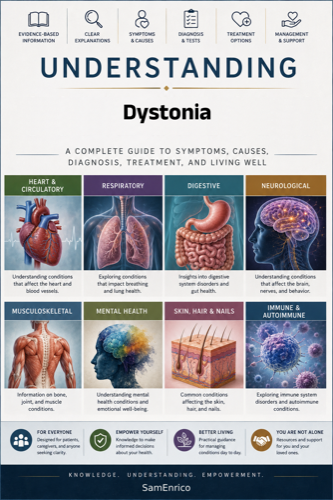 Understanding DystoniaNoel Lonnie$11.99
 How to Start a Nurse (private) Business (Beginners Guide)Noel Lonnie$11.99
 How to Produce Free Weight Storage RacksNoel Lonnie$11.99
You may also like
 Hong Kong Handover 1997Dunn Johnnie$11.99
 Zumba For Postnatal Recovery CourseNeal Christian$11.99
 Zumba for BeginnersLadner Nikia$11.99
 YouTube Comment Mining GuideHumes Pandora$12.99
 Worry Box MeditationCarlin Rudy$11.99
 Workplace Stress MeditationNguyen Lynn$11.99
 Workplace Stress and Sleep RepairHawley Ivory$11.99
 Workplace Perfectionism CureDelaney Jeffry$11.99
 Workplace Injustice Anger GuideWallen Isabelle$11.99
 Work Addiction and Burnout LinkGreenwood Ester$11.99
 Women in Yoga and WellnessBeattie Galina$11.99
 Women in Stand Up ComedyChun Evangeline$11.99