
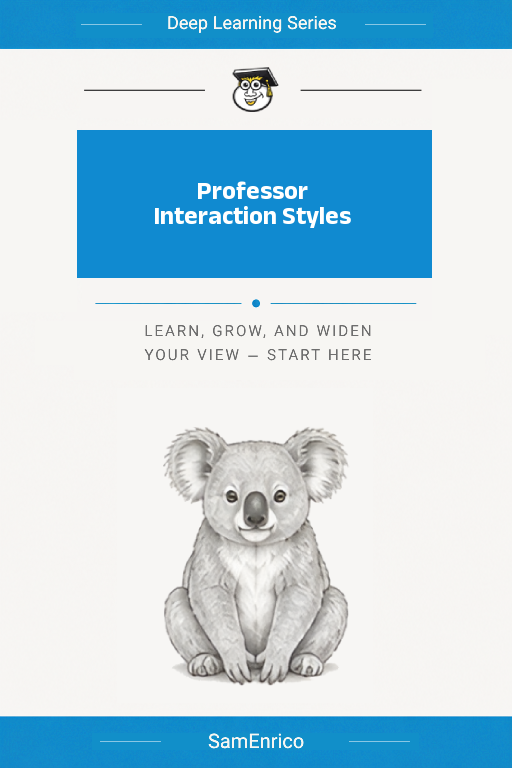
Non-FictionStudent's ShortcutAcademic Culture
Professor Interaction Styles eBook
Compare office hours (US), tutorials (UK), and lec
Compare office hours (US), tutorials (UK), and lectures (Australia) for student-faculty engagement.
Formats
Free sample
Chapter 1: The Open Door Trap--–- The email arrived at 11:47 PM on a Tuesday. Dr. Elena Vasquez, a third-year associate professor of political science at a large public university in the Midwest, had just finished grading fifteen poorly argued essays on international trade agreements. The subject line read: “Urgent question about my grade.” The body of the email contained a single sentence: “I came to your office hours twice but you weren’t there. This isn’t fair.” Elena stared at the screen.
She had held her office hours religiously every Tuesday and Thursday from 2:00 to 4:00 PM. She had sat alone in her windowless office for all but twenty minutes of the past six weeks. The student who sent the email had never appeared. But the student’s accusation—whether true or false—tapped into a deeper anxiety that Elena had been carrying since she started teaching: she had no idea whether her office hours were actually helping anyone, and she suspected that the students who needed them most were the ones who never came.This chapter dissects the uniquely American model of student-faculty interaction: the scheduled, voluntary, one-on-one or small-group “office hour.” On the surface, office hours appear to be the embodiment of democratic access—an open door, a willing ear, a professor ready to help. But beneath that welcoming veneer lies a complex, often dysfunctional system that I call the Open Door Trap.
The trap is simple: the students who show up get ahead, and the students who don’t fall further behind. The professor waits passively, assuming that the absence of visitors means the absence of need. Meanwhile, the gap between those who know how to ask for help and those who do not widens with every empty hour. This chapter will argue that the US office hour, as traditionally practiced, is not a solution to student disengagement but a mirror of it. It rewards the already confident, confuses the novice, and places the burden of initiation entirely on the very people who least know how to initiate.
We will explore the historical roots of office hours, their hidden curriculum, the role of teaching assistants, and—most importantly—a set of practical, evidence-based reforms that can transform the open door trap into a genuine gateway for all students.The Hidden History of the Office Hour To understand why office hours look the way they do, we have to go back to the late nineteenth century. Before 1870, American higher education was a rigid, uniform affair. Students attended prescribed classes, recited memorized material, and rarely spoke to professors outside of the lecture hall. The German research university model, imported to Johns Hopkins and then Harvard, changed everything. Professors were no longer just teachers; they were scholars expected to produce original research.
The lecture hall became the stage for knowledge dissemination, but the real intellectual work—the mentoring, the debate, the apprenticeship—moved into the professor’s study. That study eventually became the office, and the time set aside for students became “office hours.”For most of the twentieth century, office hours were a luxury of elite institutions. At small liberal arts colleges, a professor might have three or four office hours per week and see a handful of students. At large state universities, office hours were often sparsely attended, and no one worried much about it because the assumption was that students who needed help would find it. That assumption began to crack in the 1980s and 1990s, as access to higher education expanded and first-generation college students entered universities in record numbers.
These students did not know the unwritten rules: that you were supposed to go to office hours, that you should come with specific questions, that the professor actually wanted you to show up. The result was a two-tiered system. Students with college-educated parents learned to treat office hours as a resource. Students without that cultural capital stayed away, mistaking the professor’s open door for a trap—a place where you might reveal your ignorance and be punished for it.Today, office hours are nearly universal in US higher education. A 2018 survey of 150 colleges and universities found that 94% of faculty were required to hold at least two hours per week of office time.
Yet the same survey found that only 38% of students had ever attended office hours outside of a required assignment. The math is stark: millions of faculty hours sit empty every week, while millions of students struggle in silence. The open door is not enough. The door must be opened from the other side.The Low-Structure, High-Individualization Paradox Let me define what makes the US office hour distinct from the other interaction styles we will explore in later chapters. Unlike the UK Oxbridge tutorial, which has a rigid structure (a weekly essay, a Socratic interrogation, a fixed schedule), the US office hour is characterized by low structure and high individualization.
Low structure means that the student decides what to discuss: grades, confusion about a lecture, career advice, a personal crisis, or nothing at all. High individualization means that each visit is tailored to that specific student’s needs, with no standard agenda or outcome. On paper, this sounds ideal. In practice, it creates three major problems.First, low structure places an enormous cognitive burden on the student. To use office hours effectively, a student must: recognize that they are struggling, diagnose the specific nature of their struggle, formulate that diagnosis into a question, overcome any fear or shame about asking for help, find the professor’s office, enter the space, and then articulate the question clearly.
Each of these steps is a barrier. For a student who is already lost, the very act of articulating what they are lost about can feel impossible. I have watched students stand outside office doors for ten minutes, knock, and then say, “I don’t really have a question, I just feel behind.” That is not a failure of the student. It is a failure of the structure.Second, high individualization means that office hours are wildly inconsistent. One professor might use the time to review exam answers line by line.
Another might ask about the student’s career plans. A third might sit in silence waiting for the student to lead. There is no shared script, no common language, no predictable experience. For students who are already navigating multiple unfamiliar environments—a new campus, a new city, perhaps a new country—this unpredictability is exhausting. They would rather avoid the office hour than risk an awkward or humiliating encounter.Third, the combination of low structure and high individualization produces what I call the “transparency paradox.” Faculty assume that office hours are obviously useful because they are obviously available.
Students, especially those without prior college exposure, do not see the usefulness because no one has ever explained it to them. In one study, first-generation college students reported that they thought office hours were for “students who were failing” or “students who wanted to complain about grades.” They did not understand that office hours were also for clarifying lecture material, discussing ideas, or building professional relationships. The professor’s open door was invisible to them because they lacked the mental…
This is the end of the free sample. Get the eBook to keep going. Buy now
About this book
Details
- Author
- Damon Florencia
- Publisher
- SamEnrico
- Language
- English
- Genre
- Non-Fiction, Student's Shortcut, Academic Culture
- Released
- 2026-05-30
- Pages (approx.)
- 157
- Available as
- eBook, Audiobook

Read better in the ZLOADR app
Your eBooks on your phone or tablet. Sign in with your SamEnrico account and start reading.
More by Damon Florencia
 After Holiday Spending Hangover GuideDamon Florencia$11.99
 Values And Mission Alignment Complete GuideDamon Florencia$11.99
 Dream Creative Problem SolvingDamon Florencia$11.99
 Mindfulness for Impatient PeopleDamon Florencia$11.99
 Binge Eating Mindfulness Retreat GuideDamon Florencia$11.99
 Echoes of the Deep: The Lost Submarine That Changed the Cold WarDamon Florencia$11.99
 Understanding Congenital Adrenal Hyperplasia Due to 21-hydroxylase DeficiencyDamon Florencia$17.99
 BoP Customer Retention GuideDamon Florencia$12.99
 IT Support AssociateDamon Florencia$11.99
 How to Start a Shop Fronts Made of Wood Business (Beginners Guide)Damon Florencia$11.99
You may also like
 Hong Kong Handover 1997Dunn Johnnie$11.99
 Zumba For Postnatal Recovery CourseNeal Christian$11.99
 Zumba for BeginnersLadner Nikia$11.99
 YouTube Comment Mining GuideHumes Pandora$12.99
 Worry Box MeditationCarlin Rudy$11.99
 Workplace Stress MeditationNguyen Lynn$11.99
 Workplace Stress and Sleep RepairHawley Ivory$11.99
 Workplace Perfectionism CureDelaney Jeffry$11.99
 Workplace Injustice Anger GuideWallen Isabelle$11.99
 Work Addiction and Burnout LinkGreenwood Ester$11.99
 Women in Yoga and WellnessBeattie Galina$11.99
 Women in Stand Up ComedyChun Evangeline$11.99