
Non-FictionCapital & Valuation RegisterPrecedent Transactions
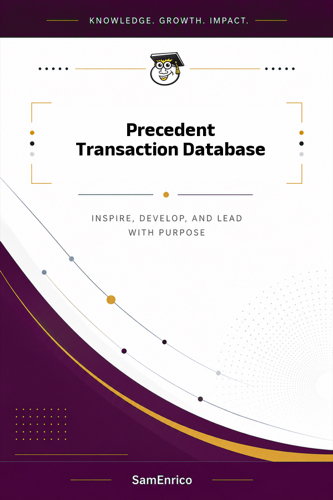
Precedent Transaction Database
Compare LBO multiples to similar past deals.
Compare LBO multiples to similar past deals.
Formats
About this book
Free sample
Chapter 1: The Valuation Trap--–- On a Tuesday morning in March 2019, a mid-market private equity firm called Sterling Capital Partners signed a term sheet to acquire Advanced Circuit Technologies (ACT), a niche manufacturer of aerospace components. The purchase price was $450 million, representing an 11.5x multiple of the company’s LTM EBITDA of $39.1 million. The deal team had worked eighteen-hour days for six weeks. They had run seven different sensitivity analyses, stress-tested the model against a 500-basis-point rise in interest rates, and secured a commitment letter from a reputable lender. By every internal metric they trusted, the deal worked.Eighteen months later, Sterling Capital wrote down the entire investment to zero.ACT did not go bankrupt because of fraud, mismanagement, or a cataclysmic industry event.
The company’s EBITDA actually grew by 4% during the holding period. What killed the deal was something more subtle and far more common: Sterling had paid the wrong multiple because they had compared their proposed LBO valuation to the wrong set of past transactions.The precedent transaction database they had assembled included fifteen deals. Fourteen were strategic acquisitions made by corporate buyers. One was an LBO. The median multiple in their database was 10.8x.
At 11.5x, they felt justified—they were paying only 70 basis points above the median. What they failed to understand, because no one had ever taught them the framework you are about to learn, was that the 10.8x median was polluted by strategic synergies. The true financial-buyer multiple for that sector, once you stripped out the effects of corporate synergies, was 9.2x. Sterling had overpaid by 230 basis points—not 70. That seemingly small error, compounded by the leverage in the capital structure, erased 100% of the equity value when the credit markets tightened in 2020.This book exists because of deals like ACT.
The central argument is simple: you cannot compare an LBO entry multiple to a database of past transactions without first understanding the fundamental divide between who buys and why they buy differently. Most practitioners ignore this distinction. They throw a dozen deals into a spreadsheet, calculate a median, and call it a day.…
This is the end of the free sample. Get the eBook to keep going. Buy now
Contents
- Chapter 1
- Chapter 2
- Chapter 3
- Chapter 4
- Chapter 5
- Chapter 6
- Chapter 7
- Chapter 8
- Chapter 9
- Chapter 10
- Chapter 11
- Chapter 12
Details
- Author
- Canales Roxann
- Publisher
- SamEnrico
- Language
- English
- Genre
- Non-Fiction, Capital & Valuation Register, Precedent Transactions
- Released
- 2026-06-11
- Pages (approx.)
- 142
- Available as
- eBook, Audiobook

Read better in the ZLOADR app
Your eBooks on your phone or tablet. Sign in with your SamEnrico account and start reading.
More by Canales Roxann
 NVC In Customer Support WorkbookCanales Roxann$11.99
 FTZ Growth OutlookCanales Roxann$11.99
 The Anapanasati Breath GuideCanales Roxann$11.99
 Loving Kindness For Sleep GuideCanales Roxann$11.99
 The Timbuktu Tally: Mathematicians of the Golden AgeCanales Roxann$11.99
 Tax Farming TaxCanales Roxann$11.99
 How to Start a Accounting Machine Business (Beginners Guide)Canales Roxann$11.99
 Understanding Sleepwalking DisorderCanales Roxann$17.99
 Middle East Sales Objections GuideCanales Roxann$12.99
 Course Creator Pricing GuideCanales Roxann$12.99
You may also like
 Hong Kong Handover 1997Dunn Johnnie$11.99
 Zumba For Postnatal Recovery CourseNeal Christian$11.99
 Zumba for BeginnersLadner Nikia$11.99
 YouTube Comment Mining GuideHumes Pandora$12.99
 Worry Box MeditationCarlin Rudy$11.99
 Workplace Stress MeditationNguyen Lynn$11.99
 Workplace Stress and Sleep RepairHawley Ivory$11.99
 Workplace Perfectionism CureDelaney Jeffry$11.99
 Workplace Injustice Anger GuideWallen Isabelle$11.99
 Work Addiction and Burnout LinkGreenwood Ester$11.99
 Women in Yoga and WellnessBeattie Galina$11.99
 Women in Stand Up ComedyChun Evangeline$11.99