
Non-FictionSelf-HelpBusiness Strategy
Pattern Recognition for Business eBook
Spot market trends and consumer patterns for strat
by Croft Neva
Spot market trends and consumer patterns for strategic advantage.
Formats
Free sample
Chapter 1: The $47 Billion Blind Spot--The meeting was scheduled for thirty minutes. It lasted twelve.Sarah Chen, Chief Product Officer of a mid-sized sneaker company we’ll call Apex Footwear, had prepared for weeks. Her team had compiled forty-seven dashboards. Three data scientists had run regression models on twelve million transaction records. A $2 million analytics budget had been deployed to answer one question: should they launch the new “vegan leather” line?The answer, according to the data, was a resounding yes.Surveys showed that sixty-eight percent of their target customers claimed they would pay a premium for sustainable materials.
Focus groups had reacted positively to the prototypes. Social listening tools detected a 340 percent increase in conversations around “cruelty-free fashion” over the previous eighteen months. The pattern seemed obvious. The trend was clear. The board approved a $15 million production run.Eight weeks after launch, Apex Footwear had sold just eleven percent of inventory.
Return rates were running at thirty-two percent. The “vegan leather” line was a catastrophe.Across town, a competitor we’ll call Terra Kicks had launched a nearly identical product at the exact same time. Same material supplier. Same price point. Same target demographic.
Their line sold out in eight hours.The difference? Terra Kicks called their material “plant-based performance wear.” They photographed it on a model who looked like she had just finished a trail run, not a boardroom presentation. They sold aspiration, not virtue. The material was identical. The story was not.Sarah’s team had all the data in the world.
They had dashboards coming out of their ears. What they didn’t have was the ability to distinguish between two very different kinds of information: loud data and signal data.Loud data is what everyone else can see. It’s the survey results that tell you what people say. It’s the trending hashtag that’s already peaked. It’s the focus group where participants perform their best selves rather than reveal their true preferences.
Loud data is abundant, comfortable, and almost completely useless for predicting the future.Signal data is the opposite. It’s quiet. It’s weird. It’s the color that keeps appearing in the background of Instagram photos but hasn’t been named a “trend” yet. It’s the purchase that contradicts everything the customer said in the survey.
It’s the micro-behavior—the hesitation, the glance, the comparison shop that goes nowhere—that reveals the truth beneath the story.Apex Footwear had drowned in loud data. Terra Kicks had found the signal.This book is about how to become Terra Kicks.The Most Expensive Word in Business Let me tell you about the most expensive word in business. It’s not “restructuring.” It’s not “litigation.” It’s not even “layoffs.”The most expensive word is “seems.”“The market seems to be moving toward sustainability.”“Our customers seem to want lower prices.”“The competition seems to be struggling with supply chain issues.”Every time you use the word “seems,” you are admitting that you are guessing. And in the modern economy, guessing costs billions.Consider Blockbuster. In 2000, a small startup called Netflix approached Blockbuster’s CEO with a proposition: buy us for $50 million, and we’ll run your online DVD-by-mail business.
Blockbuster passed. The CEO looked at the data—Blockbuster had $5 billion in revenue, Netflix had $5 million in losses—and said no. The pattern seemed obvious: physical stores were the business model that worked. Online was a niche for movie geeks.Blockbuster filed for bankruptcy in 2010. Netflix is worth over $200 billion today.Consider Kodak.
In 1975, a Kodak engineer named Steve Sasson invented the first digital camera. Management’s response was to lock it in a safe. The data told them that film was a $25 billion market. Digital seemed like a toy for hobbyists. They couldn’t see the pattern because the pattern required them to burn down their own business model.Kodak filed for bankruptcy in 2012.
The digital camera market is now worth more than film ever was.Consider Sears. In the 1990s, Sears had more data on American households than almost any other company. They knew what people bought, where they lived, how much they earned, and what they were likely to buy next. When Amazon launched as an online bookstore, Sears had every advantage: brand recognition, supply chains, customer relationships, and mountains of data.Sears is now essentially defunct. Amazon is worth nearly $2 trillion.Here’s what all these stories have in common.
In every case, the failing company had access to massive amounts of data. Blockbuster could see exactly how many movies were rented each night. Kodak had decades of film sales data. Sears had more customer information than the US Census Bureau.The problem was never data scarcity. The problem was pattern blindness: the inability to distinguish between the noise of the existing business and the signal of the future.Why Smart People Make Dumb Pattern Mistakes You might be thinking: “I’m not Blockbuster.
I’m not Kodak. My team knows what we’re doing.”That’s exactly what the Blockbuster and Kodak teams thought.The problem is not intelligence. The problem is how the human brain is wired. We are, every one of us, pattern recognition machines. It’s what brains do.
Your visual cortex processes millions of bits of information every second and assembles them into a coherent picture of the world. Your auditory system filters out background noise so you can hear a single conversation in a crowded room. Your memory compresses thousands of daily experiences into a handful of “lessons learned.”This is miraculous. It’s also a disaster for business strategy.Here’s why.We prefer stories to statistics. Your brain would rather hear a compelling narrative about why a trend won’t happen than study a probabilistic model that says it might.
Stories have heroes and villains and beginnings and ends. Statistics have standard deviations and confidence intervals and Bayesian updates. One feels satisfying. The other feels like homework.A study by researchers at Stanford found that when presented with the same information in story form versus statistical form, decision-makers were 63 percent more likely to remember the story and 47 percent more likely to act on it—even when the statistical version was objectively more accurate. We don’t just like stories.
We’re addicted to them.We anchor on the familiar. When confronted with something new, your brain’s first instinct is to find an analogy. “This new thing is like that old thing.” Sometimes this works. Often it fails catastrophically. The executives at Blockbuster didn’t see Netflix as a revolutionary business model.
They saw it as a DVD-by-mail service, which already existed as a tiny niche business called Netflix. They anchored on the familiar and missed the future.We prefer certainty to accuracy. Would you rather be confidently wrong or uncertainly right? Most people choose the first option. It feels better to be sure about a bad decision than to be unsure about a good one.
This is why executives love metrics like “customer satisfaction scores” and “Net Promoter Score.” These numbers feel solid and reliable. They also predict almost nothing about future behavior.A meta-analysis of sixty-seven studies…
This is the end of the free sample. Get the eBook to keep going. Buy now
About this book
Details
- Author
- Croft Neva
- Publisher
- SamEnrico
- Language
- English
- Genre
- Non-Fiction, Self-Help, Business Strategy
- Released
- 2026-06-07
- Pages (approx.)
- 144
- Available as
- eBook, Audiobook

Read better in the ZLOADR app
Your eBooks on your phone or tablet. Sign in with your SamEnrico account and start reading.
More by Croft Neva
 CRE Investor Tax DeductionsCroft Neva$11.99
 Grief Journal For Complicated LossCroft Neva$11.99
 1031 Exchange Drop and Swap StrategyCroft Neva$11.99
 Meth Recovery Nutrition HandbookCroft Neva$11.99
 Reed Hastings NetflixCroft Neva$11.99
 Resume Singapore GuideCroft Neva$11.99
 Female Veteran Master GuideCroft Neva$11.99
 Cedar Sauna RelaxationCroft Neva$11.99
 The Unstoppable Rise: How a Teenage Girl Defied the Odds and Won the World CupCroft Neva$11.99
 Silk and Secrets: The Bribery That Built VeniceCroft Neva$11.99
 Dust to Gold: The Untold Story of the Dust Bowl's Last Living WitnessCroft Neva$11.99
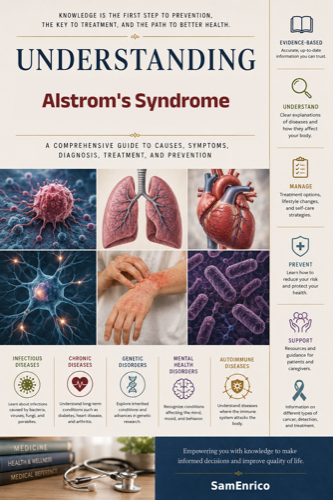 Understanding Alstrom's SyndromeCroft Neva$17.99
You may also like
 Hong Kong Handover 1997Dunn Johnnie$11.99
 Zumba For Postnatal Recovery CourseNeal Christian$11.99
 Zumba for BeginnersLadner Nikia$11.99
 YouTube Comment Mining GuideHumes Pandora$12.99
 Worry Box MeditationCarlin Rudy$11.99
 Workplace Stress MeditationNguyen Lynn$11.99
 Workplace Stress and Sleep RepairHawley Ivory$11.99
 Workplace Perfectionism CureDelaney Jeffry$11.99
 Workplace Injustice Anger GuideWallen Isabelle$11.99
 Work Addiction and Burnout LinkGreenwood Ester$11.99
 Women in Yoga and WellnessBeattie Galina$11.99
 Women in Stand Up ComedyChun Evangeline$11.99