
Non-FictionSelf-HelpPaper PlanningAnalog
Paper Based Priority Planner eBook
Design and use physical planners with built in Eis
by Atwood Brynn
Design and use physical planners with built in Eisenhower grid pages.
Formats
Free sample
Chapter 1: The Pixels Lie--The average smartphone user touches their device 2,617 times per day. The average knowledge worker switches between digital apps every forty-seven seconds. And the average professional—the person reading this sentence right now—will feel, before they finish this chapter, the familiar vibration of a notification that has absolutely nothing to do with their most important goal.This is not a coincidence. This is a business model.For the past fifteen years, the productivity industry has sold us a seductive promise: the right app, the right software, the right digital system will finally bring order to the chaos. Download Todoist.
Master Asana. Build the perfect Notion database. Sync it across five devices. Color-code your tasks. Set recurring reminders.
Connect it to your calendar. Automate your workflow. And yet, despite all of this—despite the hundreds of dollars spent on premium subscriptions, despite the hours lost to learning keyboard shortcuts, despite the 147 unread emails sitting in your inbox right now—you feel more overwhelmed than ever.The apps did not fail you. You did not fail the apps. The entire premise was wrong.This book makes a radical argument, one that will either liberate you or infuriate you: your digital task manager is not the solution to your overwhelm.
It is the cause. Every ping, every push notification, every infinite scroll of your task list is designed to keep you inside the app, not to help you leave it. The pixels on your screen are not neutral. They are addictive by architecture, distracting by design, and fundamentally incapable of doing what you actually need: helping you focus on what matters, ignore what doesn't, and think clearly for more than ninety seconds at a time.The solution is not a better app. The solution is no app at all.This chapter introduces the neurological, psychological, and practical case for paper.
You will learn why your brain treats a written task differently than a typed one, why a physical planner acts as an external hard drive for your limited attention, and why the simple act of putting pen to paper is one of the most subversive, effective, and liberating things you can do in an age of constant interruption. By the end of this chapter, you will understand why pixels fail and paper prevails. And you will be asked to make a thirty-day commitment that will change how you work forever.The Great Paradox of Digital Productivity Let us begin with an uncomfortable truth.In 1975, before the invention of the personal computer, the average office worker completed roughly the same number of tasks per week as the average office worker in 2024. Despite email, Slack, Asana, Trello, Monday.com, Click Up, Notion, and a thousand other tools designed to increase efficiency, we are not more productive. We are just busier.The difference is that the 1975 worker experienced downtime.
They waited for the typewriter to be free. They walked across the building to deliver a memo. They had lunch at a desk without checking anything because there was nothing to check. Their attention was their own for large portions of the day. Today, the average professional checks email seventy-seven times per day.
They open Slack forty times per day. They switch tasks every three minutes. They feel busy. They feel exhausted. They feel, most of all, like they are constantly behind on something they cannot quite name.This is the paradox of digital productivity.
We have more tools than ever, yet we feel less in control than ever. We have more data about our tasks than ever, yet we have less clarity about our priorities than ever. We have more ways to communicate than ever, yet we have less time to think than ever.The reason is simple, and it is the central thesis of this book: digital task managers are designed to maximize engagement, not completion. Every app you use has a financial incentive to keep you inside it. Todoist wants you to keep adding tasks.
Asana wants you to keep commenting on tasks. Notion wants you to keep reorganizing your workspace. These are not bugs. They are features. The app that truly helped you finish everything and close it forever would be a commercial failure.
The app that keeps you coming back, keeps you tweaking, keeps you feeling just productive enough to stay but just overwhelmed enough to upgrade—that is the successful app.You are not the customer. Your attention is the product. And your attention is being farmed.The Zeigarnik Effect: Why Your Brain Hates Unfinished Business In 1927, a young Lithuanian psychologist named Bluma Zeigarnik sat in a Vienna coffee shop, watching waiters take orders. She noticed something peculiar. A waiter could remember a complex order perfectly while the customer was still eating—but moments after the table was cleared, the waiter had no memory of what had been ordered at all.Zeigarnik had stumbled upon one of the most powerful and underappreciated discoveries in cognitive psychology.
The human brain has a remarkable ability: it holds unfinished tasks in a privileged mental space, looping them through working memory until they are resolved. Once a task is complete, the brain releases it, freeing up cognitive resources for the next challenge. But until that moment of completion, the task occupies mental real estate. It hums in the background. It drains your focus even when you are not actively thinking about it.Zeigarnik called this the Zeigarnik Effect, and it explains almost everything about modern overwhelm.When you have ten open loops in your head—a client email to answer, a project deadline looming, a difficult conversation you have been avoiding, a call you need to return, a gift you need to buy—your brain is not idle.
It is constantly, quietly, exhaustingly spinning all ten plates. You feel tired not because you are doing too much but because you are holding too much. The cognitive load of unfinished tasks is heavier than the effort of completing them.Here is where the trouble begins.Digital task managers exploit the Zeigarnik Effect for profit. When you add a task to Todoist, the app shows you a satisfying checkmark. It feels good.
But the task remains in the app. It remains incomplete. It remains an open loop. And because you can see it every time you open the app—because it is always there, always glowing, always reminding you that you have not finished it—your brain never releases it. The Zeigarnik Effect, which evolved to help you remember to hunt for food or gather firewood, becomes a torture device.
Your brain holds every unfinished task in your digital system because the system never signals completion. There is no closure. Only the endless scroll.Worse, digital apps have no natural boundary. You can add five hundred tasks to Asana. You can have fifty projects open in Notion.
You can have twenty conversations happening simultaneously in Slack. The app does not say, "Stop. You have enough." It says, "Create another task. Start another project. Organize this differently." The open loops multiply exponentially.
And your brain, faithful servant that it is, spins every single one.Paper Closes the Loop Paper works differently. Fundamentally, neurologically, irrevocably differently.When you…
This is the end of the free sample. Get the eBook to keep going. Buy now
About this book
Details
- Author
- Atwood Brynn
- Publisher
- SamEnrico
- Language
- English
- Genre
- Non-Fiction, Self-Help, Paper Planning, Analog
- Released
- 2026-06-08
- Pages (approx.)
- 147
- Available as
- eBook, Audiobook

Read better in the ZLOADR app
Your eBooks on your phone or tablet. Sign in with your SamEnrico account and start reading.
More by Atwood Brynn
 DoorDash Addiction RecoveryAtwood Brynn$11.99
 Armenian Immigrant EntrepreneursAtwood Brynn$11.99
 ABCDE for Wedding Planning GuideAtwood Brynn$11.99
 Childhood Growth Hormone GuideAtwood Brynn$11.99
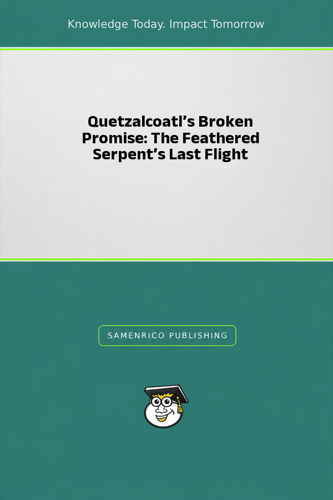 Quetzalcoatl’s Broken Promise: The Feathered Serpent’s Last FlightAtwood Brynn$11.99
 German Raise Body Language GuideAtwood Brynn$12.99
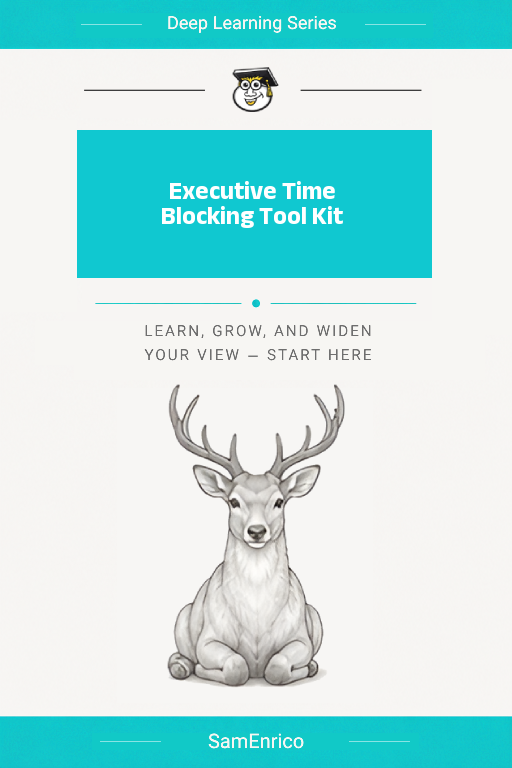 Executive Time Blocking Tool KitAtwood Brynn$12.99
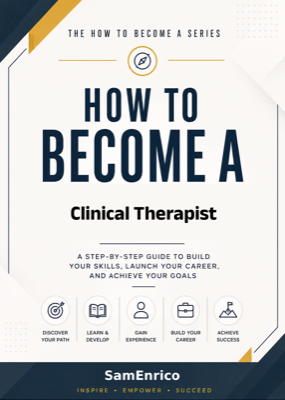 How to Become a Clinical TherapistAtwood Brynn$11.99
 Understanding McPherson–robertson–cammarano SyndromeAtwood Brynn$17.99
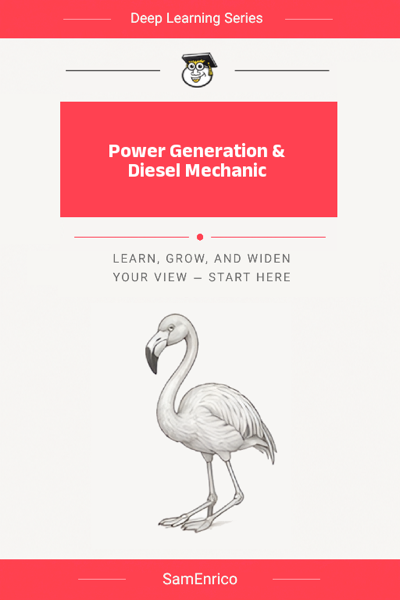 Power Generation & Diesel MechanicAtwood Brynn$11.99
You may also like
 Hong Kong Handover 1997Dunn Johnnie$11.99
 Zumba For Postnatal Recovery CourseNeal Christian$11.99
 Zumba for BeginnersLadner Nikia$11.99
 YouTube Comment Mining GuideHumes Pandora$12.99
 Worry Box MeditationCarlin Rudy$11.99
 Workplace Stress MeditationNguyen Lynn$11.99
 Workplace Stress and Sleep RepairHawley Ivory$11.99
 Workplace Perfectionism CureDelaney Jeffry$11.99
 Workplace Injustice Anger GuideWallen Isabelle$11.99
 Work Addiction and Burnout LinkGreenwood Ester$11.99
 Women in Yoga and WellnessBeattie Galina$11.99
 Women in Stand Up ComedyChun Evangeline$11.99