
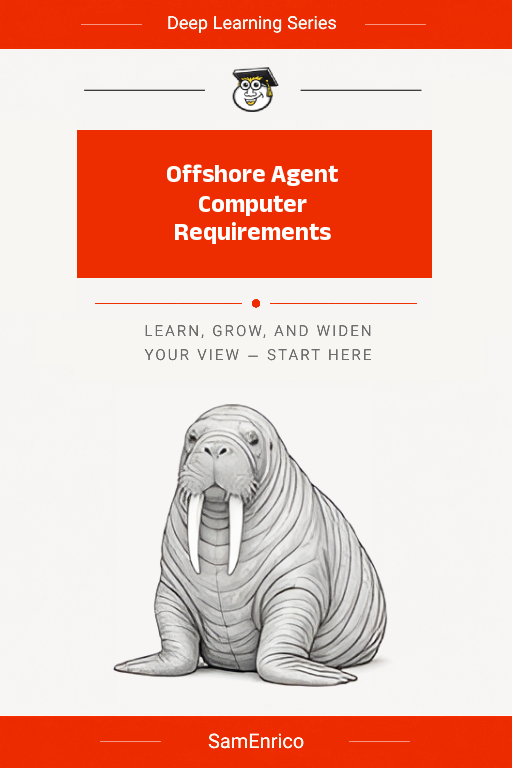
Offshore Agent Computer Requirements eBook
Specify minimum RAM (8GB), internet speed (50 Mbps
Specify minimum RAM (8GB), internet speed (50 Mbps), and noise-canceling headsets for Indian and Jamaican home-based agents, subsidizing equipment.
Formats
Free sample
Chapter 1: The Million-Dollar Crash--–- In the summer of 2022, a Jamaican BPO named Island Connect landed what should have been the deal of a decade: a 4.2millioncontractwitha Fortune500healthinsurancecompany.Theclientrequired200home−basedagentsin Kingstonand Montego Bay.Island Connecthadsixweekstohire,equip,andonboard.Theydideverythingfast.Theydideverythingcheap.Andwithin90days,theyhadlostthecontract,paid4.2 million contract with a Fortune 500 health insurance company. The client required 200 home-based agents in Kingston and Montego Bay. Island Connect had six weeks to hire, equip, and onboard. They did everything fast. They did everything cheap.
And within 90 days, they had lost the contract, paid 4.2millioncontractwitha Fortune500healthinsurancecompany.Theclientrequired200home−basedagentsin Kingstonand Montego Bay.Island Connecthadsixweekstohire,equip,andonboard.Theydideverythingfast.Theydideverythingcheap.Andwithin90days,theyhadlostthecontract,paid340,000 in penalties, and watched their CEO resign on a recorded call that went viral in the BPO industry.The post-mortem was brutal. The agents had been given no equipment subsidies. They used their own laptops—most with 4GB of RAM—and their own internet connections. On day three of operations, a power surge during a routine thunderstorm fried twenty-three laptops simultaneously. On day seventeen, a Jamaican agent’s neighbor began playing dancehall music at full volume during a call with a patient asking about chemotherapy coverage.
The patient hung up and filed a complaint with the insurance company’s compliance department. On day forty-four, a Kingston agent’s internet dropped during a call with an elderly woman who had been on hold for twenty-two minutes. She never called back. The insurance company tracked her eventual hospitalization to a different provider.This chapter is the antidote to the Island Connect story. It is built on a single, non-negotiable premise: The difference between a profitable offshore home-agent program and a catastrophic one is not the talent of the agents.
It is the specifications of their computers, the stability of their internet, and the quality of their headsets. Everything else—recruiting, training, quality assurance—comes after. If you get the hardware wrong, nothing else matters.We will begin by dismantling the three most dangerous myths that killed Island Connect and hundreds of similar operations in India and Jamaica. Then we will establish the foundational framework that every successful offshore BPO uses to turn home-based agents into reliable, high-performance assets. This chapter is not theoretical.
It is a field guide written in the blood of failed contracts.Myth One: “Agents Can Use Their Own Equipment”This is the most common and most destructive mistake in offshore management. The logic seems sound: agents already own laptops and headsets. Why spend 600–600–600–700 per agent when you can spend zero? The answer is that consumer-grade equipment is not designed for eight hours of continuous VOIP, remote desktop protocols, and CRM multitasking. It is designed for email, Netflix, and occasional Zoom calls.Let us examine the data.
In a 2023 study of 1,800 home-based agents across twelve BPOs in India and Jamaica, agents using their own equipment experienced:3.7 times more technical issues per week than agents using employer-provided equipment (8.2 vs. 2.2)4.1 times more call drops due to laptop overheating or memory exhaustion6.2 times more background noise complaints because consumer headsets lack microphone ANCThe financial impact is staggering. Each technical issue costs an average of 4.3 minutes of agent downtime. For an agent handling 50 calls per day at 15percallhour,thatis15 per call hour, that is 15percallhour,thatis5.38 per day in lost revenue. Multiply by 200 agents, 220 working days, and you lose $236,720 annually.
That is before counting the cost of lost clients, compliance violations, and agent attrition.But the deeper problem is accountability. When an agent uses their own equipment, the employer has no right to enforce specifications. You cannot require an agent to upgrade from 4GB to 8GB of RAM if they own the laptop. You cannot mandate a specific headset model. You cannot install endpoint detection software to prevent security breaches.
The agent’s home becomes a black box, and the client’s calls disappear into it.Island Connect learned this lesson when a Kingston agent’s personal laptop was infected with ransomware. The agent did not report it. The ransomware spread to the remote desktop connection, triggering a security audit by the insurance company. The contract had a clause requiring “industry-standard endpoint protection.” Island Connect could not prove compliance because they did not control the endpoints. They lost the contract on day sixty-seven.The fix: Never allow agents to use their own primary equipment.
Provide employer-owned laptops, headsets, and UPS units under a 12-month equipment loan agreement (detailed in Chapter 9). This gives you legal ownership, technical control, and the ability to enforce specifications. The upfront cost is real. The cost of not doing it is far higher.Myth Two: “A Cheap Headset is Good Enough”Walk into any electronics market in Mumbai’s Lamington Road or Kingston’s Constant Spring Road, and you will find headsets for 15–15–15–30. They claim to have “noise cancellation.” The packaging shows a person speaking in a quiet office with a red line through a picture of a construction site.
It is marketing fiction.What these cheap headsets actually have is passive noise isolation—foam or plastic that physically blocks some sound from reaching the microphone. They do not have active noise cancellation for the microphone. The distinction is critical. Passive isolation reduces sound volume by about 10–15 decibels. It works for steady, low-level hums like an air conditioner.
It fails completely for intermittent, high-frequency sounds like a barking dog, a rickshaw horn, or dancehall music.The technical reason is that cheap headsets use a single microphone. That microphone picks up everything—your voice, the dog, the music. Software filters can remove some of the dog, but they cannot distinguish between a dog and the word “dog.” The result is either muffled speech or background noise that sounds like a robot struggling to understand reality.True microphone ANC requires dual-mic arrays. Two microphones are placed on the headset: one pointed at your mouth, one pointed at the environment. The headset’s chipset (e.g., Poly Acoustic Fence, Jabra Clear Voice) compares the signals and subtracts the environmental noise in real time.
The result is crystal-clear speech even in a room with a television playing. These headsets cost 100–100–100–150. They are worth every penny.Island Connect provided $25 headsets. On a recorded call that later became evidence in their penalty hearing, an agent in Montego Bay said to a patient, “I apologize for the noise. My neighbor is—I apologize.
Can you hear me now? I apologize.” The patient could not hear the agent over the music. The call lasted seven minutes and resolved nothing. The patient called back the next day, was routed to a different agent, and spent another twelve minutes repeating their medical history. The insurance company’s contract had a “first-call resolution” requirement of 85%.
Island Connect’s FCR rate with cheap headsets was 62%.The fix: Buy only headsets with dual-mic array ANC. Chapter 4 provides the complete specification and testing protocols, including the “clap test” that instantly separates cheap headsets from professional ones. Budget at least $100 per headset. There is no cheaper alternative that works.Myth Three: “Internet is the Agent’s Responsibility”This myth is seductive because it appears fair. The agent uses the internet at home.
They already pay for it. Why should the employer subsidize it? The answer is that without subsidy, the employer has…
This is the end of the free sample. Get the eBook to keep going. Buy now
About this book
Details
- Author
- Sommers Meryl
- Publisher
- SamEnrico
- Language
- English
- Genre
- Non-Fiction, Business Brief
- Released
- 2026-05-29
- Pages (approx.)
- 156
- Available as
- eBook, Audiobook

Read better in the ZLOADR app
Your eBooks on your phone or tablet. Sign in with your SamEnrico account and start reading.
More by Sommers Meryl
 Uber Acceptance Rate GuideSommers Meryl$11.99
 PNF Stretching GuideSommers Meryl$11.99
 Pandemic Call Center ProtocolSommers Meryl$11.99
 REIT Dividend Investing PrimerSommers Meryl$11.99
 Foster Care Summer CampSommers Meryl$11.99
 Subway Station Memory RouteSommers Meryl$11.99
 Opioid Sleep Apnea GuideSommers Meryl$11.99
 Recovery After Exhaustion PhaseSommers Meryl$11.99
 The Skyward Pioneers: Black Genius in the Nobel SciencesSommers Meryl$11.99
 The Iron Queen of Meroë: A Love Forged in FireSommers Meryl$11.99
 How to Produce Matte FinishSommers Meryl$11.99
 Growing AbromaSommers Meryl$11.99
You may also like
 Franchising Your Local Brand Across Borders Child Labor LawsWilson Ida$11.99
 Franchising Your Local Brand Across Borders Beneficial OwnershipGordon Debbie$11.99
 Franchising Your Local Brand Across Borders Trade SecretsKeener Tatum$11.99
 Franchising Your Local Brand Across Borders Performance DashboardsCota Lisette$11.99
 Franchising Your Local Brand Across Borders Parallel ImportsBailey Wallace$11.99
 Franchising Your Local Brand Across Borders Packaging RegulationsRandle Adaline$11.99
 Franchising Your Local Brand Across Borders Know Your CustomerMyers Adam$11.99
 Franchising Your Local Brand Across Borders Human TraffickingFranklin Lee$11.99
 Franchising Your Local Brand Across Borders Government IncentivesLogsdon Beckie$11.99
 Franchising Your Local Brand Across Borders Carbon FootprintMcfarlane Margot$11.99
 Franchising Your Local Brand Across Borders Bribery LawsStarr Cortney$11.99
 Franchising Your Local Brand Across Borders Best Practice SharingBryson Vernia$11.99