
Non-FictionHealth & WellnessHepatology
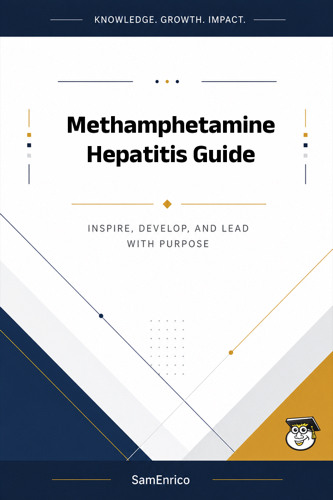
Methamphetamine Hepatitis Guide eBook
Prevent needle transmitted Hep C and support liver
Prevent needle transmitted Hep C and support liver recovery.
Formats
Free sample
Chapter 1: The Perfect Storm--–- Hepatitis C is a curable disease. Methamphetamine use disorder is a treatable condition. But when these two epidemics collide inside a single human body, the result is neither simply “addiction with a virus” nor “a virus in someone who uses drugs.” The result is a distinct, aggressive, and poorly understood clinical syndrome that accelerates liver damage, complicates recovery, and kills people in ways that neither condition alone would predict. This chapter is not an introduction. It is a warning and a promise.
The warning is that the existing literature has failed you: hepatitis C guides written for the general population assume three meals a day, stable housing, and no ongoing stimulant use, while meth recovery books obsess over dopamine and ignore that a failing liver will sabotage every recovery attempt. The promise is that by the end of this book, you will understand exactly how meth and HCV work together to destroy the liver—and, more importantly, what you can do about it without first being required to stop using methamphetamine.The Epidemiology Nobody Wants to Talk About For years, public health messaging around Hepatitis C focused almost exclusively on people who inject opioids. Heroin, with its daily withdrawal cycle and relatively stable injection frequency of one to three times per day, became the archetypal “HCV risk behavior.” This focus was not wrong—opioid injectors do have high rates of HCV—but it created a dangerous blind spot. People who inject methamphetamine do so at dramatically higher frequencies during a “run,” often injecting every two to four hours for two to five days without sleeping. In rural and urban communities across the United States, the HCV prevalence among people who inject meth now ranges from 40 to 65 percent, in many areas exceeding the rates seen among opioid injectors.
This is not because meth users are careless or uninformed. It is because the pharmacology of meth fundamentally changes the risk equation.Consider what happens during a meth run. On day one, a user may start with a clean syringe. By hour twelve, after multiple injections, that same syringe has been reused, or “bootstrapped,” several times. By day three, the syringe has been passed among partners, rinsed with tap water, and possibly cleaned with a bleach solution that was mixed days ago and has lost its potency.
The user is not making a series of individual risk decisions. They are operating inside a altered neurological state where time, hygiene, and future consequences lose their usual weight. This is not a moral failing. It is a neurobiological reality. And it is why traditional “just use a clean needle every time” messaging fails for this population.The Gap in the Literature That This Book Fills Walk into any major bookstore or search any academic database for books on Hepatitis C.
You will find comprehensive guides on antiviral therapy, liver transplantation, and dietary management. These books assume a reader who can afford three meals a day, has a refrigerator, and does not experience week-long episodes of psychosis or hypersexuality. Now search for books on methamphetamine recovery. You will find detailed protocols for managing withdrawal, repairing dopamine receptors, and rebuilding social functioning. These books barely mention the liver.
Some do not mention it at all. This silence is not a minor oversight. It is a lethal gap.The liver is not a passive organ. It is the body’s metabolic command center. It processes every drug you take, filters every toxin from your blood, and produces the proteins that allow your blood to clot.
When meth damages the liver through vasoconstriction and oxidative stress—a topic we will explore in depth in Chapter 2—and HCV attacks the liver through immune-mediated inflammation, the combined effect is not additive. It is multiplicative. A meth user with untreated HCV can experience fibrosis progression at three to five times the rate of someone with HCV alone. Liver aging that should take twenty years happens in four to six. This is the “accelerated fibrosis” phenomenon, and it is the single most important concept in this book.Yet almost no recovery literature addresses it.
A person in meth withdrawal is given Gatorade and crackers—both of which are high in sugar and fructose, both of which worsen the fatty liver disease that accompanies chronic HCV infection. A person seeking HCV treatment is asked about alcohol use but not about methamphetamine use, even though meth-induced ischemic hepatitis can cause liver enzyme elevations that mimic viral flares. The left hand of addiction medicine does not talk to the right hand of hepatology. This book forces the conversation.Hard Hope: Two Medical Realities That Do Not Require Abstinence Before we go any further, you need to hear two facts that contradict almost everything you have been told about drug use and disease. These facts are not opinions.
They are not motivational phrases. They are peer-reviewed, clinically validated, reproducible medical realities.Fact one: Direct-Acting Antiviral (DAA) medications cure Hepatitis C in over 95 percent of people who take them, regardless of whether that person continues to use methamphetamine during treatment. You do not need to stop using to be cured. You do not need to enter a rehabilitation program. You do not need to disclose your meth use to your insurer or your employer.
You need to take one pill per day for eight to twelve weeks. That is it. The cure rate is the same for active meth users as it is for people who have never used any drug. This fact is not permission to continue using—but it is the end of the lie that you must “get clean first” before you deserve treatment for a life-threatening viral illness.Fact two: The human liver is the only solid organ capable of significant regeneration. After you cure HCV, even if you have advanced fibrosis (scarring), your liver can rebuild healthy tissue.
Someone with F3 fibrosis—the stage just before cirrhosis—can regress to F1 or even F0 within twelve to twenty-four months of cure, provided they stop further injury. This does not require stopping meth entirely, though it does require stopping the combination of meth, alcohol, and iron supplements, which together create the fastest path to liver failure. Regeneration is not guaranteed, but it is possible. And possibility, when you have been told there is no hope, is a revolutionary act.Who This Chapter Is For This chapter—and this entire book—is written for four audiences, each of whom has been failed by existing resources.The first audience is people who currently use methamphetamine and have either been diagnosed with Hepatitis C or suspect they might have it. You may be actively using.
You may be in a crash. You may be trying to stop or you may have given up on stopping. This book assumes nothing about your intentions regarding meth. It assumes only that you want to keep your liver functioning long enough to have a future, whatever that future looks like.The second audience is people who have stopped using meth but were diagnosed with HCV during their using years. You may have been told that the liver damage is permanent.
You may be living with anxiety about cirrhosis without knowing that cure and regeneration are possible. This book will give…
This is the end of the free sample. Get the eBook to keep going. Buy now
About this book
Details
- Author
- Venable Sarita
- Publisher
- SamEnrico
- Language
- English
- Genre
- Non-Fiction, Health & Wellness, Hepatology
- Released
- 2026-06-07
- Pages (approx.)
- 141
- Available as
- eBook, Audiobook

Read better in the ZLOADR app
Your eBooks on your phone or tablet. Sign in with your SamEnrico account and start reading.
More by Venable Sarita
 Therapy For Landmine SurvivorsVenable Sarita$11.99
 Last Mile Delivery Insurance And Liability Optimization GuideVenable Sarita$11.99
 Cellulite Body Neutrality GuideVenable Sarita$11.99
 Merlin's Last Song: The Enchanter's Forgotten BalladVenable Sarita$11.99
 Understanding Hipo SyndromeVenable Sarita$17.99
 2026-2030 AI Legal OutlookVenable Sarita$12.99
 Admin Security And Compliance WorkbookVenable Sarita$12.99
 How to Become a Chinchilla-machine OperatorVenable Sarita$11.99
 Floor Covering InstallerVenable Sarita$11.99
You may also like
 Hong Kong Handover 1997Dunn Johnnie$11.99
 Zumba For Postnatal Recovery CourseNeal Christian$11.99
 Zumba for BeginnersLadner Nikia$11.99
 YouTube Comment Mining GuideHumes Pandora$12.99
 Worry Box MeditationCarlin Rudy$11.99
 Workplace Stress MeditationNguyen Lynn$11.99
 Workplace Stress and Sleep RepairHawley Ivory$11.99
 Workplace Perfectionism CureDelaney Jeffry$11.99
 Workplace Injustice Anger GuideWallen Isabelle$11.99
 Work Addiction and Burnout LinkGreenwood Ester$11.99
 Women in Yoga and WellnessBeattie Galina$11.99
 Women in Stand Up ComedyChun Evangeline$11.99