
Non-FictionSelf-Help / Interactive
Memory Palace Workbook eBook
undefined
by Weeks Danyel
undefined
Formats
Free sample
Chapter 1: The Kitchen Test...--–- Try a simple experiment. Close your eyes right now – or keep them open if you prefer – and mentally walk from where you are sitting to your kitchen. Do not open your eyes or look around physically. Just visualize the path. Count the doorways you pass through.
Feel the floor change from carpet to tile. Notice the smell of last night’s dinner or the morning’s coffee. Hear the hum of the refrigerator before you even enter the room. You just performed a miracle of spatial memory that no supercomputer can replicate. That short mental journey, the one you completed in under ten seconds without any conscious effort, is the foundation of everything this workbook will teach you.
You do not have a bad memory. You have an untrained one.The Myth of the "Bad Memory"Every week, someone sits across from me at a coffee shop and says the same six words: "I have a terrible memory." They usually tap their temple while saying it, as if apologizing for the hardware they were given at birth. They tell me they forget names thirty seconds after an introduction. They lose their keys so often they bought a Bluetooth tracker. They study for hours only to blank out during the test.
They have tried highlighters, flashcards, mnemonic apps, and sticky notes. Nothing works. Their conclusion is always the same: their memory is broken.They are wrong.The evidence for their wrongness is sitting in their own head, available for free, right now. That same person who claims to have a "bad memory" can navigate their home in complete darkness. They know exactly which cupboard holds the coffee mugs and which drawer holds the silverware.
They can drive to work without thinking about the turns. They recognize hundreds of faces – colleagues, celebrities, family members – without any conscious effort. They remember the lyrics to songs they have not heard in ten years. They recall exactly where they were on September 11, 2001, or during the lockdown announcement of 2020, or when their favorite team won the championship.What they actually have is a selective forgetting problem, not a general memory deficit. The human brain evolved over hundreds of thousands of years to remember one type of information exceptionally well: spatial locations and the threats or rewards associated with them.
Your ancient ancestor did not need to remember a shopping list. She needed to remember which bend in the river held crocodiles (location) and what those crocodiles looked like when they attacked (image). She needed to remember which berry bush was sweet (location) and which one made her cousin vomit for three days (image). She did not need to remember the name of the new person in the neighboring tribe. That was irrelevant to survival.Your brain is still running that ancient operating system.
It is optimized for place and picture, not for abstract symbols like letters and numbers. When you complain about a "bad memory," you are blaming a fish for being bad at climbing a tree. Give that fish water, and it will outperform any land animal. The Memory Palace method is your water.What This Workbook Actually Is Before we go any further, let me be brutally honest about what you are holding. This is not a collection of "memory tricks" or "brain hacks." It is not a set of cute acronyms that you will forget by next Tuesday.
It is a structured, sequential, twelve-week training program that will physically rewire the neural architecture of your hippocampus – the seahorse-shaped region deep in your brain that handles spatial navigation and memory formation.The approach is called the Method of Loci (Latin for "places"), and it has been used for over two thousand years. The Greek poet Simonides of Ceos supposedly invented it around 477 BCE after a building collapsed on a banquet hall. He was the sole survivor, and he realized he could identify every victim by mentally walking through the dining hall and remembering where each person had been sitting. The Roman statesman Cicero wrote about the method in his De Oratore. Medieval scholars used it to memorize entire books of scripture.
Modern memory champions – the people who memorize the order of ten shuffled decks of cards or the first hundred digits of pi – all use some variation of this technique, whether they admit it or not.But here is the distinction that matters: this workbook is not about becoming a memory champion. You will not be asked to memorize the phone book or the value of pi to a thousand digits. That is parlor trick territory. This book is about practical, everyday memory: remembering the names of the people you meet at networking events, recalling the key points of the presentation you stayed up all night to prepare, holding onto the grocery list without pulling out your phone, learning a new language without drowning in flashcards, passing the certification exam without cramming for seventy-two straight hours.The Structure of Your Twelve-Week Transformation This workbook is divided into four parts, each lasting approximately three weeks if you follow the daily exercises. You will notice that I said "workbook" and not "book." That distinction is intentional.
You cannot read your way to a better memory any more than you can read your way to six-pack abs. You must do the work. Each chapter contains specific exercises, worksheets, and challenges. If you skip them, you are skipping the entire point of the method.Part One: The Foundation (Chapters 1-3) teaches you why your brain is already wired for this technique and walks you through building your first Memory Palace – your childhood home. You will learn the three laws of effective memory architecture and the rules for transforming boring, abstract information into vivid, unforgettable images.
By the end of Part One, you will have a functioning memory system capable of holding twenty random items in perfect order.Part Two: The Toolbox (Chapters 4-6) introduces advanced concepts like the Locus Density Ladder (how to store multiple images at a single location), the Memory Village (themed streets for organizing different types of information), and the Major System (a two-hundred-year-old code for converting numbers into images). You will learn to combine Memory Palaces with Mind Maps to memorize the structure of entire books. You will master the Roman Room technique for delivering speeches without notes.Part Three: The Applications (Chapters 7-9) takes the foundational skills and applies them to real-world challenges: remembering names and faces, acquiring foreign vocabulary at fifty words per hour, and delivering professional presentations that sound natural and unrehearsed. Each chapter focuses on a specific domain and includes drills designed to simulate actual use cases.Part Four: The Mastery (Chapters 10-12) teaches you how to maintain your palaces over time using the Spacing Effect, how to integrate digital tools like Google Street View and Anki into your practice, and finally, how to build a Master Palace – a permanent archival system that acts as a "second brain" for organizing dozens of individual palaces. The workbook concludes with a final project that directly measures your improvement from Chapter One.The Neuroplasticity Promise Here is where the promise meets the science.
For most of the twentieth century, neuroscientists believed that the adult brain was fixed and unchangeable – that after a…
This is the end of the free sample. Get the eBook to keep going. Buy now
About this book
Details
- Author
- Weeks Danyel
- Publisher
- SamEnrico
- Language
- English
- Genre
- Non-Fiction, Self-Help / Interactive
- Released
- 2026-06-06
- Pages (approx.)
- 146
- Available as
- eBook, Audiobook

Read better in the ZLOADR app
Your eBooks on your phone or tablet. Sign in with your SamEnrico account and start reading.
More by Weeks Danyel
 Meditation for Afternoon Slump AnxietyWeeks Danyel$11.99
 Stress Induced Silence RecoveryWeeks Danyel$11.99
 Procrastination To ProductivityWeeks Danyel$11.99
 Cocaine Addiction HelpWeeks Danyel$11.99
 The Roman Room TechniqueWeeks Danyel$11.99
 Rust Belt Talent RetentionWeeks Danyel$11.99
 Redwood Forest GiantsWeeks Danyel$11.99
 Loving Kindness For CoworkersWeeks Danyel$11.99
 The Olmec Maestros: Echoes of the First Mesoamerican HarmoniesWeeks Danyel$11.99
 Anansi’s Web: The Trickster’s WisdomWeeks Danyel$11.99
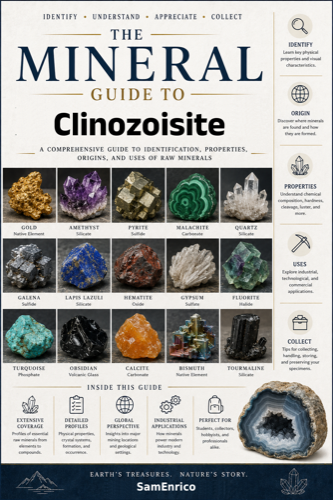 The Mineral Guide to ClinozoisiteWeeks Danyel$11.99
 How to Start a Mats and Rugs Made of Fur Business (Beginners Guide)Weeks Danyel$11.99
You may also like
 Hong Kong Handover 1997Dunn Johnnie$11.99
 Zumba For Postnatal Recovery CourseNeal Christian$11.99
 Zumba for BeginnersLadner Nikia$11.99
 YouTube Comment Mining GuideHumes Pandora$12.99
 Worry Box MeditationCarlin Rudy$11.99
 Workplace Stress MeditationNguyen Lynn$11.99
 Workplace Stress and Sleep RepairHawley Ivory$11.99
 Workplace Perfectionism CureDelaney Jeffry$11.99
 Workplace Injustice Anger GuideWallen Isabelle$11.99
 Work Addiction and Burnout LinkGreenwood Ester$11.99
 Women in Yoga and WellnessBeattie Galina$11.99
 Women in Stand Up ComedyChun Evangeline$11.99