
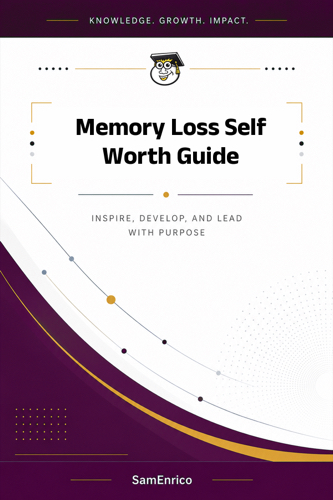
Memory Loss Self Worth Guide
Maintain dignity and value when cognitive abilitie
Maintain dignity and value when cognitive abilities begin to decline.
Formats
About this book
Free sample
Chapter 1: The Hypercognitive Trap--–- The examining room smelled of antiseptic and stale coffee. The neurologist had used words like “Mild Cognitive Impairment” and “progression” and “monitoring,” but what you heard was something else entirely. You heard: You are becoming less than you were. You are becoming less than others. You are becoming less.This chapter begins in that room, but it will not leave you there.
The diagnosis of MCI or early Alzheimer’s is not the end of your story. It is, however, the beginning of a specific kind of psychological ambush—one that has less to do with the actual symptoms of memory loss and everything to do with a hidden bias that permeates our culture. The purpose of this chapter is to name that bias, to show you how it operates, and to give you the tools to reject it before it steals what cannot be measured by any cognitive test: your sense of your own worth.The Moment the World Changes Let us be honest about what a diagnosis of cognitive decline feels like. It is not like breaking a bone, where the pain is localized and the treatment is clear. It is not like high blood pressure, where a number on a gauge tells you exactly where you stand.
A diagnosis of MCI or Alzheimer’s arrives as a verdict on your very self. Even before you have forgotten anything important—even before you have gotten lost or failed to recognize a face—the diagnosis whispers that you are already disappearing.This is not an overstatement. Research in medical anthropology has documented what clinicians call the “diagnosis paradox”: patients with early-stage cognitive impairment often report feeling more shame and worthlessness immediately after diagnosis than they do years later when their symptoms have significantly progressed. The reason is simple. In the early stages, you are still fully aware of who you used to be.
You remember your former fluency, your sharp memory, your quick wit. The gap between that past self and your current struggles feels like a moral failing. Later, as the disease advances…
This is the end of the free sample. Get the eBook to keep going. Buy now
Contents
- Chapter 1
- Chapter 2
- Chapter 3
- Chapter 4
- Chapter 5
- Chapter 6
- Chapter 7
- Chapter 8
- Chapter 9
- Chapter 10
- Chapter 11
- Chapter 12
Details
- Author
- Boling Alisha
- Publisher
- SamEnrico
- Language
- English
- Genre
- Non-Fiction, Self-Help, Memory, Cognitive
- Released
- 2026-06-10
- Pages (approx.)
- 123
- Available as
- eBook, Audiobook

Read better in the ZLOADR app
Your eBooks on your phone or tablet. Sign in with your SamEnrico account and start reading.
More by Boling Alisha
 Tide Pool StillnessBoling Alisha$11.99
 Guilt Productive Use GuideBoling Alisha$11.99
 Inactivated Vaccine TechnologyBoling Alisha$11.99
 Gacy's Appeal Process OverviewBoling Alisha$11.99
 The Iron Bridge: Telford’s Vision and the Birth of Modern EngineeringBoling Alisha$11.99
 Staff Mri EngineerBoling Alisha$11.99
 L'Oréal Supply GuideBoling Alisha$12.99
 Revenue Recognition AutomationBoling Alisha$12.99
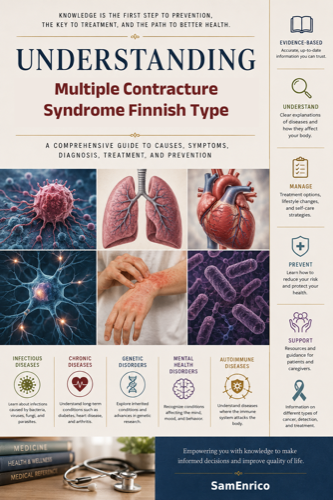 Understanding Multiple Contracture Syndrome Finnish TypeBoling Alisha$17.99
 How to Start a Bulb Flats Made of Steel Business (Beginners Guide)Boling Alisha$11.99