
Non-FictionCapital & Valuation RegisterCommitment Letter
LBO Debt Commitment Letter eBook
Bank's preliminary agreement to provide financing.
Bank's preliminary agreement to provide financing.
Formats
Free sample
Chapter 1: The Handshake Trap–- The email arrived at 11:47 PM on a Thursday. Sarah Chen, a thirty-four-year-old principal at a mid-market private equity firm, had just submitted the final markup of the merger agreement. The deal was a $2.1 billion leveraged buyout of a specialty chemicals company. She had spent eighteen months chasing this target. Her fund had signed a commitment letter with a syndicate of three banks six weeks earlier.
The letter was forty-two pages, including exhibits. She had read it twice. She thought she understood it.The email was from the bank's general counsel. Subject line: "Market Disruption Notice." The body was three sentences. The bank was invoking Section 7(c) of the commitment letter, citing "adverse market conditions in the high-yield bond market." The bank was reducing its committed amount from $1.6 billion to $1.2 billion.
The remaining $400 million would require new terms: a 250 basis point pricing increase, a tighter leverage covenant, and a personal guarantee from the fund's general partner. The bank gave Sarah seventy-two hours to respond.She called her lawyer at 11:52 PM. The lawyer, a twenty-year veteran of leveraged finance, asked one question: "What does your commitment letter say about market disruption?"Sarah opened the PDF. Section 7(c) read: "The Bank may terminate or reduce its commitment in the event of a material disruption in the debt capital markets, as determined by the Bank in its sole discretion."There was no definition of "material disruption." No objective benchmark. No requirement that the bank prove the disruption affected this specific transaction.
Just three words: "in its sole discretion."Her lawyer was silent for six seconds. Then: "You have no recourse."The deal died seventy-two hours later. The target company was acquired by a competitor. Sarah's fund lost $18 million in broken deal costs. The bank kept its $3 million commitment fee.
Sarah's carried interest in her fund's latest vintage year effectively zeroed out.She had signed a handshake. She thought it was a contract. She learned the difference at 11:47 PM on a Thursday.The Most Dangerous Document in Finance This book exists because Sarah's story is not an outlier. It is the norm. And the document that destroyed her deal—the commitment letter—is the most misunderstood, misused, and dangerous instrument in leveraged finance.Ask a junior investment banker what a commitment letter does, and they will tell you: "It promises financing for an LBO." Ask a private equity partner, and they will say: "It's the bank's promise to fund." Ask a lawyer, and they will pause, choose their words carefully, and say: "It is a preliminary agreement that creates binding obligations—but only if you read every word, understand every condition, and negotiate every clause as if your deal depends on it.
Because it does."The commitment letter sits at the intersection of promise and performance, trust and treachery, speed and due diligence. It is executed in a frenzy—often within seventy-two hours of a bid deadline, often without full legal review, often with the assumption that "the bank is on our side." That assumption is the handshake trap.This chapter dismantles that trap. It draws the sharpest possible distinctions between a real commitment and a theatrical performance. It introduces the two types of commitment letters—signing and closing—that every practitioner must know. It walks through a complete anatomy of the document.
And it tells the stories of deals that died because someone trusted a handshake instead of reading the fine print.By the end of this chapter, you will never sign a commitment letter the same way again.The Three Faces of Bank Paper Before we can understand the commitment letter, we must understand what it is not. Banks issue three distinct types of financing communications. Only one is a real commitment. The other two are marketing documents dressed in legal clothing.Comfort Letter A comfort letter is exactly what it sounds like: a letter designed to make you feel comfortable. It contains language like: "Based on preliminary discussions, the Bank is pleased to express its interest in potentially providing financing for the proposed transaction." Key phrases to spot: "interest," "potentially," "preliminary," "non-binding."A comfort letter creates zero legal obligation.
Zero. No court in the United States or England has ever enforced a comfort letter as a binding commitment. The bank can issue a comfort letter on Monday and refuse to sign a commitment letter on Tuesday. The only consequence is reputational. In the words of one leveraged finance partner: "A comfort letter is a promise to think about maybe trying to help."Yet private equity sponsors routinely treat comfort letters as green lights.
They sign merger agreements. They pay deposits. They announce deals. And then they discover that a comfort letter is not a commitment. It is a suggestion.Highly Confident Letter The highly confident letter is the most famous piece of non-binding paper in finance.
Pioneered by Goldman Sachs in the 1980s and still used today, the highly confident letter states that the bank is "highly confident" it will be able to raise the necessary financing. The key word is "confident"—not "committed."Courts have uniformly held that highly confident letters create no legal obligation to fund. In the 2008 litigation arising from the failed buyout of Sallie Mae, the court specifically ruled that a highly confident letter was "a statement of belief, not a promise of performance." The bank that issued the letter walked away from the deal with no liability.Why do banks issue highly confident letters? Because they sound impressive in press releases. Because they help sponsors win auctions.
Because they cost the bank nothing to write and nothing to break. A highly confident letter is a marketing document. Treat it as such.Committed Letter A committed letter—the subject of this book—is a different animal entirely. It creates binding obligations. The bank promises to fund a specific amount, at specific terms, subject to specific conditions.
If the bank breaches that promise, the borrower can sue for damages—and, in rare cases, force the bank to lend.But here is the catch: a committed letter is not a blank check. It is a highly conditional promise. The conditions are the trap. And the most dangerous condition is the one you never see coming: the bank's unilateral right to declare a market disruption, invoke a material adverse change, or exercise a flex clause that rewrites the terms of the deal.The remainder of this chapter and this book is about understanding those conditions, negotiating them, and ensuring that your committed letter is actually a commitment—not a handshake in a suit.The Signing Letter vs. The Closing Letter: A Critical Distinction One of the most common mistakes in leveraged finance is treating all commitment letters as the same.
They are not. There are two distinct types, and the difference can mean the difference between closing and walking away empty-handed.The Signing Commitment Letter The signing commitment letter is issued before the merger agreement is signed. It is the document Sarah Chen signed. It contains the broadest possible bank protections because the bank is committing to something that does not yet exist. The target company has not been acquired.
The due diligence is incomplete. The regulatory approvals are pending. The bank is writing a blind check.Because the signing letter…
This is the end of the free sample. Get the eBook to keep going. Buy now
About this book
Details
- Author
- Wayne Elizbeth
- Publisher
- SamEnrico
- Language
- English
- Genre
- Non-Fiction, Capital & Valuation Register, Commitment Letter
- Released
- 2026-06-09
- Pages (approx.)
- 132
- Available as
- eBook, Audiobook

Read better in the ZLOADR app
Your eBooks on your phone or tablet. Sign in with your SamEnrico account and start reading.
More by Wayne Elizbeth
 NVC For Environmental Activism CourseWayne Elizbeth$11.99
 White Glove Logistics ForecastWayne Elizbeth$11.99
 Loving Kindness For IllnessWayne Elizbeth$11.99
 The Breath Awareness for InsomniaWayne Elizbeth$11.99
 The Shanghai Code: How a Spy Ring Exploited Wall StreetWayne Elizbeth$11.99
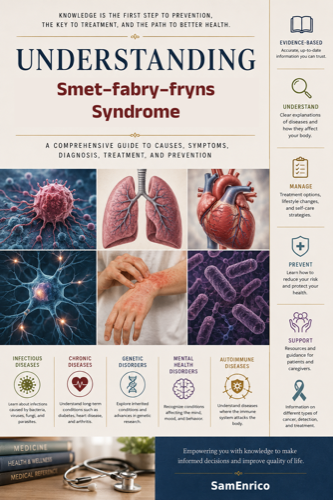 Understanding Smet–fabry–fryns SyndromeWayne Elizbeth$17.99
 Technical SpecialistWayne Elizbeth$11.99
 Pricing Case Study LibraryWayne Elizbeth$12.99
 Price Indexation StrategiesWayne Elizbeth$12.99
 How to Start a Accumulator Cell Cases Made of Glass Business (Beginners Guide)Wayne Elizbeth$11.99
You may also like
 Hong Kong Handover 1997Dunn Johnnie$11.99
 Zumba For Postnatal Recovery CourseNeal Christian$11.99
 Zumba for BeginnersLadner Nikia$11.99
 YouTube Comment Mining GuideHumes Pandora$12.99
 Worry Box MeditationCarlin Rudy$11.99
 Workplace Stress MeditationNguyen Lynn$11.99
 Workplace Stress and Sleep RepairHawley Ivory$11.99
 Workplace Perfectionism CureDelaney Jeffry$11.99
 Workplace Injustice Anger GuideWallen Isabelle$11.99
 Work Addiction and Burnout LinkGreenwood Ester$11.99
 Women in Yoga and WellnessBeattie Galina$11.99
 Women in Stand Up ComedyChun Evangeline$11.99