
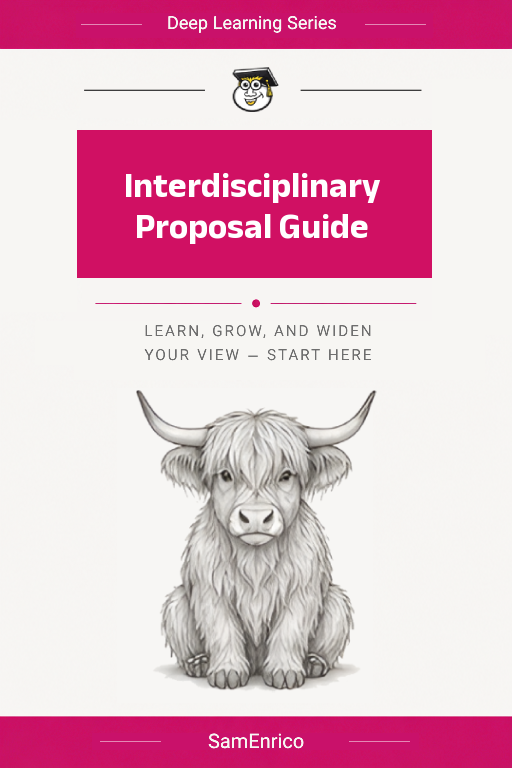
Non-FictionStudent's ShortcutInterdisciplinary
Interdisciplinary Proposal Guide Audiobook
Write research proposals that bridge multiple fiel
Write research proposals that bridge multiple fields with integrated methodologies and cross-cutting significance.
Formats
Free sample
Chapter 1: The Funding Mandate--–- In the fall of 2019, a distinguished civil engineer submitted a proposal to a major European funding agency. Her project was elegant: a new composite material that would extend the lifespan of offshore wind turbine blades by forty percent. The science was sound, the team was stellar, and the budget was meticulous. The proposal was rejected. Not because of technical flaws, but because the reviewer panel—restructured just six months earlier—included not only engineers but also marine ecologists, supply chain economists, and community planners.
The panel’s consensus was brutal: “The proposal solves a technical problem brilliantly, but it does not address the societal challenge for which funding was allocated. No assessment of ecological impact during manufacturing. No analysis of repairability in low-resource coastal communities. No consideration of blade recycling at end-of-life. This is engineering in a vacuum.
Score: Unfundable.”The engineer was devastated. She had done everything right by the standards of her discipline. But the standards had changed. And she had not received the memo.This chapter is that memo.The New Reality: Why Your Single-Discipline Expertise Is No Longer Enough For most of the twentieth century, research funding followed a simple logic: deep problems required deep expertise within a single disciplinary silo. Physicists studied physics.
Sociologists studied society. Biologists studied life. The boundaries were clear, the review panels were homogeneous, and a proposal that stayed firmly within its disciplinary lane was considered rigorous, focused, and fundable.That era is over.Over the past decade, the world’s largest research funders—the US National Science Foundation (NSF), the European Union’s Horizon Europe programme, UK Research and Innovation (UKRI), the Wellcome Trust, and the Bill & Melinda Gates Foundation—have systematically restructured their review panels, funding calls, and evaluation criteria to privilege interdisciplinary research (IDR) over single-discipline work. This is not a trend. It is a structural realignment driven by the recognition that the most pressing problems of the twenty-first century—climate adaptation, pandemic preparedness, artificial intelligence governance, biodiversity collapse, and entrenched inequality—are not disciplinary problems.
They are wicked problems that span multiple domains of knowledge, values, and stakeholders.Consider the evidence. Between 2015 and 2025, the proportion of NSF’s research budget allocated to cross-cutting initiatives grew from eighteen percent to forty-seven percent. Horizon Europe’s “missions”—such as “Adapting to Climate Change” and “Conquering Cancer”—are explicitly designed to require interdisciplinary collaboration. UKRI’s “Strategic Priorities Fund”…
This is the end of the free sample. Get the Audiobook to keep going. Buy now
About this book
Details
- Author
- Devore Russell
- Publisher
- SamEnrico
- Language
- English
- Genre
- Non-Fiction, Student's Shortcut, Interdisciplinary
- Released
- 2026-05-30
- Pages (approx.)
- 160
- Available as
- eBook, Audiobook

Listen in the VoxFlicks app
Audiobooks and audio dramas wherever you go. Sign in with your SamEnrico account and press play.
More by Devore Russell
 Nairobi Tech Community GuideDevore Russell$11.99
 Pain Gate Control MeditationDevore Russell$11.99
 Emotional Regulation Group GuideDevore Russell$11.99
 Testosterone and Mental HealthDevore Russell$11.99
 Overcoming Imposter Syndrome at WorkDevore Russell$11.99
 The Last Stand: How One Man Defied the Odds to Win the 1980 Olympic MarathonDevore Russell$11.99
 The Billionaire’s Secret Gift: How Warren Buffett’s Pledge Revolutionized PhilanthropyDevore Russell$11.99
 Understanding Cervical Hypertrichosis Peripheral NeuropathyDevore Russell$17.99
 How to Start a Retail Bakeries BusinessDevore Russell$11.99
 CubingDevore Russell$11.99
 English Test IELTS PTE GuideDevore Russell$12.99
You may also like
 Hong Kong Handover 1997Dunn Johnnie$11.99
 Zumba For Postnatal Recovery CourseNeal Christian$11.99
 Zumba for BeginnersLadner Nikia$11.99
 YouTube Comment Mining GuideHumes Pandora$12.99
 Worry Box MeditationCarlin Rudy$11.99
 Workplace Stress MeditationNguyen Lynn$11.99
 Workplace Stress and Sleep RepairHawley Ivory$11.99
 Workplace Perfectionism CureDelaney Jeffry$11.99
 Workplace Injustice Anger GuideWallen Isabelle$11.99
 Work Addiction and Burnout LinkGreenwood Ester$11.99
 Women in Yoga and WellnessBeattie Galina$11.99
 Women in Stand Up ComedyChun Evangeline$11.99