
Implementation Intentions For Procrastination eBook
Create specific if then plans to automate task ini
Create specific if then plans to automate task initiation.
Formats
Free sample
Chapter 1: The Decisional Graveyard--–- Every morning, before you have accomplished a single thing, you have already lost. Not because you are lazy. Not because you lack ambition. Not because you are fundamentally broken. You have lost because you have already made a series of invisible decisions that drain the very fuel you need to start.Let me show you what I mean.Take out your phone.
Open your screen time report. Look at the first hour after you woke up today. How many times did you pick up your device before you even brushed your teeth? How many micro-decisions did you make about what to read, what to watch, what to ignore? Now multiply that by seven days.
Now multiply that by fifty-two weeks.You are not a procrastinator because you are weak. You are a procrastinator because you are exhausted by decisions you did not even know you were making.This chapter is called The Decisional Graveyard because that is where most of your willpower goes to die. Not in heroic battles against temptation. Not in dramatic moments of choosing the gym over the couch. No, your willpower dies in a thousand small cuts: Should I check email now or later?
Should I start with the hard task or the easy one? Should I make coffee first or open my laptop first? Should I sit here or over there?By the time you actually need to start the important thing, you have nothing left. Your tank is empty. And then you do the worst thing possible: you blame yourself.Stop that right now.WHAT THIS CHAPTER WILL TEACH YOUBy the end of this chapter, you will understand:Why every decision to start a task is a small act of self-harm against your own productivity The scientific reason your future self seems like a superhero (and your present self is a hot mess)Why "Just do it" is not just unhelpful but actively destructive advice The critical difference between Goal Intentions and Execution Intentions How to stop spending your willpower on decisions that don't matter Let me be clear about something upfront.
I am not going to tell you to try harder. I am not going to tell you to wake up at 4 AM or take cold showers or meditate for an hour before you start your work. I am not interested in your discipline. I am interested in your design.The most productive people you know are not the ones with the strongest willpower. They are the ones who have figured out how to stop using willpower altogether.
They have automated their start. They have made the right thing the easy thing. They have eliminated the decision.And that is exactly what this book will teach you to do.But first, you need to understand the enemy. And the enemy is not your laziness. The enemy is the decision itself.THE WILLPOWER FALLACYLet me tell you about a study that changed how I think about human behavior.In the late 1990s, psychologist Roy Baumeister conducted a now-famous experiment.
He brought hungry college students into a room filled with the smell of freshly baked chocolate chip cookies. On a table, there were two bowls. One bowl held warm, gooey cookies. The other bowl held radishes.Some students were told they could eat the cookies. Some students were told they could only eat the radishes.
And some students were told they could eat nothing at all.Then, after ten minutes of sitting in cookie-scented torture, all the students were given a geometric puzzle to solve. The puzzle was actually unsolvable, but the students did not know that. The researchers were measuring how long each student would persist before giving up.The students who ate the cookies persisted for about twenty minutes. The students who ate nothing persisted for about twenty-one minutes. The students who ate the radishes, who had to exert willpower to resist the cookies, gave up after about eight minutes.They had depleted their willpower.
They had nothing left for the puzzle.This is called ego depletion, and it has been replicated dozens of times. The science has been debated and refined over the years, but the core finding remains: willpower is a finite resource that gets used up throughout the day. Every act of self-control, every decision you make, every time you choose the harder thing over the easier thing, you drain a little more from the tank.Here is what most people get wrong about this research. They hear "willpower is finite" and they think the solution is to get more willpower. To build discipline.
To train yourself to have a bigger tank.That is like hearing that your phone battery only lasts eight hours and deciding to buy a bigger battery instead of just plugging the phone in.The smart solution is not a bigger battery. The smart solution is to stop using the battery on things that do not matter.High achievers do not have more willpower than you. They have less need for it. They have automated their environment so that the wrong choice is physically harder or literally invisible. They have eliminated decisions before those decisions can drain them.Let me give you a concrete example.I know a writer who produces three thousand words every morning before nine AM.
When I first heard this, I assumed she had superhuman discipline. I assumed she woke up early, meditated, did yoga, and then sat down to write with the focused intensity of a zen master.The truth was much simpler and much more useful.She slept in her workout clothes. Her laptop was on her desk, open to her document, with the cursor blinking on the exact sentence she would write next. Her phone was in the kitchen, not the bedroom. Her coffee maker was on a timer.
Her email was blocked until nine-thirty.She did not decide to write. She woke up, and writing was already happening. The decision had been made the night before.That is what we are building in this book. Not superhuman willpower. A superhuman environment.TEMPORAL MOTIVATION THEORY: WHY YOUR FUTURE SELF IS A LIARThere is a cruel trick your brain plays on you every single day.
It is called temporal discounting, and it is the reason you will start exercising next Monday but not today.Temporal Motivation Theory (TMT) explains why we consistently choose immediate comfort over future reward, even when the future reward is objectively better. Here is the formula:Motivation = (Expectancy × Value) / (1 + Impulsiveness × Delay)I know that looks like math, but stay with me. It is actually very simple.The longer you have to wait for a reward, the less motivated you are to pursue it. Your brain literally discounts the value of future outcomes. A hundred dollars today feels better than a hundred and twenty dollars next month, even though the math says you should wait.
A promotion next year feels abstract. A cookie right now feels real.Your future self is not a person to your brain. Your future self is a stranger. A theoretical construct. A character in a story you have not written yet.Your present self, on the other hand, is…
This is the end of the free sample. Get the eBook to keep going. Buy now
About this book
Details
- Author
- Applegate Santina
- Publisher
- SamEnrico
- Language
- English
- Genre
- Non-Fiction, Self-Help, Planning
- Released
- 2026-06-06
- Pages (approx.)
- 144
- Available as
- eBook, Audiobook

Read better in the ZLOADR app
Your eBooks on your phone or tablet. Sign in with your SamEnrico account and start reading.
More by Applegate Santina
 Metta for Massage TherapistsApplegate Santina$11.99
 Outbreak Insurance Claim NavigatorApplegate Santina$11.99
 Restaurant Macro OrderingApplegate Santina$11.99
 The Bad Placement StoryApplegate Santina$11.99
 Bird Dog ExerciseApplegate Santina$11.99
 OKR For Nonprofits GuideApplegate Santina$12.99
 Nobel Laureates in Synthetic ChemistryApplegate Santina$11.99
 Grief and Work After SpouseApplegate Santina$11.99
 The Salon of Madame Geoffrin: Where Enlightenment Art Was BornApplegate Santina$11.99
 The Battle of the Horns: How a Rivalry in South Africa United a NationApplegate Santina$11.99
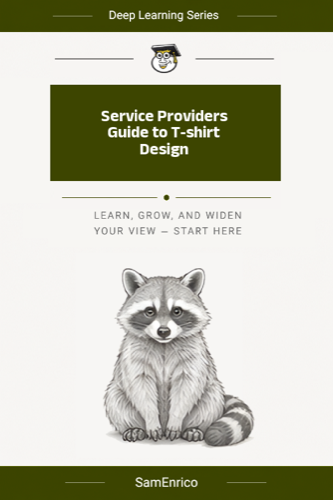 Service Providers Guide to T-shirt DesignApplegate Santina$11.99
 How to Produce WhiteApplegate Santina$11.99
You may also like
 Pomodoro For OutliningNeville Adrianne$11.99
 Prospective Memory and SleepToler Elenora$11.99
 Implementation Intentions PlanTrimble Virgilio$11.99
 Study Schedule BlueprintQuinones Katharyn$11.99
 The Remote Weekly Review GuideEsparza Taren$11.99
 Daily Scheduling Master PlanHaag Melvin$11.99
 Atomic Habits For PlanningErinn Palma$11.99
 Weekly Review Habit GuideNeville Dallas$11.99
 The SMART Goals WorkbookBurgos Verda$11.99
 Morning Planning SessionFlorence Windy$11.99
 Week Planning Scheduling SystemKerns Madelene$11.99
 Study Schedule Planning GuideThornhill Soon$11.99