
Non-FictionHealth & WellnessNeurology
HRT For Cognitive Function Dementia Guide eBook
Reviews evidence on estrogen's role in Alzheimer's
Reviews evidence on estrogen's role in Alzheimer's prevention and cognitive aging.
Formats
Free sample
Chapter 1: The XX Brain...--–- When Dr. Sarah Jenkins walked into her annual check-up at age 49, she expected the usual: a blood pressure cuff, a quick breast exam, and a prescription refill. What she did not expect was to leave with her intelligence questioned. "You're just getting older," her physician chuckled when she mentioned forgetting appointments, struggling to find common words, and feeling mentally sluggish. "Maybe cut back on stress." Sarah was a Harvard-trained neurologist.
She knew what early dementia looked like, and this wasn't it. But when she pressed for answers—could this be related to perimenopause?—the doctor shrugged. "We don't really study that."Sarah's story is not unusual. It is the story of millions of women who enter their 40s and 50s and suddenly feel like their brains have been replaced with a slower, foggier version of themselves. They are told it is stress, aging, or "all in their heads." But Sarah—and eventually, the women she would go on to treat—knew something else was happening.
Their brains were changing, and no one in mainstream medicine seemed to care.This book exists because Sarah's story is also my story, and likely, it is your story or the story of someone you love. For decades, medical research has treated women as if they are simply smaller versions of men. We have studied male hearts, male brains, and male hormones, and then we have applied those findings to women as if the only difference were reproductive organs. This approach has been a catastrophic failure—nowhere more so than in the field of cognitive health and dementia prevention.Welcome to the first chapter of The HRT for Cognitive Function & Dementia Guide. Before we dive into the science of estrogen, the mechanics of hormone replacement therapy, or the 12-week protocol that will change your brain's trajectory, we must first understand a fundamental truth: the female brain is not a male brain with estrogen added.
It is a structurally, functionally, and genetically distinct organ. And until we accept that, we will continue to fail women at the moment they need help the most.The Myth of the "Neutral" Brain For most of medical history, the default human being in research was male. Drug trials, neurological studies, and even basic animal research overwhelmingly used male subjects. The reasoning was simple and, in retrospect, deeply flawed: female hormones "complicated" the data. Menstrual cycles, pregnancy, and menopause introduced variables that researchers found inconvenient.
So they excluded women, or they failed to analyze their data by sex.This practice, which persisted well into the 1990s, created a medical knowledge base that is fundamentally androcentric—centered on the male body. When researchers did study women, they focused almost exclusively on what I call "bikini medicine" : breasts, ovaries, uterus, and pregnancy. Everything else—the heart, the immune system, the brain—was assumed to work the same way in women as in men.We now know this assumption was catastrophically wrong.The female brain differs from the male brain in at least a dozen fundamental ways. It ages differently. It metabolizes glucose differently.
It responds to stress differently. And most critically for this book, it is exquisitely sensitive to the rise and fall of the hormone estradiol—a sensitivity that has profound implications for cognitive function and dementia risk.The Two X Chromosomes: A Genetic Advantage and Vulnerability Let us start with the most basic biological fact: women have two X chromosomes. Men have one X and one Y. For decades, geneticists viewed the Y chromosome as the "active" one—the chromosome that made males male—while the X was seen as relatively passive. We now understand that the X chromosome carries over 1,100 genes, many of which are directly involved in brain function.These X-linked genes influence everything from synaptic formation (how neurons connect) to mitochondrial function (how brain cells produce energy) to immune regulation in the central nervous system.
Having two X chromosomes means women have a genetic backup system for many critical brain processes. If one X carries a mutation, the other X can often compensate.This sounds like a clear advantage, and in many ways, it is. Women have lower rates of certain X-linked neurological disorders. They are more resilient to some forms of brain injury. They live longer, on average, than men.But there is a catch.
Having two X chromosomes also means the female brain is more genetically dynamic—and more vulnerable to disruption when that dynamic system is thrown off balance. The most dramatic disruption in a woman's life is the transition through menopause, when the ovaries stop producing estradiol, and the brain must suddenly adapt to a radically different hormonal environment.Men never experience anything like this. Their testosterone declines gradually, over decades, in a linear fashion. Women experience a cliff. Over the course of a few years—sometimes months—their estradiol levels drop by 80 to 90 percent.
And because the female brain has evolved to expect high levels of estradiol for reproductive function, this drop is not a minor inconvenience. It is a metabolic catastrophe for millions of neurons.The Alzheimer's Paradox: Why Women Bear the Brunt Let us examine the most alarming statistic in all of dementia research: women are twice as likely as men to develop Alzheimer's disease. This is not because women live longer. Even when you control for age, the disparity persists. A 65-year-old woman has a 1 in 5 chance of developing Alzheimer's in her remaining lifetime.
A 65-year-old man has a 1 in 10 chance.For decades, researchers assumed this disparity was genetic. Perhaps women had a "bad" gene on their second X chromosome. Or perhaps the APOE4 gene (which we will explore in depth in Chapter 10) affected women more severely.But a growing body of evidence points to a different explanation: the dramatic hormonal transition of menopause. The timing is too precise to be coincidental. The steepest increase in Alzheimer's risk for women occurs in the decade following menopause—precisely when estradiol levels have bottomed out.
Men, who experience no equivalent hormonal cliff, show a steady, linear increase in risk starting in their 60s and 70s.Consider the landmark Rochester Epidemiology Project, which followed thousands of women for decades. Researchers found that women who entered menopause earlier (before age 45) had a significantly higher risk of dementia later in life. Women who entered menopause later (after age 55) had a significantly lower risk. The pattern was so clear that researchers could predict dementia risk based almost entirely on the age of menopause—a finding that points directly to estrogen as a key protective factor.But if estrogen is so protective, why do not all women develop dementia after menopause? Because some women's brains are more resilient than others.
Genetics, diet, exercise, sleep, and a dozen other factors modulate the impact of estrogen loss. Some women have "backup systems" that allow their brains to adapt. Others do not. The goal of this book is to help you become one of the resilient ones.How the Female Brain Ages Differently To understand why menopause is such a critical event for the female brain, we must first understand how men and women age cognitively in different patterns.Men, on average, show a linear decline…
This is the end of the free sample. Get the eBook to keep going. Buy now
About this book
Details
- Author
- Shoemaker Dennis
- Publisher
- SamEnrico
- Language
- English
- Genre
- Non-Fiction, Health & Wellness, Neurology
- Released
- 2026-06-10
- Pages (approx.)
- 148
- Available as
- eBook, Audiobook

Read better in the ZLOADR app
Your eBooks on your phone or tablet. Sign in with your SamEnrico account and start reading.
More by Shoemaker Dennis
 Logistics Tech Investment PlanShoemaker Dennis$11.99
 Paystack Acquisition Exit GuideShoemaker Dennis$11.99
 Child Post Hypnotic GuideShoemaker Dennis$11.99
 The Empathy for Infertility GuideShoemaker Dennis$11.99
 The Maestro of Strings: Manuel Velázquez and the Birth of the Modern GuitarShoemaker Dennis$11.99
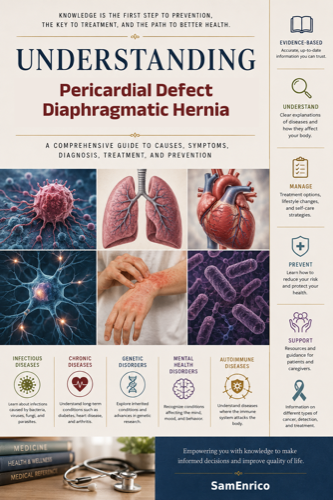 Understanding Pericardial Defect Diaphragmatic HerniaShoemaker Dennis$17.99
 Stripe Connect Platform GuideShoemaker Dennis$12.99
 London Pop Up Permits and RegulationsShoemaker Dennis$12.99
 ScrapbookingShoemaker Dennis$11.99
 How to Start a Theme Parks BusinessShoemaker Dennis$11.99
You may also like
 Hong Kong Handover 1997Dunn Johnnie$11.99
 Zumba For Postnatal Recovery CourseNeal Christian$11.99
 Zumba for BeginnersLadner Nikia$11.99
 YouTube Comment Mining GuideHumes Pandora$12.99
 Worry Box MeditationCarlin Rudy$11.99
 Workplace Stress MeditationNguyen Lynn$11.99
 Workplace Stress and Sleep RepairHawley Ivory$11.99
 Workplace Perfectionism CureDelaney Jeffry$11.99
 Workplace Injustice Anger GuideWallen Isabelle$11.99
 Work Addiction and Burnout LinkGreenwood Ester$11.99
 Women in Yoga and WellnessBeattie Galina$11.99
 Women in Stand Up ComedyChun Evangeline$11.99