
Non-FictionInformativeEducational
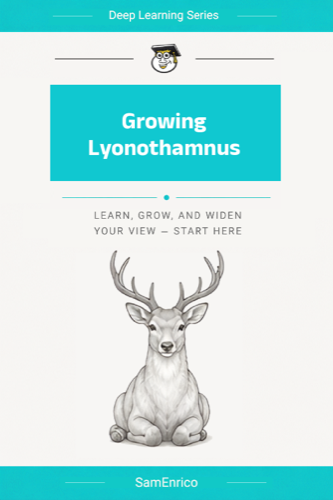
Growing Lyonothamnus Audiobook
This publication, published by SamEnrico, covers G
by Mendez May
This publication, published by SamEnrico, covers Growing Lyonothamnus
Formats
Free sample
Chapter 1: The Last Survivor...–- Before the first European botanists ever laid hands on a specimen of Lyonothamnus, before it received its Latin name, before it was ever planted in a single garden, this tree had already survived the apocalypse. Not the apocalypse of human imagination—no fire, flood, or famine of biblical proportion—but the slow, indifferent apocalypse of climate change, competition, and geological time. While mammoths roamed California and saber-toothed cats stalked the coastal valleys, Lyonothamnus flourished across the mainland. Then, somewhere between the Pliocene and the Pleistocene, the world shifted. Summers grew longer and drier.
New trees evolved faster, competed harder, and claimed territory. One by one, the ironwood populations on the mainland blinked out. By the time humans first crossed the land bridges into the Americas, Lyonothamnus had already retreated to its last redoubts: the wind-scoured, fog-shrouded, rocky slopes of the Channel Islands. This is not a tree that learned to thrive everywhere. It is a tree that learned to survive in one place, perfectly and precisely, and then waited.The story of growing Lyonothamnus in a garden is not a story of conquest or domestication.
It is a story of negotiation. You cannot force this tree to grow where it does not wish to grow. You cannot trick it with fertilizer or coddle it with excessive water or bully it with pruning shears. What you can do is understand where it came from, what it needs, and why those needs are so specific. Then, and only then, can you become a steward of one of the most remarkable living fossils in the North American flora.The Weight of Deep Time To understand Lyonothamnus, you must first understand the scale of its loneliness in the plant kingdom.
This genus is what botanists call monotypic—it contains only one living species, Lyonothamnus floribundus, which itself divides into two subspecies. In an era of hyper-specific taxonomy where every minor variation earns a new name, a monotypic genus is a botanical declaration of isolation. Lyonothamnus has no close living relatives. Its nearest cousins, whatever they once were, have vanished entirely from the Earth. It stands alone, the last of its evolutionary lineage, a single candle flickering at the end of a long, dark hall.Fossil evidence tells a startling story.
Paleobotanists have identified Lyonothamnus leaves and fruits in Miocene and Pliocene deposits across California, Nevada, and even as far east…
This is the end of the free sample. Get the Audiobook to keep going. Buy now
About this book
Details
- Author
- Mendez May
- Publisher
- SamEnrico
- Language
- English
- Genre
- Non-Fiction, Informative, Educational
- Released
- 2026-05-11
- Pages (approx.)
- 145
- Available as
- eBook, Audiobook

Listen in the VoxFlicks app
Audiobooks and audio dramas wherever you go. Sign in with your SamEnrico account and press play.
More by Mendez May
 The MBSR for Tinnitus ReliefMendez May$11.99
 No More Mr. AngryMendez May$11.99
 Medical Residency MentorshipMendez May$11.99
 Altitude Sickness PreventionMendez May$11.99
 Self Esteem After Missing PromotionMendez May$11.99
 Private Antitrust DamagesMendez May$11.99
 Pollen and Spore ForensicMendez May$11.99
 Assertiveness For MediatorsMendez May$11.99
 Barrymore Dynasty - John BarrymoreMendez May$11.99
 The Velvet Revolution: How a Secretive Chinese Designer Toppled the Luxury IndustryMendez May$11.99
 The Samurai of Rugby: Japan's Unlikely World Cup Triumph (1987-2000)Mendez May$11.99
 Frozen Genius: The Arctic Theorem That Changed Mathematics ForeverMendez May$11.99
You may also like
 Hong Kong Handover 1997Dunn Johnnie$11.99
 Zumba For Postnatal Recovery CourseNeal Christian$11.99
 Zumba for BeginnersLadner Nikia$11.99
 YouTube Comment Mining GuideHumes Pandora$12.99
 Worry Box MeditationCarlin Rudy$11.99
 Workplace Stress MeditationNguyen Lynn$11.99
 Workplace Stress and Sleep RepairHawley Ivory$11.99
 Workplace Perfectionism CureDelaney Jeffry$11.99
 Workplace Injustice Anger GuideWallen Isabelle$11.99
 Work Addiction and Burnout LinkGreenwood Ester$11.99
 Women in Yoga and WellnessBeattie Galina$11.99
 Women in Stand Up ComedyChun Evangeline$11.99