
Non-FictionInformativeEducational
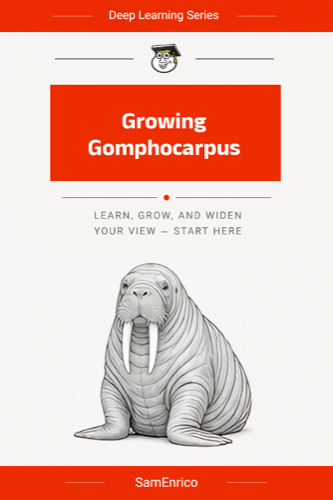
Growing Gomphocarpus
This publication, published by SamEnrico, covers G
This publication, published by SamEnrico, covers Growing Gomphocarpus
Formats
About this book
Free sample
Chapter 1: The Strangest Seed...–- It began, as many obsessions do, with a laugh. I was standing in a fellow flower farmer’s field in late September, admiring rows of zinnias and dahlias, when she pointed to a corner of her cutting garden and said, “You want to see something ridiculous?” There, rising six feet tall, were stems covered in what looked like lime-green spiked balloons, each one the size of a small apple, hollow, hairy, and utterly absurd. “Those,” she said with a grin, “are my Hairy Balls. They’re the best-selling stem at the farmers’ market. People can’t resist touching them.”I laughed.
Then I touched one. Then I bought seeds. And that single encounter launched me into a five-year journey with a plant genus that defies every expectation a gardener might have.This book is the result of that journey—and of synthesizing everything the top gardening books, scientific papers, and commercial growers have to say about Gomphocarpus. What I discovered is that this bizarre African milkweed is far more than a novelty. It is a plant that can transform a garden, support endangered butterflies, bring unexpected income to flower farmers, and spark more conversations than any rose ever could.Welcome to Growing Gomphocarpus: The Complete Guide to Balloon Plant Success.
Let me show you why this strange, spiky, wonderful plant deserves a place in your garden.What Exactly Is Gomphocarpus?Before we dig into the how-to, we need to understand the what. Gomphocarpus (pronounced gom-foh-KAR-pus) is a genus of flowering plants in the Apocynaceae family—the same family that includes milkweeds, oleander, and frangipani. For many years, botanists classified these plants under the genus Asclepias, which is why you will sometimes see them labeled as Asclepias physocarpa or Asclepias fruticosa in older gardening books. Modern taxonomy has separated them, but the close relationship remains obvious: both produce milky sap, both have complex flower structures designed for pollination by specialized insects, and both serve as host plants for Monarch butterflies.The name Gomphocarpus comes from Greek roots: gomphos meaning “club” or “bolt,” and karpos meaning “fruit.” This refers to the…
This is the end of the free sample. Get the eBook to keep going. Buy now
Contents
- Chapter 1
- Chapter 2
- Chapter 3
- Chapter 4
- Chapter 5
- Chapter 6
- Chapter 7
- Chapter 8
- Chapter 9
- Chapter 10
- Chapter 11
- Chapter 12
Details
- Author
- Moseley Arica
- Publisher
- SamEnrico
- Language
- English
- Genre
- Non-Fiction, Informative, Educational
- Released
- 2026-06-02
- Pages (approx.)
- 137
- Available as
- eBook, Audiobook

Read better in the ZLOADR app
Your eBooks on your phone or tablet. Sign in with your SamEnrico account and start reading.
More by Moseley Arica
 Napping for MenopauseMoseley Arica$11.99
 Parent Overdose Death RecoveryMoseley Arica$11.99
 Mixed Episode Recognition GuideMoseley Arica$11.99
 Startup Remote MetricsMoseley Arica$11.99
 The Doctor Office WaitMoseley Arica$11.99
 Jumia Cross Border GuideMoseley Arica$11.99
 Social Boundary SettingMoseley Arica$11.99
 Surviving Your Childs DeathMoseley Arica$11.99
 Back Pain MeditationMoseley Arica$11.99
 The Vanishing of Flight 772: The Last TransmissionMoseley Arica$11.99
 The Clay Spy of Enki: A God’s Double AgentMoseley Arica$11.99
 The Mole in the Kremlin: The Spy Who Outplayed the KGBMoseley Arica$11.99
You may also like
 Hong Kong Handover 1997Dunn Johnnie$11.99
 Zumba For Postnatal Recovery CourseNeal Christian$11.99
 Zumba for BeginnersLadner Nikia$11.99
 YouTube Comment Mining GuideHumes Pandora$12.99
 Worry Box MeditationCarlin Rudy$11.99
 Workplace Stress MeditationNguyen Lynn$11.99
 Workplace Stress and Sleep RepairHawley Ivory$11.99
 Workplace Perfectionism CureDelaney Jeffry$11.99
 Workplace Injustice Anger GuideWallen Isabelle$11.99
 Work Addiction and Burnout LinkGreenwood Ester$11.99
 Women in Yoga and WellnessBeattie Galina$11.99
 Women in Stand Up ComedyChun Evangeline$11.99