
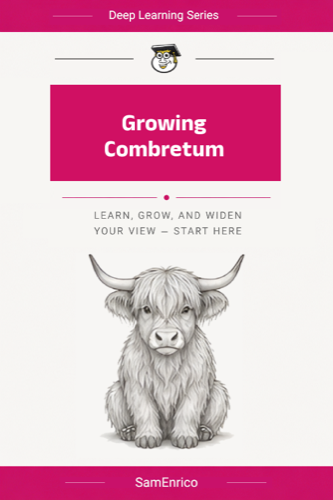
Growing Combretum
This publication, published by SamEnrico, covers G
by Yee Loura
This publication, published by SamEnrico, covers Growing Combretum
Formats
About this book
Free sample
Chapter 1: The Accidental Obsession...-- It begins, as many obsessions do, with a single photograph. I was scrolling through a botanical forum late one night—the kind of aimless digital wandering that precedes regret or revelation—when I stopped at an image that made me set down my coffee. A vine, thick as a garden hose, had swallowed a pergola whole. From its tangled branches spilled cascades of flowers that shifted from cream to pink to crimson, sometimes all three colors on the same cluster. The caption read simply: Combretum indicum, Rangoon creeper, 15 years old, Southern California.
I had never heard of Combretum. I had been gardening for two decades. I had grown roses from bare roots, resurrected orchids from supermarket clearance racks, and once successfully germinated a thirty-year-old date seed found in an Egyptian tomb. But this plant was a stranger to me, and that felt like a personal failing.The next morning, I went hunting. Not to a nursery—I knew better than to expect such a plant at the local big-box garden center with its predictable rows of petunias and boxwoods.
Instead, I went down the rabbit hole of seed exchanges, specialty growers, and university herbarium databases. What I found changed the trajectory of my garden and, in many ways, my life. The genus Combretum, I discovered, contains somewhere between 250 and 370 species—taxonomists argue about the exact number, and as we will explore throughout this book, that debate tells you something important about how little mainstream attention this genus has received. These species span three continents: Africa, Asia, and the Americas. They grow as towering trees in Zimbabwean river valleys, as scrambling climbers in the rainforests of Borneo, and as gnarled shrubs clinging to the cliffs of Madagascar.
They are among the most drought-tolerant flowering plants on earth, yet they produce blooms that rival the most pampered tropical specimens. They attract birds, bees, butterflies, and—if you are lucky—the admiration of neighbors who have no idea what they are looking at.And almost no one grows them.That last realization was the hook that sank into me and never let…
This is the end of the free sample. Get the eBook to keep going. Buy now
Contents
- Chapter 1
- Chapter 2
- Chapter 3
- Chapter 4
- Chapter 5
- Chapter 6
- Chapter 7
- Chapter 8
- Chapter 9
- Chapter 10
- Chapter 11
- Chapter 12
Details
- Author
- Yee Loura
- Publisher
- SamEnrico
- Language
- English
- Genre
- Non-Fiction, Informative, Educational
- Released
- 2026-05-07
- Pages (approx.)
- 158
- Available as
- eBook, Audiobook

Read better in the ZLOADR app
Your eBooks on your phone or tablet. Sign in with your SamEnrico account and start reading.
More by Yee Loura
 Sleep Time Self TalkYee Loura$11.99
 Context Dependent Body LanguageYee Loura$11.99
 The Krebs Cycle RevelationYee Loura$11.99
 John Paulson SubprimeYee Loura$11.99
 Metta for the Inner ChildYee Loura$11.99
 Drug Dependency and LGBTQ Plus CommunityYee Loura$11.99
 Anapanasati for RunningYee Loura$11.99
 Bill Hicks RevelationsYee Loura$11.99
 Dare to Defy: The Revolutionary Rise of Darcey Bussell and the Royal BalletYee Loura$11.99
 The Billion-Dollar Bamboozle: How a Math Genius Outsmarted Wall StreetYee Loura$11.99
 How to Produce Blu-ray PlayersYee Loura$11.99
 Wealth Display Comparison TrapYee Loura$12.99