
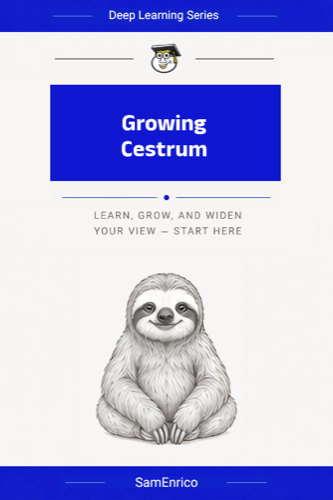
Non-FictionInformativeEducational
Growing Cestrum eBook
This publication, published by SamEnrico, covers G
by Luna Marian
This publication, published by SamEnrico, covers Growing Cestrum
Formats
Free sample
Chapter 1: Beyond White Jasmine…--–- When most gardeners first encounter a Cestrum, they almost always mistake it for something it is not. The long, tubular flowers, the sweet fragrance that drifts across the garden at dusk, the clusters of berries that follow—all of these traits scream “jasmine” to the untrained eye. But the plant you are about to grow belongs to an entirely different botanical family, one that includes tomatoes, potatoes, and tobacco rather than true jasmines. This misunderstanding is the first and most important hurdle to overcome, because everything about how you care for Cestrum—from its watering needs to its toxicity to its aggressive growth habits—flows directly from understanding what this plant truly is and where it came from.The genus Cestrum contains roughly 150 to 200 species of evergreen or semi-evergreen shrubs and small trees, all native to the warm temperate and tropical regions of the Americas. Their range stretches from the southern United States down through Mexico, Central America, the Caribbean islands, and deep into South America as far as Argentina and Chile.
Despite this broad distribution, most cultivated species come from a relatively narrow band of subtropical and tropical climates, which explains both their sensitivity to frost and their remarkable adaptability to container life in colder regions.What makes Cestrum so fascinating to botanists and gardeners alike is the sheer diversity hidden within this single genus. Some species, like the famous night-blooming jasmine (Cestrum nocturnum), have been cultivated for centuries specifically for their intoxicating evening fragrance. Others, like the orange cestrum (Cestrum aurantiacum), are grown primarily for their vivid, day-blooming flowers that attract hummingbirds from across the garden. Still others, like the willow-leaved cestrum (Cestrum parqui), offer unusual foliage shapes and exceptional cold hardiness at the cost of increased toxicity. And a few species, such as the day-blooming jessamine (Cestrum diurnum), provide sweet daytime fragrance and glossy berries that add ornamental interest well into the winter months.This chapter will give you the foundational knowledge you need to become a successful Cestrum grower.
You will learn where these plants come from, how they are classified, what distinguishes the major cultivated species from one another, and why understanding their botanical identity matters for your day-to-day care routine. By the end of this chapter, you will be able to look at a Cestrum and see not just a pretty flowering shrub, but a member of a fascinating plant family with specific needs, unique adaptations, and a rich horticultural history.The Nightshade Family Connection To understand Cestrum, you must first understand the Solanaceae—the nightshade family. This is one of the most economically and culturally important plant families on Earth, containing roughly 2,700 species across 98 genera. When you eat a tomato, slice a potato for frying, dice an eggplant for curry, or sprinkle paprika on your eggs, you are consuming members of the same family that includes your Cestrum shrubs. Even the tobacco you might smell wafting from a neighbor’s porch comes from Nicotiana tabacum, another solanaceous plant.The nightshade family is characterized by several shared features.
Most species produce alternate leaves (meaning leaves grow singly at each node rather than in pairs), flowers with five fused petals that form a tube or star shape, and fruits that are berries or capsules. The flowers are typically hermaphroditic—containing both male and female parts—and are pollinated by a wide range of insects, birds, and bats depending on the species. Cestrum fits perfectly into this pattern: its leaves are simple, alternate, and generally smooth-edged; its flowers are tubular with five flaring lobes; and its fruits are small, juicy berries containing multiple seeds.But the most important shared characteristic of the nightshade family is the presence of alkaloids—nitrogen-containing compounds that are often toxic to animals. These alkaloids evolved as chemical defenses against herbivores, and different genera within the Solanaceae have developed different chemical arsenals. Tomatoes produce tomatine, potatoes produce solanine and chaconine, tobacco produces nicotine, and Cestrum produces a cocktail of alkaloids including solasonine and solamargine.
These compounds can cause gastrointestinal distress, neurological symptoms, and in severe cases, death in mammals—including humans, dogs, cats, and livestock.This is why every part of every Cestrum species is considered toxic. The berries, which birds can consume without ill effect (their metabolisms process the alkaloids differently), are particularly dangerous to pets and small children because they look attractive and taste sweet. The leaves and stems contain higher concentrations of alkaloids during active growth. Even the roots, though rarely ingested, contain toxic compounds. We will cover toxicity in detail in Appendix B, but for now, the key takeaway is this: Cestrum is not a plant for households with unsupervised pets or toddlers who put everything in their mouths.
Treat it with the same respect you would give to a foxglove or a castor bean plant.Despite this toxicity—or perhaps because of it—Cestrum species have evolved remarkable resilience. Their chemical defenses make them unappealing to most mammalian herbivores, including deer and rabbits. In many gardens, Cestrum is one of the few flowering shrubs that deer will leave completely untouched. This resistance to browsing is a significant advantage for gardeners in areas with high deer pressure, and we will return to this point in Chapter 12 when discussing landscape design.Native Habitats and What They Tell Us About Care The native range of Cestrum provides essential clues about how to grow these plants successfully. Most cultivated species come from regions with warm temperatures, distinct wet and dry seasons, and soils that range from sandy coastal plains to rich volcanic slopes.
By understanding the specific conditions of each species’ home habitat, you can replicate those conditions in your own garden.Cestrum nocturnum originated in the West Indies—specifically Jamaica, Cuba, Hispaniola, and Puerto Rico—as well as the coastal lowlands of southern Mexico and Belize. Its natural habitat is tropical dry forest and disturbed areas near coasts, where temperatures rarely drop below 60°F (15°C) even in winter. Rainfall in these regions is seasonal, with a wet summer and a drier winter. This explains why C. nocturnum grows vigorously with regular watering in summer but can survive (and even benefit from) a drier winter rest period.
The plant is adapted to bright, direct sunlight but can tolerate light shade, especially in the hottest parts of the day. Soils in its native range are often limestone-derived, alkaline to neutral in p H, and very well-draining—a critical insight for anyone who has lost a Cestrum to root rot from heavy, waterlogged soil.Cestrum aurantiacum comes from the highlands of Guatemala and the Mexican states of Chiapas and Oaxaca, at elevations ranging from 2,500 to 6,000 feet (750 to 1,800 meters). This higher elevation means cooler average temperatures than lowland C. nocturnum, and the plants there experience occasional light frosts. This relative cold tolerance makes C.
aurantiacum a better choice for gardeners in marginal climates (USDA Zones 8-9). The soils in its native range are volcanic in origin, rich in organic matter, and slightly acidic to neutral. The species grows along forest edges and stream banks, indicating a preference for consistent moisture during the growing season but not standing water.Cestrum parqui has the widest native distribution, ranging from central Chile…
This is the end of the free sample. Get the eBook to keep going. Buy now
About this book
Details
- Author
- Luna Marian
- Publisher
- SamEnrico
- Language
- English
- Genre
- Non-Fiction, Informative, Educational
- Released
- 2026-06-02
- Pages (approx.)
- 159
- Available as
- eBook, Audiobook

Read better in the ZLOADR app
Your eBooks on your phone or tablet. Sign in with your SamEnrico account and start reading.
More by Luna Marian
 Breath Awareness For Pain ReliefLuna Marian$11.99
 DoorDash Customer Rating RepairLuna Marian$11.99
 The Withdrawal Symptom Management GuideLuna Marian$11.99
 Exercise Timing GuideLuna Marian$11.99
 Sudden Departure Post Mortem Analysis GuideLuna Marian$11.99
 Spouse Death and New IdentityLuna Marian$11.99
 Price Fixing Fine DatabaseLuna Marian$11.99
 Memory Blank ProtocolLuna Marian$11.99
 Cannabis Use Disorder ChecklistLuna Marian$11.99
 The Cosmic Harmonies of Samuel Coleridge-Taylor: A Musical VisionaryLuna Marian$11.99
 The Silent Conquest: Drake’s Circumnavigation and the Birth of Global EmpireLuna Marian$11.99
 How to Produce BackgroundsLuna Marian$11.99
You may also like
 Hong Kong Handover 1997Dunn Johnnie$11.99
 Zumba For Postnatal Recovery CourseNeal Christian$11.99
 Zumba for BeginnersLadner Nikia$11.99
 YouTube Comment Mining GuideHumes Pandora$12.99
 Worry Box MeditationCarlin Rudy$11.99
 Workplace Stress MeditationNguyen Lynn$11.99
 Workplace Stress and Sleep RepairHawley Ivory$11.99
 Workplace Perfectionism CureDelaney Jeffry$11.99
 Workplace Injustice Anger GuideWallen Isabelle$11.99
 Work Addiction and Burnout LinkGreenwood Ester$11.99
 Women in Yoga and WellnessBeattie Galina$11.99
 Women in Stand Up ComedyChun Evangeline$11.99