
Non-FictionInformativeEducational
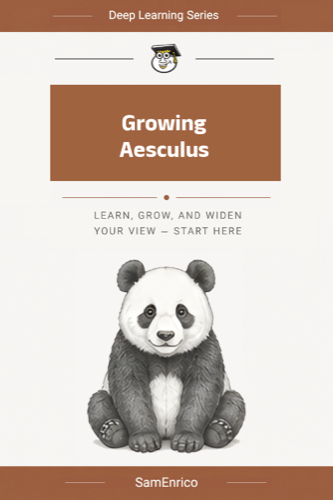
Growing Aesculus eBook
This publication, published by SamEnrico, covers G
by Brent Dewitt
This publication, published by SamEnrico, covers Growing Aesculus
Formats
Free sample
Chapter 1: The Survivor’s Secret--–- On a cold November afternoon, I watched a single buckeye nut split its husk and fall onto a bed of wet leaves. It was not a dramatic moment. There was no music, no slow-motion cinematography, no narrator whispering about the circle of life. Just a nut, falling from a tree, landing with a soft thud that barely registered above the rustle of wind through bare branches. Yet in that unremarkable instant, I realized that everything I thought I knew about growing Aesculus was wrong.For years, I had treated these trees like delicate divas.
I watered them on schedules. I fertilized them by the calendar. I pruned them with surgical precision. I sprayed them at the first sign of a yellow leaf. And one by one, they died.
Not dramatically—not with any single catastrophe I could point to—but slowly, stubbornly, as if they simply could not be bothered to meet my expectations.The nut that fell that November afternoon belonged to a tree I had ignored completely. It grew at the edge of a neglected property, a wild horse chestnut that had never been planted by human hands. No one had watered it during the summer drought. No one had mulched its roots or fertilized its soil. No one had pruned its branches or sprayed its leaves.
And yet it stood thirty feet tall, its trunk thick and its canopy full, dropping hundreds of viable nuts each autumn while my pampered saplings rotted in their graves.That tree was trying to tell me something. So were the academic papers I had been reading on seed dormancy and the old nurserymen I had been interviewing about grafting techniques. So were the forest ecologists studying the role of buckeyes in pre-glacial ecosystems and the pharmacologists extracting Aescin from horse chestnut seeds in European laboratories. The message, once I finally stopped long enough to hear it, was this: Aesculus does not need us to coddle it. It needs us to understand it.This chapter is about that understanding.
It is not a checklist of tasks or a collection of random facts. It is the foundation upon which every successful grower builds their practice: a deep, intuitive knowledge of what Aesculus actually is, where it came from, how it lives, and why it refuses to be treated like an ordinary ornamental tree. Master what follows, and the rest of this book will feel like common sense. Skip it, and you will spend years making the same mistakes I made.The Thirty-Million-Year-Old Survivor The genus Aesculus has been on this planet longer than most of the animals we recognize as modern wildlife. While dinosaurs were long gone by the time the first Aesculus appeared, the genus predates the evolution of horses, elephants, bears, and almost every bird species alive today.
Fossil evidence places the earliest Aesculus in the Eocene epoch, roughly thirty to fifty million years ago, when the Northern Hemisphere was warmer, wetter, and largely covered in subtropical forests.Those ancient Aesculus looked much like their modern descendants. The leaves were palmate—five to seven leaflets radiating from a central point—just as they are today. The flowers were showy panicles, adapted for insect pollination. The seeds were large nuts, encased in protective husks, designed to be dispersed by animals. The genus had already figured out its winning strategy, and it has been refining that strategy ever since.Then came the climate.
As the Eocene gave way to the Oligocene and Miocene, the Northern Hemisphere cooled and dried. Forests retreated. Deserts expanded. Species that could not adapt went extinct. Aesculus adapted by doing something remarkable: it split into three isolated populations.One population remained in Europe, evolving into what we now call horse chestnuts—most famously Aesculus hippocastanum, the Common Horse Chestnut of Balkan origin.
A second population survived in eastern Asia, giving rise to species like Aesculus turbinata (Japanese Horse Chestnut) and Aesculus chinensis (Chinese Horse Chestnut). And a third population persisted in eastern North America, evolving into the buckeyes: Aesculus flava (Yellow Buckeye), Aesculus glabra (Ohio Buckeye), Aesculus pavia (Red Buckeye), and their relatives.This pattern—scientists call it the Arcto-Tertiary Geoflora—explains everything from the shape of the leaves to the chemistry of the seeds. The three populations have been separated for millions of years, long enough to evolve distinct characteristics but not long enough to lose their essential Aesculus identity. When you plant a Japanese horse chestnut next to an Ohio buckeye, you are reuniting distant cousins whose last common ancestor lived before the Rocky Mountains finished rising.Why does this matter to you, the grower? Because it explains the single most important fact about Aesculus: these trees are survivors.
They did not just endure the climate chaos of the last thirty million years. They thrived through it. They adapted to ice ages and heatwaves, droughts and floods, pest outbreaks and volcanic winters. They are not fragile. They are not needy.
They are not waiting for you to save them with the perfect fertilizer schedule.What they need from you is not coddling. What they need is understanding.The Anatomy of a Survivor Before you can grow Aesculus successfully, you need to understand how these trees are built. Not as a botanist memorizing Latin terms, but as a grower who can look at a tree and see what it needs.Roots That Breathe The root system of a mature Aesculus is a marvel of natural engineering, but it is also the tree’s greatest vulnerability in cultivated landscapes. The fine feeder roots that absorb water and nutrients live in the top twelve to eighteen inches of soil. They need oxygen.
They need loose, well-aerated ground. They need organic matter to feed the soil microorganisms that help them function.In a forest, these conditions exist naturally. Leaves fall, decompose, and create a rich, spongy duff layer. Earthworms and fungi tunnel through the soil, creating channels for air and water. The soil stays cool and moist but never waterlogged.In a suburban lawn, these conditions are often destroyed.
Construction compacts the soil, squeezing out the air pockets that roots need. Lawnmowers and foot traffic further compress the ground. Chemical fertilizers kill the soil fungi that help roots absorb nutrients. And the constant removal of fallen leaves starves the soil of organic matter.The result is a tree that looks fine for a few years—living off the energy reserves stored in its roots from the nursery—and then slowly declines. The leaves get smaller.
The flowers become sparse. The branches start dying back from the tips. And the grower, convinced the tree must be diseased or attacked by pests, sprays and prunes and fertilizes, making everything worse.The solution is not more intervention. The solution is less. Plant Aesculus in soil that has not been compacted.
Mulch the root zone instead of planting grass up to the trunk. Leave the fallen leaves to decompose where they fall, or rake them into the mulch layer. Stop using chemical fertilizers that disrupt the soil food web. And for the love of all that is green, stop driving vehicles or parking cars under the canopy.Aesculus roots are…
This is the end of the free sample. Get the eBook to keep going. Buy now
About this book
Details
- Author
- Brent Dewitt
- Publisher
- SamEnrico
- Language
- English
- Genre
- Non-Fiction, Informative, Educational
- Released
- 2026-06-02
- Pages (approx.)
- 153
- Available as
- eBook, Audiobook

Read better in the ZLOADR app
Your eBooks on your phone or tablet. Sign in with your SamEnrico account and start reading.
More by Brent Dewitt
 Corporate Skills Nonprofits Actually NeedBrent Dewitt$11.99
 Managing Interruptions with ADHDBrent Dewitt$11.99
 Energy Pipeline Dividends GuideBrent Dewitt$11.99
 Failure Planning GuideBrent Dewitt$11.99
 Burnout And Compassion FatigueBrent Dewitt$11.99
 Upwork Niche Selection GuideBrent Dewitt$11.99
 Benzo Paradoxical ReactionBrent Dewitt$11.99
 Grief and Volunteering After Child LossBrent Dewitt$11.99
 Whispers from the Lost Library of AlexandriaBrent Dewitt$11.99
 Larry & Lenny: The Unlikely Love Story Behind Seinfeld's GeniusBrent Dewitt$11.99
 How to Produce Wireless Networking EquipmentBrent Dewitt$11.99
 How to Produce Medical Alarm SystemsBrent Dewitt$11.99
You may also like
 Hong Kong Handover 1997Dunn Johnnie$11.99
 Zumba For Postnatal Recovery CourseNeal Christian$11.99
 Zumba for BeginnersLadner Nikia$11.99
 YouTube Comment Mining GuideHumes Pandora$12.99
 Worry Box MeditationCarlin Rudy$11.99
 Workplace Stress MeditationNguyen Lynn$11.99
 Workplace Stress and Sleep RepairHawley Ivory$11.99
 Workplace Perfectionism CureDelaney Jeffry$11.99
 Workplace Injustice Anger GuideWallen Isabelle$11.99
 Work Addiction and Burnout LinkGreenwood Ester$11.99
 Women in Yoga and WellnessBeattie Galina$11.99
 Women in Stand Up ComedyChun Evangeline$11.99