
Non-FictionBiographyLinguistics
Green Beret Language Training eBook
Become fluent in Spanish French or Arabic to opera
Become fluent in Spanish French or Arabic to operate with foreign forces.
Formats
Free sample
Chapter 1: The Language Trap--–- The first time I nearly died in a foreign country, it wasn't because of a bullet, an IED, or an ambush. It was because I couldn't say one word. Not a complex word. Not a technical term. A word that a five-year-old native speaker knows.
The word was "left."We were conducting a vehicle checkpoint operation in a dusty village in a country I am not permitted to name. The year was 2009. My team had been on the ground for seventy-two hours. We were partnered with a platoon from the host nation's security forces—good men, underpaid, under-equipped, but willing to fight. Our mission was simple: interdict a known facilitator moving weapons and foreign fighters through the region.
The intelligence was solid. The target vehicle was a white Toyota Hilux, two men inside, armed. What could go wrong?Everything.The target vehicle appeared at exactly 1630 hours, just as the intelligence briefing had predicted. My team initiated the stop procedure. Spike strips deployed.
Hand signals went up. The vehicle slowed, then stopped. So far, textbook. My role was to approach the driver's side while my partner, a senior sergeant we'll call "Mike," covered the passenger. The host-nation soldiers were supposed to seal the rear and flanks.
Standard stuff. We had rehearsed it a dozen times in English, and another dozen times through an interpreter.But the interpreter was not with us at the point of contact. He was back at the patrol base, monitoring the radio net. In the moment of truth, it was just me, my broken Arabic, and a driver whose eyes were already calculating whether to fight or flee.I approached the window, weapon up but not pointed directly at the man's face—a conscious choice to de-escalate. I had learned that much from the pre-deployment cultural training.
What I had not learned was how to say "Turn off the engine" in the local dialect. I knew the Modern Standard Arabic phrase. I had memorized it from a government-issued phrasebook. But when I spoke it, the driver stared at me like I had just recited poetry at a funeral. He had no idea what I was saying.So I tried again, slower, louder—the universal sign of the desperate English speaker abroad.
Still nothing. The driver's right hand began to drift toward the center console. Mike saw it too. He called out over the radio: "Driver is reaching. Give the command now."I had no command to give.
I did not know the word for "stop" in the dialect. I did not know the word for "hands." I did not know the word for "engine." What I knew was a grab bag of tourist phrases: "Where is the bathroom?" "How much does this cost?" "Thank you very much." None of which were useful in preventing a man from reaching for what we both suspected was a weapon.The driver's hand disappeared into the console. Time did not slow down. It did the opposite. Everything accelerated into a blur of adrenaline and bad decisions.
Mike fired a warning shot into the dirt beside the vehicle. The driver's hand came out empty—no weapon, just a cell phone—but the damage was done. The host-nation soldiers, hearing the shot and understanding nothing else, opened fire on the vehicle. The passenger took a round in the shoulder. The driver, now terrified and bleeding from shattered glass, floored the accelerator and crashed through a nearby stall, killing a donkey and narrowly missing a child.We spent the next six hours doing damage control: medevac for the wounded passenger, compensation negotiations with the village elder for the donkey and the stall, and a lengthy report explaining why a routine vehicle stop had turned into a firefight and an international incident.The intelligence later confirmed that the driver and passenger were not the facilitators we were looking for.
They were farmers transporting vegetables to market. The "reaching" motion was the driver going for his phone to call his wife. The weapon we feared did not exist. Two innocent men were shot because I could not say four words: "Turn off the engine."That was the day I stopped treating language like a nice-to-have skill and started treating it like a weapon system. Because silence on the battlefield is not golden.
Silence gets people killed. And the difference between life and death often comes down to a single word—a word you either possess in the moment or you do not.The Myth of the Universal Translator Before we go any further, let me dismantle a dangerous fantasy that kills more soldiers than enemy action: the belief that someone else will translate for you.Every Green Beret I have ever met has entertained this thought at some point. Usually it sounds something like this: "I don't really need to learn the language. That's what the interpreter is for. That's what the foreign forces are for.
I'll just point and shoot."This is not just lazy thinking. It is lethal thinking.Interpreters are human beings, not radios. They get tired. They get scared. They get shot.
They have their own agendas, their own family pressures, their own loyalties that may not align with yours. I have worked with interpreters who were heroes—men and women who risked everything to help us communicate. I have also worked with interpreters who lied, who omitted critical information, who fed us disinformation because their cousin was in the enemy militia. And in every case, the only way I caught the lie was because I knew just enough of the language to realize that what they were saying did not match what I was hearing from the local people.The same is true for partner forces. You cannot assume that the host-nation soldier standing next to you will translate accurately, or at all.
In high-stress situations, even well-trained soldiers revert to their native language. They will shout commands to each other that you need to understand. They will ask you questions that you need to answer. And if you are standing there mute, you are not a partner. You are a liability.The Special Forces motto is De Oppresso Liber—"To Free the Oppressed." But you cannot free anyone if you cannot talk to them.
You cannot build trust. You cannot gather intelligence. You cannot de-escalate a confrontation. You cannot coordinate fire support. You cannot do any of the things that make a Green Beret different from a conventional infantryman.
You become, in the words of one retired general I interviewed, "a highly trained tourist with a gun."This book exists because that general—and dozens of other operators, trainers, and linguists I have spoken with—believes that the military's approach to language training is fundamentally broken. We spend millions of dollars on programs that produce operators who can pass a written test but cannot order food in a restaurant, let alone negotiate with a militia leader. We prioritize grammar over communication, written over spoken, and classroom time over field time. And then we are surprised when soldiers freeze up at the moment of contact.I wrote this book to fix that. Not with theory, not with academic linguistics, but…
This is the end of the free sample. Get the eBook to keep going. Buy now
About this book
Details
- Author
- Mccann Malika
- Publisher
- SamEnrico
- Language
- English
- Genre
- Non-Fiction, Biography, Linguistics
- Released
- 2026-06-06
- Pages (approx.)
- 150
- Available as
- eBook, Audiobook

Read better in the ZLOADR app
Your eBooks on your phone or tablet. Sign in with your SamEnrico account and start reading.
More by Mccann Malika
 Workaholism And Anger IssuesMccann Malika$11.99
 Franklin Anne Sayre Biography CourseMccann Malika$11.99
 The Anger Trigger Reduction PlanMccann Malika$11.99
 New Hire Creative Onboarding GuideMccann Malika$11.99
 The Sleeping Sickness Sleuths: Unraveling Africa's Silent EpidemicMccann Malika$11.99
 Lancelot’s Shadow: The Knight Who Loved a GhostMccann Malika$11.99
 Client Care SpecialistMccann Malika$11.99
 Revenue Acceleration GuideMccann Malika$12.99
 Conversational English GuideMccann Malika$12.99
 Understanding Furunculous MyiasisMccann Malika$17.99
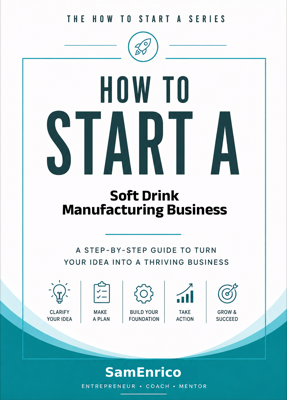 How to Start a Soft Drink Manufacturing BusinessMccann Malika$11.99
You may also like
 Hong Kong Handover 1997Dunn Johnnie$11.99
 Zumba For Postnatal Recovery CourseNeal Christian$11.99
 Zumba for BeginnersLadner Nikia$11.99
 YouTube Comment Mining GuideHumes Pandora$12.99
 Worry Box MeditationCarlin Rudy$11.99
 Workplace Stress MeditationNguyen Lynn$11.99
 Workplace Stress and Sleep RepairHawley Ivory$11.99
 Workplace Perfectionism CureDelaney Jeffry$11.99
 Workplace Injustice Anger GuideWallen Isabelle$11.99
 Work Addiction and Burnout LinkGreenwood Ester$11.99
 Women in Yoga and WellnessBeattie Galina$11.99
 Women in Stand Up ComedyChun Evangeline$11.99