
Non-FictionBusiness BriefEco-Compliance
Gender Equality Certification eBook
Get gender equality certification for export. Wome
by Rounds Jetta
Get gender equality certification for export. Women's empowerment in supply chains.
Formats
Free sample
Chapter 1: The 2158 Deadline--The year is 2158. That is not the release date of a science fiction film. It is the year the World Economic Forum predicts that global gender parity will finally be achieved—if we continue at the current glacial pace. Let me say that again. If nothing changes, if no disruption occurs, if every company continues doing exactly what it is doing today, your great-granddaughter will be middle-aged before a woman earns the same as a man for the same work, before female farmers own the land they till, before women sit in equal numbers in boardrooms and parliaments.Five generations.
That is the waiting period the global economy has implicitly accepted.Your buyers are not willing to wait.This chapter is not a philosophical argument about why gender equality matters. You have heard those arguments. You may agree with them or you may not. It does not matter. What matters is this: gender equality has shifted from a corporate social responsibility nice-to-have to a binding market-access requirement.
The largest retailers on earth—Walmart, Target, Lidl, Carrefour, Aldi—are now imposing gender criteria on their suppliers. The German Supply Chain Due Diligence Act, passed in 2023, legally requires companies to audit and report on gender discrimination in their supply chains. The European Union is finalizing its Corporate Sustainability Due Diligence Directive, which will apply to any company doing business in Europe, regardless of where it is headquartered.If you export anything—coffee, cocoa, garments, electronics, spices, handicrafts, seafood, auto parts—your buyers will soon demand proof of gender equality. Not promises. Not statements of principle.
Certifiable, auditable, verifiable proof.This chapter will show you exactly how close that deadline is for your specific business. You will complete a risk calculator that tells you, within a 90-day window, when your largest buyer will ask for gender certification. You will see, through a detailed case study of the Ivorian cocoa sector, what happens when exporters ignore this trend. And you will understand why gender equality certification is not a cost but a competitive weapon—one that your competitors are already acquiring.The Myth of the Social Issue Let us clear away a misunderstanding immediately. Many business owners, particularly those in developing countries, view gender equality as a Western social agenda imposed upon them by distant NGOs and well-meaning but disconnected activists.
They see it as a luxury for wealthy companies with excess resources. They believe that issues like pay equity and workplace harassment are secondary to the real business of production, shipping, and profit.This perspective is not just wrong. It is dangerously expensive.Gender inequality is a supply chain risk management problem. When women are excluded from training, they cannot improve productivity. When women lack land rights, they cannot invest in long-term soil health.
When women face harassment without recourse, they leave—and the supply chain loses experienced workers. When women are paid less than men for the same output, they produce less because effort and reward are decoupled.Consider the math. If your supply chain relies on 100 workers and 60 of them are women, but those 60 women receive no training, no promotion opportunities, and lower pay, you are effectively operating at 60 percent of your potential human capital. You are paying for 100 bodies but getting only 70 units of productivity, because the women are demotivated, under-skilled, and planning their exit.Now consider what happens when a buyer like Nestlé or Mars or Walmart audits your facility and discovers this. You do not receive a warning.
You receive a deadline: fix this within 12 months or lose the contract. And fixing it—building a certification-ready gender equality program from scratch—typically takes 24 months if you start from zero. You are now in a race you cannot win.The 2158 Problem is not a moral indictment. It is a mathematical reality. The world is moving toward gender parity at a rate of approximately 0.5 percent per year.
At that speed, full parity arrives in 2158. But your buyers are moving at a much faster speed. They have made public commitments. Walmart pledged to advance women's economic empowerment across its supply chain by 2025. Target set a goal of 100 percent of its owned-brand suppliers having a women's empowerment policy by 2025.
Lidl committed to requiring social compliance audits that include gender criteria for all high-risk suppliers.Your buyers' deadlines are measured in months, not generations.The Ivorian Cocoa Case Study: A Warning Let me take you to Côte d'Ivoire, the world's largest cocoa producer. This country supplies 40 percent of the world's cocoa. The chocolate industry depends on it. In 2023, the Ivorian cocoa sector employed approximately 1.2 million farmers. Of those, 68 percent were women.Now ask yourself: what percentage of Ivorian cocoa farmers who receive formal agricultural training are women?
What percentage who have legal land title? What percentage who access bank financing for farm improvements?The answer to all three questions is effectively zero. Less than 1 percent. In some regions, literally zero.I traveled to the Soubré region of Côte d'Ivoire in 2022 to visit a cooperative of 2,000 cocoa farmers. The cooperative had been certified organic and Fairtrade.
It had a modern fermentation facility. It exported directly to a European chocolate maker. By any external measure, this was a successful exporter.Inside the cooperative, the reality was different. The men made decisions. The men attended training sessions.
The men signed contracts. The men received payments. The women—who did 68 percent of the labor, including harvesting, pod breaking, fermentation, and drying—were listed as "helpers" or "spouses." They had no voting rights in the cooperative. They could not attend training because training sessions were scheduled on Sundays, the only day women had for household work. They had no separate bank accounts; payments went to their husbands, who allocated "household money" back to them arbitrarily.When I asked the female farmers what they would change, one woman—her name was Adjo, and she had been farming cocoa for twenty-two years—said this: "I have never seen the contract.
I have never met the buyer. I do not know how much my cocoa sells for. I only know what my husband gives me."Two years after my visit, that cooperative collapsed. Not because of disease or drought or market prices. Because the women left.
They had had enough. They refused to work for invisible wages and unacknowledged labor. The men could not harvest alone. The cooperative defaulted on its export contracts. The European buyer canceled the relationship.This is not a story about injustice, though injustice is present.
This is a story about supply chain fragility. When you build a supply chain on the backs of disempowered women, you are building on sand. Women with no training cannot innovate. Women with no land rights cannot invest. Women with no grievance mechanism cannot report problems.
Women who are treated as invisible eventually make themselves invisible by leaving.The Ivorian cocoa sector is now scrambling to implement gender certification programs. The European Union's new deforestation regulation includes human rights due diligence requirements that explicitly cover gender. Buyers are demanding EDGE certification and WEPs commitments. The exporters who survive will be those who started three years ago.Are you three years ahead of your buyers' demands? Or are you still…
This is the end of the free sample. Get the eBook to keep going. Buy now
About this book
Details
- Author
- Rounds Jetta
- Publisher
- SamEnrico
- Language
- English
- Genre
- Non-Fiction, Business Brief, Eco-Compliance
- Released
- 2026-06-01
- Pages (approx.)
- 125
- Available as
- eBook, Audiobook

Read better in the ZLOADR app
Your eBooks on your phone or tablet. Sign in with your SamEnrico account and start reading.
More by Rounds Jetta
 Hugh Latimer Courageous BishopRounds Jetta$11.99
 Continental System Economic Warfare GuideRounds Jetta$11.99
 Early Career Hiring StudyRounds Jetta$11.99
 The Newborn Sleep Survival GuideRounds Jetta$11.99
 The Aggression Trigger GuideRounds Jetta$11.99
 The Lazarus Code: Deciphering the Voynich ManuscriptRounds Jetta$11.99
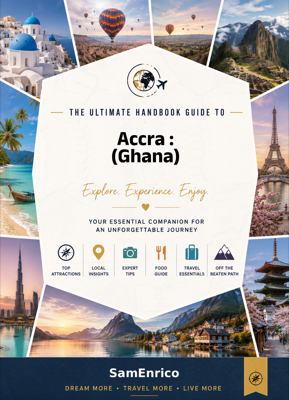 Ultimate Handbook Guide to Accra : (Ghana) Travel GuideRounds Jetta$11.99
 EnologistRounds Jetta$11.99
 Software as a Service ValuationRounds Jetta$12.99
 Understanding SuriphobiaRounds Jetta$17.99
You may also like
 Hong Kong Handover 1997Dunn Johnnie$11.99
 Zumba For Postnatal Recovery CourseNeal Christian$11.99
 Zumba for BeginnersLadner Nikia$11.99
 YouTube Comment Mining GuideHumes Pandora$12.99
 Worry Box MeditationCarlin Rudy$11.99
 Workplace Stress MeditationNguyen Lynn$11.99
 Workplace Stress and Sleep RepairHawley Ivory$11.99
 Workplace Perfectionism CureDelaney Jeffry$11.99
 Workplace Injustice Anger GuideWallen Isabelle$11.99
 Work Addiction and Burnout LinkGreenwood Ester$11.99
 Women in Yoga and WellnessBeattie Galina$11.99
 Women in Stand Up ComedyChun Evangeline$11.99