
Non-FictionConsumer Mind ReportGaming IndustryGaming
Gaming Consumption Patterns Audiobook
Examines mobile, console, PC gaming spend, microtr
by Harp Lizbeth
Analyze Boomer casual mobile games against Gen Z PC and console esports.
Formats
Free sample
Chapter 1: The $60 Lie--–- The first time I watched my nephew spend $47 on a virtual pickaxe, I thought he had lost his mind. He was fourteen, had saved his birthday money for six weeks, and with three clicks on his mother’s credit card (saved to the console for “convenience”), he traded a stack of real twenty-dollar bills for a digital axe that existed only as pixels on a screen. When I asked him why, he looked at me with the patience of a teacher explaining basic math to a toddler. “Uncle,” he said, “it’s not an axe. It’s a status symbol.
And it’s only available for forty-eight more hours.” He bought it. He used it to chop virtual trees for three hours. And the next day, he asked me if I had seen his new axe. I had not. But everyone in his online lobby had.
That was the point.This book is not about that axe. It is about the economic revolution that axe represents—a revolution that has quietly, over the past fifteen years, dismantled a business model that sustained the video game industry for three decades. The 60boxedgame,oncetheunquestionedstandardofhowwepaidforinteractiveentertainment,isdying.Initsplacehasemergedsomethingfarmorecomplex,farmoreprofitable,andfarmorepsychologicallyintricate:afragmentedecosystemofmicrotransactions,subscriptions,battlepasses,lootboxes,virtualcurrencies,andsecondarymarketsthattogethergenerateover60 boxed game, once the unquestioned standard of how we paid for interactive entertainment, is dying. In its place has emerged something far more complex, far more profitable, and far more psychologically intricate: a fragmented ecosystem of microtransactions, subscriptions, battle passes, loot boxes, virtual currencies, and secondary markets that together generate over 60boxedgame,oncetheunquestionedstandardofhowwepaidforinteractiveentertainment,isdying.Initsplacehasemergedsomethingfarmorecomplex,farmoreprofitable,andfarmorepsychologicallyintricate:afragmentedecosystemofmicrotransactions,subscriptions,battlepasses,lootboxes,virtualcurrencies,andsecondarymarketsthattogethergenerateover250 billion annually—more than the global box office and North American sports combined.This chapter establishes the historical foundation for modern gaming spend. It traces how we arrived at this moment, from the arcades of the 1980s to the digital storefronts of the 2010s, and why the shift from ownership to access has fundamentally altered not just how we pay for games, but how we value them.
The $60 box is not gone, but it is no longer the center of gravity. It has become, instead, a loss leader—a cheap entry point into an ongoing relationship of continuous spending. Understanding how this happened is the first step toward understanding the generational, psychological, and economic forces that now shape one of the largest entertainment industries on earth.The Era of Physical Media: When…
This is the end of the free sample. Get the Audiobook to keep going. Buy now
About this book
Details
- Author
- Harp Lizbeth
- Publisher
- SamEnrico
- Language
- English
- Genre
- Non-Fiction, Consumer Mind Report, Gaming Industry, Gaming
- Released
- 2026-06-01
- Pages (approx.)
- 135
- Available as
- eBook, Audiobook

Listen in the VoxFlicks app
Audiobooks and audio dramas wherever you go. Sign in with your SamEnrico account and press play.
More by Harp Lizbeth
 The Corey Haim Field InterviewHarp Lizbeth$11.99
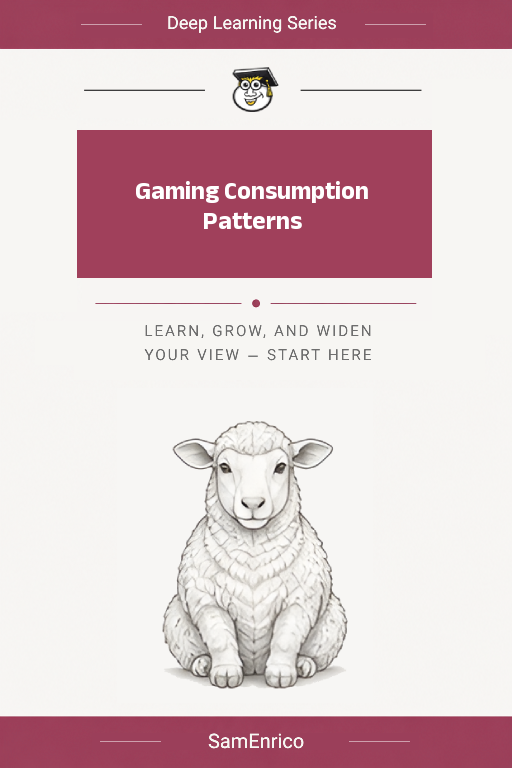 Gaming Consumption PatternsHarp Lizbeth$12.99
 Breath Of Loving KindnessHarp Lizbeth$11.99
 The Infidelity Discovery Stress GuideHarp Lizbeth$11.99
 Calming Heartbeat with BreathHarp Lizbeth$11.99
 Elon Musk SpaceX StarshipHarp Lizbeth$11.99
 The Battle of Khalkhin-Gol: The Forgotten Clash That Shaped WWIIHarp Lizbeth$11.99
 Understanding Lopes–Marques De Faria SyndromeHarp Lizbeth$17.99
 How to Become a Set DesignerHarp Lizbeth$11.99
 Non Resident LLC Dissolution GuideHarp Lizbeth$12.99
 Fishery ObserverHarp Lizbeth$11.99
You may also like
 Hong Kong Handover 1997Dunn Johnnie$11.99
 Zumba For Postnatal Recovery CourseNeal Christian$11.99
 Zumba for BeginnersLadner Nikia$11.99
 YouTube Comment Mining GuideHumes Pandora$12.99
 Worry Box MeditationCarlin Rudy$11.99
 Workplace Stress MeditationNguyen Lynn$11.99
 Workplace Stress and Sleep RepairHawley Ivory$11.99
 Workplace Perfectionism CureDelaney Jeffry$11.99
 Workplace Injustice Anger GuideWallen Isabelle$11.99
 Work Addiction and Burnout LinkGreenwood Ester$11.99
 Women in Yoga and WellnessBeattie Galina$11.99
 Women in Stand Up ComedyChun Evangeline$11.99