
Non-FictionSelf-HelpHabit Formation
Flow Habit Stacking eBook
Attaches flow triggers to existing habits.
Attaches flow triggers to existing habits.
Formats
Free sample
Chapter 1: The Autopilot Trap...--It begins so quietly you almost don’t notice. One morning, you pour your coffee without tasting it. You drive to work without remembering a single turn. You brush your teeth, rinse, spit, and walk away—and if someone asked you thirty seconds later whether the water was warm or cold, you couldn’t say. This is not a failure of memory.
This is a failure of presence. And it is the single greatest obstacle between you and a life that feels genuinely worth living.You have been told, probably your entire adult life, that habits are the secret to success. Read any productivity book, listen to any podcast about high performance, and you will hear the same refrain: automate the small things so you can save your brainpower for the big things. Make your good habits automatic. Make them effortless.
Make them mindless. On the surface, this advice makes perfect sense. Why waste conscious energy deciding to brush your teeth every morning? Why deliberate over whether to put on your running shoes? Just do it.
Let the autopilot handle it.But here is the paradox that no one warns you about: the same mechanism that makes a habit effortless also makes it joyless.When a behavior becomes fully automatic, your brain stops processing it as an experience and starts processing it as a procedure. The dorsolateral striatum—a region deep in the basal ganglia, evolution’s gift for energy conservation—takes over from the cortex. The cortex is where you feel, where you notice, where you taste, where you wonder. The striatum is where you execute. It is efficient, reliable, and completely, utterly dead inside.Think about the last time you drove somewhere familiar and arrived with no memory of the journey.
Were you unsafe? Probably not. Did you break any traffic laws? Unlikely. But were you there?
No. You were somewhere else—in a meeting that hadn’t happened yet, in an argument from three days ago, in a grocery list for tonight. Your body drove the car. Your brain was everywhere except the road. And that, right there, is the autopilot trap: you can perform a habit correctly while experiencing it barely at all.The Hidden Cost of Automaticity Most people assume that mindless habits are neutral.
They think, “I’m not suffering while I commute, so what’s the harm?” The harm is not active suffering. The harm is the slow, cumulative erosion of what psychologists call positive valence—the felt sense that an experience is good, interesting, or worthwhile. A mindless habit is not a neutral zero. It is a negative drain, because it occupies time that could have been filled with anything else—a daydream, a moment of curiosity, a flash of gratitude, even a brief awareness of your own breathing.Let me say this clearly: mindlessness is not efficiency. It is the enemy of flourishing.Consider the research on “habit boredom,” a phenomenon studied by psychologists at the University of Southern California.
In a 2019 study, participants were asked to perform the same simple task—sorting cards by color—for thirty minutes a day over four weeks. For the first few days, participants reported moderate engagement. By the second week, they reported boredom. By the fourth week, they reported active aversion to the task, even though the task itself had not changed. What changed was their brain’s relationship to it.
The task had become so overlearned, so fully transferred to the striatum, that the cortex no longer bothered to pay attention. And without attention, there can be no enjoyment.Now extend this finding to your actual life. How many habits have you performed thousands of times? Brushing your teeth. Making your bed.
Showering. Commuting. Making coffee. Opening your laptop. Checking your phone.
Each of these is a candidate for the autopilot trap. Each one, performed mindlessly, becomes not just neutral but slightly draining—like a low-grade static that you’ve stopped noticing only because it has been playing for years.This is not a small problem. The average adult spends nearly forty percent of their waking hours performing habits—automatic behaviors that require little to no conscious thought. That means nearly half of your waking life is passing through your brain without leaving a trace. You are, in a very real sense, not there for almost half of your own existence.The Neuroscience of Disengagement To understand why this happens—and more importantly, how to fix it—we need to take a brief tour of the brain’s habit machinery.
Do not worry. This will not be a tedious anatomy lesson. You only need to know two structures: the cortex and the striatum.The cortex is the wrinkly outer layer of your brain, the part that makes humans human. It handles conscious thought, deliberate decision-making, sensory experience, and self-awareness. When you learn something new—the first time you tie a shoelace, the first time you parallel park—your cortex is on fire with activity.
Every movement is deliberate. Every error is noted. Every success is celebrated. The cortex is expensive to run, metabolically speaking, but it gives you richness.The striatum is deeper, older, and far less interesting. Its job is to detect patterns and automate them.
Once you have tied your shoelaces successfully a few hundred times, the cortex says to the striatum, “You take this one. I’ve got other things to do.” And the striatum does take it—efficiently, reliably, and without a single flicker of felt experience. This transfer is the miracle of habit formation. It is also the tragedy.Functional MRI studies have shown that when a behavior is novel, the cortex lights up like a Christmas tree. When that same behavior becomes automatic, cortical activity drops by as much as seventy percent.
The behavior is still performed correctly. The outcome is the same. But the experience of performing it is gone. You have optimized yourself out of your own life.Here is the insight that changes everything: the problem is not that you have habits. The problem is that you have allowed your habits to become disconnected from your awareness.
The solution is not to get rid of habits—that would be impossible and undesirable. The solution is to reconnect your habits to your conscious experience, to re-engage the cortex without losing the efficiency of the striatum.Why Willpower Will Not Save You You might be thinking, “Fine. I’ll just pay more attention. I’ll try harder. I’ll be more mindful.” This is the willpower trap, and it fails for the same reason that standard habit stacking fails: you cannot force yourself to enjoy something by trying harder.In fact, trying harder often makes things worse.
When you force yourself to pay attention to a boring task, you create a state of effortful vigilance—a kind of mental teeth-gritting that is exhausting and unsustainable. The moment your willpower runs out, you snap back to mindlessness, often with a vengeance. Have you ever tried to pay attention during a dull meeting, only to find yourself more distracted than ever after ten minutes of “trying”? That is the willpower trap.The autopilot trap is not…
This is the end of the free sample. Get the eBook to keep going. Buy now
About this book
Details
- Author
- Laplante Eulalia
- Publisher
- SamEnrico
- Language
- English
- Genre
- Non-Fiction, Self-Help, Habit Formation
- Released
- 2026-06-08
- Pages (approx.)
- 143
- Available as
- eBook, Audiobook

Read better in the ZLOADR app
Your eBooks on your phone or tablet. Sign in with your SamEnrico account and start reading.
More by Laplante Eulalia
 Stress Telomere ShorteningLaplante Eulalia$11.99
 Infinity Pool EdgeLaplante Eulalia$11.99
 Affirmations for Divorce RecoveryLaplante Eulalia$11.99
 ABCDE for Healthcare WorkersLaplante Eulalia$11.99
 The Focus and Caffeine GuideLaplante Eulalia$11.99
 Snow Globe Stillness GuideLaplante Eulalia$11.99
 CrossFit Athlete's HypnosisLaplante Eulalia$11.99
 The Volcanic Healers: Western Medicine Meets Nature's FuryLaplante Eulalia$11.99
 Blood in the Wilderness: Montcalm and Wolfe's Fatal Gambit at QuebecLaplante Eulalia$11.99
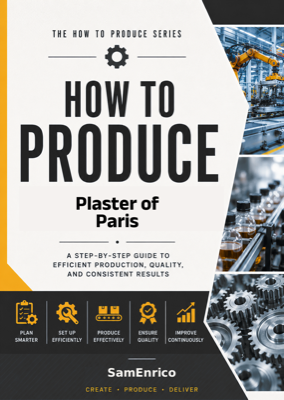 How to Produce Plaster of ParisLaplante Eulalia$11.99
 How to Produce Digital SignsLaplante Eulalia$11.99
 10 Ways to Use Argei (manufacturer) (Recipe Book)Laplante Eulalia$11.99
You may also like
 Hong Kong Handover 1997Dunn Johnnie$11.99
 Zumba For Postnatal Recovery CourseNeal Christian$11.99
 Zumba for BeginnersLadner Nikia$11.99
 YouTube Comment Mining GuideHumes Pandora$12.99
 Worry Box MeditationCarlin Rudy$11.99
 Workplace Stress MeditationNguyen Lynn$11.99
 Workplace Stress and Sleep RepairHawley Ivory$11.99
 Workplace Perfectionism CureDelaney Jeffry$11.99
 Workplace Injustice Anger GuideWallen Isabelle$11.99
 Work Addiction and Burnout LinkGreenwood Ester$11.99
 Women in Yoga and WellnessBeattie Galina$11.99
 Women in Stand Up ComedyChun Evangeline$11.99