
Non-FictionMental WealthJustice Psychology
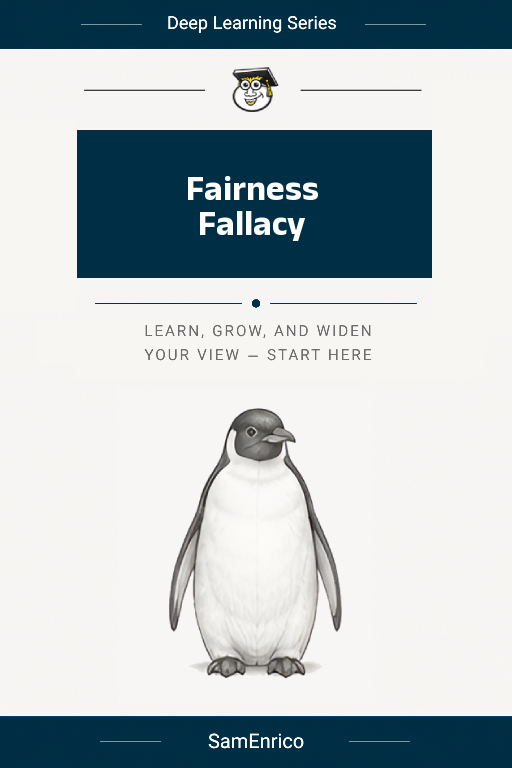
Fairness Fallacy eBook
Unlearn the childhood belief that money should be
by Cole Bessie
Unlearn the childhood belief that money should be equal, replacing it with need-based or value-based systems.
Formats
Free sample
Chapter 1: The Broken Birthday Cake...--–- Every adult financial delusion begins with a child’s birthday party. The scene is so universal that it barely registers as significant. A child sits at a table, cheeks flushed from the sugar of a single cupcake, watching as a parent slices a larger cake into increasingly smaller wedges. The knife hovers. Eyes narrow.
A younger sibling begins to whimper because their piece appears—by some infinitesimal margin—smaller than the first slice. The parent sighs, reaches for the knife again, and trims a sliver from the larger piece to add to the smaller. The crying stops. The room exhales. Justice has been served.–- We have been taught, from our earliest memories, that fairness means sameness.
The same size slice. The same number of presents. The same bedtime. The same sticker on the chart. This lesson is so deeply embedded in our emotional architecture that we never stop to examine it.
We carry it into boardrooms, salary negotiations, marriages, and political voting booths. We build careers around it. We destroy relationships with it. We remain poor because of it.–- This chapter is not an attack on kindness. It is not a defense of cruelty.
It is a surgical examination of the single most destructive belief about money that most adults never realize they hold: the belief that life owes you the same rewards as everyone else, regardless of what you produce, risk, or create. I call this belief the Fairness Fallacy, and before we can unlearn it, we must first see it for what it is—a childhood survival strategy that became an adult financial prison.The Invention of Equal–- The human brain is not born with a concept of fairness. Newborns do not cry because their blanket is not the same size as their twin’s. Toddlers do not demand equal distribution of milk. The sense that “equal is fair” emerges somewhere between the ages of three and five, and it emerges for a very specific evolutionary reason: survival.–- In small tribal groups—the environment in which our brains evolved—resources were scarce.
If one child received more food than another, the underfed child was more likely to die. The brain developed a neural alarm system: watch what others get, and if they get more, signal distress. This alarm system kept our ancestors alive. It is not a moral system. It is a survival system.
The problem is that we have mistaken a primitive threat-detection circuit for a sophisticated ethical framework.–- By age ten, most children have internalized three scripts about fairness. These scripts are taught explicitly by parents and teachers, and implicitly by the structure of childhood itself. The first script is that equal distribution is moral. When a parent splits a cookie into two visibly identical halves and says “now you both have the same,” the child learns that sameness equals goodness. The second script is that time served deserves reward.
In classrooms, every child who sits through the lesson gets the same sticker. Effort is assumed to be equal, so reward is assumed to be equal. The third script is that comparison is the measure of justice. Children watch each other’s plates. They monitor each other’s presents.
The question “Is that fair?” almost always means “Does everyone have the same?”–- These scripts are appropriate for the sandbox. They are catastrophic for the marketplace.The Sandbox vs. The Marketplace–- Consider the fundamental difference between a sandbox and an economy. In a sandbox, resources are fixed. There are only so many shovels, so many buckets, so much sand.
If one child takes two shovels, another child has none. The sandbox is a zero-sum environment. Your gain is literally my loss. In this environment, enforcing equal distribution is rational and necessary.–- The marketplace is not a sandbox. The marketplace is a positive-sum environment.
When a baker makes a loaf of bread, they do not steal flour from a neighbor. They combine flour, water, yeast, heat, and skill to create something that did not exist before. The baker gets richer. The customer gets fed. Both are better off.
The total pie grows. This is the miracle of voluntary exchange and value creation.–- The Fairness Fallacy is the cognitive error of applying sandbox rules—equal distribution, time-based reward, comparison as justice—to marketplace environments. It is the belief that because everyone should get the same slice of cake at a birthday party, everyone should get the same paycheck at work. It is the belief that because every child gets the same sticker for sitting in class, every adult deserves the same raise for showing up. It is the belief that because we watched each other’s plates in the cafeteria, we should watch each other’s bank accounts with the same jealous vigilance.–- This error is not merely theoretical.
It has real, measurable consequences. People who hold the Fairness Fallacy refuse raises because they fear being seen as greedy. They stay in jobs where they are undervalued because asking for more feels like violating a moral code. They sabotage their own wealth-building because accumulating “too much” triggers a childhood shame response. They resent successful friends and family members, not because those people did anything wrong, but because their success violates the equal-distribution script burned into their nervous systems.The Three Inherited Scripts in Adult Life–- Let us examine each script in detail, tracing its childhood origin to its adult manifestation.–- Script One: Equal Distribution is Moral.
In childhood, this script serves a protective function. It prevents bullying. It ensures that no child goes hungry while another feasts. But in adulthood, this script becomes a trap. The adult who believes equal distribution is moral will instinctively recoil from merit-based pay.
They will argue that the CEO should not make “so much more” than the janitor, regardless of the difference in responsibility, risk, or value created. They will support policies that cap incomes not because those policies help the poor, but because they punish the rich. They will turn down opportunities to earn more because earning “too much” feels like cheating.–- Script Two: Time Served Deserves Reward. In childhood, this script is reinforced by every attendance certificate, every participation trophy, every “everyone gets a turn” rule. But the marketplace does not reward presence.
It rewards problem-solving. A surgeon who removes a tumor in fifteen minutes is paid more than a security guard who sits at a desk for fifteen hours—not because the surgeon’s time is more valuable, but because the surgeon solves a problem the security guard cannot. The adult trapped by this script will work sixty hours a week doing low-value tasks and wonder bitterly why they are not rich. They will say “I work so hard” as if effort alone entitles them to reward. They will measure their worth by hours logged rather than problems solved.–- Script Three: Comparison is the Measure of Justice.
In childhood, this script is the engine of tattling. “He got more than me!” is the most common phrase on any playground. But in adulthood, this script becomes envy disguised as moral…
This is the end of the free sample. Get the eBook to keep going. Buy now
About this book
Details
- Author
- Cole Bessie
- Publisher
- SamEnrico
- Language
- English
- Genre
- Non-Fiction, Mental Wealth, Justice Psychology
- Released
- 2026-05-29
- Pages (approx.)
- 143
- Available as
- eBook, Audiobook

Read better in the ZLOADR app
Your eBooks on your phone or tablet. Sign in with your SamEnrico account and start reading.
More by Cole Bessie
 Widower Financial GuideCole Bessie$11.99
 Shame Informed Therapy GuideCole Bessie$11.99
 Mindful Spending MeditationCole Bessie$11.99
 Self Hypnosis for ADHDCole Bessie$11.99
 Progesterone for Sleep RestorationCole Bessie$11.99
 EQ for Healthcare WorkersCole Bessie$11.99
 Oura Ring Fertility TrackingCole Bessie$11.99
 Navigating Immigration InterviewsCole Bessie$11.99
 The Silent Swimmers of the Ottoman Harem: How Women Redefined Aquatic GraceCole Bessie$11.99
 The Serpent’s Curse: Sobek’s Lost TempleCole Bessie$11.99
 How to Produce Pcb and PcbaCole Bessie$11.99
 Ligers: Lion-tiger HybridCole Bessie$11.99
You may also like
 Hong Kong Handover 1997Dunn Johnnie$11.99
 Zumba For Postnatal Recovery CourseNeal Christian$11.99
 Zumba for BeginnersLadner Nikia$11.99
 YouTube Comment Mining GuideHumes Pandora$12.99
 Worry Box MeditationCarlin Rudy$11.99
 Workplace Stress MeditationNguyen Lynn$11.99
 Workplace Stress and Sleep RepairHawley Ivory$11.99
 Workplace Perfectionism CureDelaney Jeffry$11.99
 Workplace Injustice Anger GuideWallen Isabelle$11.99
 Work Addiction and Burnout LinkGreenwood Ester$11.99
 Women in Yoga and WellnessBeattie Galina$11.99
 Women in Stand Up ComedyChun Evangeline$11.99