
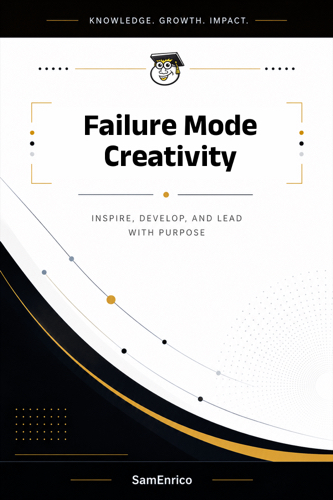
Failure Mode Creativity
Brainstorm potential failures early to design robu
Brainstorm potential failures early to design robust systems.
Formats
About this book
Free sample
Chapter 1: The Day the O-Rings Did Not Lie...--The space shuttle Challenger lifted off from Cape Canaveral on January 28, 1986, at 11:38 AM Eastern Standard Time. Seventy-three seconds later, seven human beings were scattered across the Atlantic Ocean. The investigation that followed would produce thousands of pages of analysis, hundreds of expert testimonies, and one uncomfortable truth that has haunted engineers and executives ever since: the disaster was not a surprise.Not to the engineers who had warned about the O-rings. Not to the managers who had received those warnings. And not to the data, which had been flashing red for months.
The O-rings—rubber seals designed to prevent hot gas from escaping the solid rocket boosters—had shown erosion on previous launches. In cold weather, they became stiff and unreliable. The morning of January 28 was unusually cold, with temperatures dropping to 36°F, well below the safe operating range of any previous launch. Engineers at Morton Thiokol, the contractor responsible for the boosters, recommended a delay. They were overruled.
The launch proceeded. The O-rings failed. The Challenger broke apart.Here is the question that has haunted me for years, and the question that will drive every page of this book: Why do smart, well-intentioned, highly paid professionals consistently fail to see obvious risks until it is too late?It is not a rhetorical question. It is not an excuse to point fingers at NASA or Thiokol or any particular organization. Because the Challenger disaster is not an outlier.
It is a template. The same pattern—warning signs present, data available, dissent silenced, catastrophe follows—has played out in boardrooms, engineering departments, software development teams, and government agencies thousands of times since 1986. The names change. The industries change. The underlying psychology does not.This book is called Failure Mode Creativity.
The title may sound like a contradiction. Creativity, we are taught, is about generating novel ideas, chasing breakthroughs, and celebrating success. Failure is something to be avoided, hidden, or—at best—tolerated. But what if the most creative act you can perform is not imagining success, but rigorously imagining failure? What if the teams that…
This is the end of the free sample. Get the eBook to keep going. Buy now
Contents
- Chapter 1
- Chapter 2
- Chapter 3
- Chapter 4
- Chapter 5
- Chapter 6
- Chapter 7
- Chapter 8
- Chapter 9
- Chapter 10
- Chapter 11
- Chapter 12
Details
- Author
- Andres Kendall
- Publisher
- SamEnrico
- Language
- English
- Genre
- Non-Fiction, Self-Help, FMEA
- Released
- 2026-06-08
- Pages (approx.)
- 146
- Available as
- eBook, Audiobook

Read better in the ZLOADR app
Your eBooks on your phone or tablet. Sign in with your SamEnrico account and start reading.
More by Andres Kendall
 Gambling for First RespondersAndres Kendall$11.99
 Cluster Headache MeditationAndres Kendall$11.99
 Wholesaling as a Side HustleAndres Kendall$11.99
 The PDE5 Inhibitor GuideAndres Kendall$11.99
 The Emotional Validation GuideAndres Kendall$11.99
 Freelance Niche SelectionAndres Kendall$11.99
 Anger Restructuring for InsomniaAndres Kendall$11.99
 The Velvet Throne: Marie Antoinette and the Birth of Haute CoutureAndres Kendall$11.99
 The Ghost of Caracas: Venezuela’s Deadly Double AgentAndres Kendall$11.99
 The Essential Guide to Middle EastAndres Kendall$11.99
 How to Produce a Restorative AgentAndres Kendall$11.99
 A Collector's Handbook to the Alfa Romeo Giulia GtAndres Kendall$11.99