
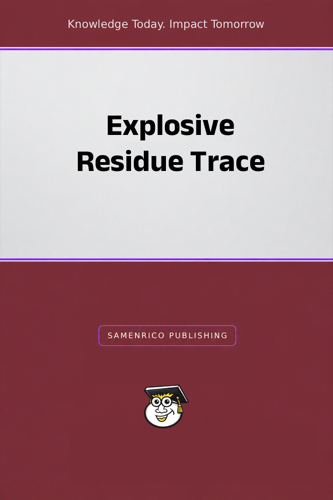
Non-FictionTrue CrimeExplosive Analysis
Explosive Residue Trace Audiobook
Detect explosive compounds on surfaces using foren
Detect explosive compounds on surfaces using forensic chemistry techniques.
Formats
Free sample
Chapter 1: The Invisible Killers...--–- The bomb had already detonated. The fire crew had doused the smoldering wreckage. The medical examiner had removed the remains. The crime scene was, by most definitions, over. But on the cracked dashboard of the burned sedan, on the jagged edge of a shattered window frame, and deep within the fibers of a discarded jacket lying fifty meters from the blast epicenter, something invisible remained.
Millions of molecules of TNT, RDX, PETN, and nitroglycerin – remnants of an explosive device that had been designed to erase itself – clung stubbornly to surfaces, waiting. To the untrained eye, the scene was sterile. To the forensic chemist, it was a library written in molecules, each residue a sentence about what had been made, who had made it, and perhaps, where they had learned to do so.–- This book is about finding those molecular sentences. More specifically, Explosive Residue Trace: Forensic Chemistry for Surface Detection is a comprehensive guide to the science, art, and legal rigor of locating, recovering, identifying, and testifying about trace amounts of energetic materials left behind on surfaces after an explosion, a manufacturing process, or even casual handling. Before we can swab a surface, before we can inject a sample into a gas chromatograph, and before we can stand before a jury and state that the residue “is consistent with TNT,” we must first answer a fundamental question: What, exactly, are we looking for?
This first chapter builds the essential chemical vocabulary for everything that follows. Without a clear taxonomy of energetic materials – their structures, their behaviors, their families, and their fates – the detective work of trace residue analysis is impossible. We must learn to name the invisible killers before we can hunt them.–- The Critical Distinction: Low vs. High Explosives–- The most fundamental division in the world of energetic materials is between low explosives and high explosives. This is not merely a semantic distinction; it determines how a substance behaves, how it is initiated, what kind of residue it leaves, and how that residue must be recovered and analyzed.–- Low explosives undergo deflagration, a rapid combustion that propagates through the material at subsonic speeds (less than the speed of sound in that material, typically below 1000 meters per second).
Deflagration is essentially a very fast burn, driven by the transfer of heat from the burning layer to the unburned layer immediately…
This is the end of the free sample. Get the Audiobook to keep going. Buy now
About this book
Details
- Author
- Schneider Katrina
- Publisher
- SamEnrico
- Language
- English
- Genre
- Non-Fiction, True Crime, Explosive Analysis
- Released
- 2026-06-06
- Pages (approx.)
- 155
- Available as
- eBook, Audiobook

Listen in the VoxFlicks app
Audiobooks and audio dramas wherever you go. Sign in with your SamEnrico account and press play.
More by Schneider Katrina
 Female Athlete Triad PreventionSchneider Katrina$11.99
 Listen To Understand Not ReplySchneider Katrina$11.99
 Immigrant Automotive Repair Chain GuideSchneider Katrina$11.99
 Wholesaling Cold Calling ScriptsSchneider Katrina$11.99
 Writer's Block SolutionSchneider Katrina$11.99
 The Bicycle BlameSchneider Katrina$11.99
 Coppola Dynasty - Francis Ford CoppolaSchneider Katrina$11.99
 ADHD Childhood Self EsteemSchneider Katrina$11.99
 The Silk Road's Shadow: Ross Ulbricht and the Birth of Bitcoin's Wild WestSchneider Katrina$11.99
 The Siege of Handan: Qin's Ruthless GambitSchneider Katrina$11.99
 The Asura's Curse: How a Fallen Titan Shaped the CosmosSchneider Katrina$11.99
 Resort Management Best PracticesSchneider Katrina$11.99
You may also like
 Hong Kong Handover 1997Dunn Johnnie$11.99
 Zumba For Postnatal Recovery CourseNeal Christian$11.99
 Zumba for BeginnersLadner Nikia$11.99
 YouTube Comment Mining GuideHumes Pandora$12.99
 Worry Box MeditationCarlin Rudy$11.99
 Workplace Stress MeditationNguyen Lynn$11.99
 Workplace Stress and Sleep RepairHawley Ivory$11.99
 Workplace Perfectionism CureDelaney Jeffry$11.99
 Workplace Injustice Anger GuideWallen Isabelle$11.99
 Work Addiction and Burnout LinkGreenwood Ester$11.99
 Women in Yoga and WellnessBeattie Galina$11.99
 Women in Stand Up ComedyChun Evangeline$11.99