
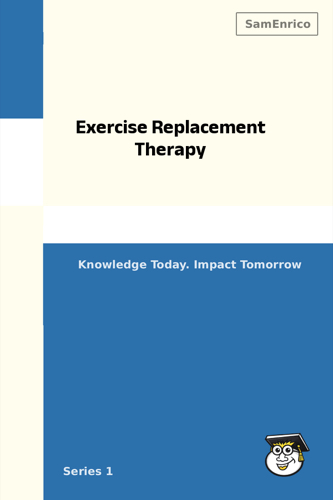
Exercise Replacement Therapy eBook
Channel compulsive energy into running, lifting, o
by Mccune Irwin
Channel compulsive energy into running, lifting, or martial arts to reduce urges.
Formats
Free sample
Chapter 1: The Urge Loop--–- The first time Marcus tried to stop gambling, he lasted eleven days. He deleted the apps, blocked the websites, and told his wife he was done. On the twelfth day, he was standing in a convenience store parking lot at 11:47 PM, feeding a hundred-dollar bill into a video poker machine he had driven twenty minutes to find. He didn't want to be there. His palms were sweating.
His chest was tight. And yet his hands moved like they belonged to someone else. When he lost the hundred dollars in under four minutes, he felt something worse than anger. He felt relief. The loop had completed.
The tension was gone. And that relief, more than any jackpot, was what kept him coming back.Marcus is not broken. He is not weak-willed. He is not a bad person who secretly enjoys self-destruction. Marcus is a man whose brain has learned a specific, powerful, and deeply misleading equation: compulsive act equals relief.
Every time he followed an urge to completion, his brain recorded that sequence as a solution to the problem of inner tension. The problem was never the gambling. The problem was the urge itself. And no amount of willpower, shame, or abstinence would fix that until he understood what the urge actually was.This chapter will reframe everything you think you know about your compulsions. By the time you finish reading, you will see your urges not as moral failings or evidence of brokenness, but as neurological energy looking for a target.
You will learn why suppression always fails, why willpower is a trap, and why the only sustainable path forward is redirection. And you will take the first self-assessment that will become your baseline for the entire Exercise Replacement Therapy protocol.The Compulsion That Didn't Look Like One Before we go further, let me introduce you to Sarah. Sarah is a thirty-one-year-old graphic designer who came to therapy not for an addiction but for "time management problems." She described herself as someone who would sit down to work at 9:00 AM, open her browser, and then somehow find herself three hours deep into online shopping, home renovation blogs, and celebrity gossip. She wasn't looking at porn. She wasn't gambling.
She wasn't drinking. She was just... scrolling. And yet the pattern was identical to Marcus's gambling. An uncomfortable feeling would arise—boredom, anxiety about an upcoming deadline, a vague sense of restlessness.
She would open a new tab. Then another. Then another. Hours would disappear. She would feel worse, not better.
And the next day, she would do it again.Sarah's compulsion is what researchers call a "behavioral addiction without the glamour." No one writes novels about the man who ruined his marriage with online window shopping. But the neurological machinery is the same. The Urge Loop does not care whether your drug is cocaine or clearance sales. It only cares about the sequence: trigger, craving, ritual, reward, relief.Understanding that sequence is the first step toward breaking it.The Neuroscience of Wanting vs. Liking Here is something that will change how you see every compulsive act you have ever committed.
Your brain has two separate systems: one for wanting and one for liking. They are supposed to work together, but in compulsive behavior, they become uncoupled.The wanting system is driven primarily by dopamine, a neurotransmitter that has been wildly misunderstood in popular culture. Dopamine is not the pleasure molecule. It is the anticipation molecule. It is released when you expect a reward, not necessarily when you receive one.
The slot machine player feels dopamine surge when the wheels start spinning, not when they stop. The person watching porn feels dopamine spike when they open the incognito tab, not at climax. The gambler feels dopamine flood his system when he walks into the casino and hears the chimes, long before he places a bet.The liking system, by contrast, is driven by opioids and endocannabinoids—the brain's natural pleasure chemicals. These are released when you actually enjoy something. A warm meal.
A hug. A sunset. The problem is that compulsive behaviors hijack the wanting system so effectively that the liking system cannot keep up. You want desperately. You act.
And then you feel... not much. Or worse, you feel shame, guilt, and emptiness.This is why you can crave a cigarette for twenty minutes, smoke it in two, and feel not pleasure but merely the absence of craving. This is why you can scroll for three hours, put down your phone, and have no idea what you even looked at. This is why you can binge eat an entire pizza and taste only the first two slices.
The wanting system is screaming. The liking system is silent. And the gap between them is where compulsions live.The Anatomy of an Urge: A Wave, Not a Wall One of the most liberating discoveries in addiction neuroscience is that urges are not constant. They rise, peak, and fall in a predictable pattern, much like an ocean wave. The average intense urge, when not engaged, lasts between five and fifteen minutes.
That is it. Fifteen minutes of discomfort stands between you and another hour, day, or year of acting out.But here is what most people do wrong. When an urge hits, they try to suppress it. They push it down. They tell themselves "don't think about it" and "just stop." This is not only ineffective—it is actively counterproductive.
The phenomenon is called ironic rebound, and it has been replicated in dozens of studies. When you try not to think about a white bear, you think about a white bear. When you try to suppress a craving, the craving intensifies. Suppression creates pressure. Pressure creates explosion.Marcus tried suppression for eleven days.
He white-knuckled his way through every urge, fighting it like an enemy. And on day twelve, the pressure blew. He didn't just gamble a little. He drove twenty minutes out of his way to find a machine. He lost a hundred dollars in four minutes.
And then he felt relief—not because gambling felt good, but because the fight was over. He had lost the battle, and at least the battle was done.ERT takes the opposite approach. Instead of suppressing the urge, you observe it. Instead of fighting it, you redirect it. Instead of trying to make it go away, you harness its energy and burn it somewhere else.
This is the Energy Transfer Model, and it is the philosophical foundation of every protocol in this book.The Energy Transfer Model: Why Willpower Is a Trap Let me be blunt. Willpower is a finite resource. It depletes with use, like a battery that loses charge over the course of a day. Every time you resist an urge, you use willpower. Every time you make a decision, you use willpower.
Every time you force yourself to do something you do not want to do, you use willpower. And by 10:00 PM, after a day of resisting and deciding and forcing, your willpower battery is empty. That is when the late-night binge happens. That is when the secret browser window opens. That is when you tell yourself…
This is the end of the free sample. Get the eBook to keep going. Buy now
About this book
Details
- Author
- Mccune Irwin
- Publisher
- SamEnrico
- Language
- English
- Genre
- Non-Fiction, Self-Help, Exercise Therapy
- Released
- 2026-06-08
- Pages (approx.)
- 109
- Available as
- eBook, Audiobook

Read better in the ZLOADR app
Your eBooks on your phone or tablet. Sign in with your SamEnrico account and start reading.
More by Mccune Irwin
 The Body Dysmorphia CalmMccune Irwin$11.99
 Lawyer Litigation Stress GuideMccune Irwin$11.99
 Bridge Phobia CrossingMccune Irwin$11.99
 Government Job Stability GuideMccune Irwin$11.99
 The Ambulance HijackingMccune Irwin$11.99
 Muhammad Yunus BankMccune Irwin$11.99
 Mental Health Days from SchoolMccune Irwin$11.99
 Wings Over Vienna: The Commonwealth's Last Stand (1683)Mccune Irwin$11.99
 Three Arrows Capital: Leverage Until It SnappedMccune Irwin$11.99
 Bragi's Golden Lyre: The God Who Spoke in SongMccune Irwin$11.99
 Community-Led Governance ModelsMccune Irwin$11.99
 Growing DendranthemaMccune Irwin$11.99
You may also like
 Exercise as a Cessation ToolTanner Christopher$11.99
 Exercise and Parent GriefFlint Leif$11.99
 Exercise Based Alcohol RecoveryFurman Garnet$11.99
 Cocaine Recovery Exercise PlanBerrios Bobbye$11.99
 Meth Recovery Exercise PlanRoach Shantell$11.99
 Exercise Stress ReductionGuest Kyung$11.99
 The Exercise Based Smoking Cessation PlanClough Corey$11.99
 Exercise as Recovery Medicine for AlcoholismHelms Charla$11.99
 Cocaine Recovery Exercise And Endorphins GuideStpierre Taneka$11.99
 The Role of Exercise in RecoveryGarvin Annamae$11.99
 Exercise Smoking CessationLoveless Roma$11.99
 The Exercise Assisted QuitMyers Allison$11.99