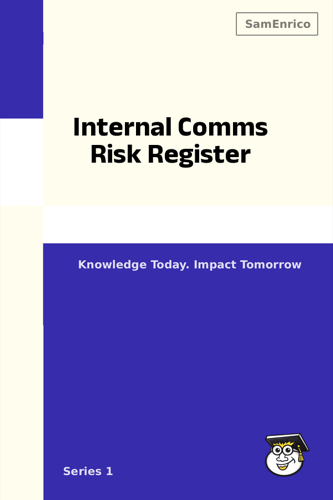
Executive Summary Risk Section Template
Address potential downsides honestly without killi
Address potential downsides honestly without killing your proposal, using mitigation language that builds credibility.
Formats
About this book
Free sample
Chapter 1: The Silence Clause--–- The conference room smelled of stale coffee and desperation. Thirty-seven people sat around a mahogany table that cost more than most of their cars, each one holding a proposal binder thick enough to stop a bullet. The bid was for $470 million—a port expansion project that would keep the company afloat for the next five years. The technical specs were flawless. The pricing was aggressive.
The team was stacked with industry veterans.One section killed them.Not the budget section, which had been scrubbed by three analysts. Not the timeline, which had been padded with two months of contingency. Not the legal appendix, which ran forty-seven pages of boilerplate indemnification clauses.The risk register.Buried on page 134, under sub-section 7.2.3, a single line read: "Soil conditions in the northeast quadrant of the proposed site have not been verified by borehole sampling. Further analysis recommended prior to foundation work."No probability percentage. No impact assessment.
No mitigation plan. No owner assigned. Just a timid acknowledgment that someone, somewhere, had noticed something troubling and then decided to whisper about it in a footnote.The client's board read only the executive summary. They assumed the ground was stable. Eighteen months later, the foundation cracked.
The lawsuit alleged fraudulent concealment. The contractor lost $200 million in claims, their largest client, their CEO, and their reputation.The silence clause had done its work.This book is the autopsy of that proposal—and the framework that would have saved it.The False Assumption That Kills More Deals Than Bad Numbers Every proposal writer operates under a false assumption. It is taught implicitly in every business development training, reinforced by every sales incentive structure, and whispered in every pre-bid strategy meeting. The assumption is simple and seductive:Mentioning a downside gives the client a reason to say no.This feels true. It feels protective.
It feels like you are doing your job by removing obstacles between the client and a signature. But feeling is not data. And the data tells a very different story.In a study of 1,200 B2B proposals spanning construction, software, consulting…
This is the end of the free sample. Get the eBook to keep going. Buy now
Contents
- Chapter 1
- Chapter 2
- Chapter 3
- Chapter 4
- Chapter 5
- Chapter 6
- Chapter 7
- Chapter 8
- Chapter 9
- Chapter 10
- Chapter 11
- Chapter 12
Details
- Author
- George Rosalie
- Publisher
- SamEnrico
- Language
- English
- Genre
- Non-Fiction, Professional's Cheat Sheet, Risk Management
- Released
- 2026-05-29
- Pages (approx.)
- 148
- Available as
- eBook, Audiobook

Read better in the ZLOADR app
Your eBooks on your phone or tablet. Sign in with your SamEnrico account and start reading.
More by George Rosalie
 TED Talk Nerves ProtocolGeorge Rosalie$11.99
 Restoring Growth Hormone NaturallyGeorge Rosalie$11.99
 Parental Anger Support Group ManualGeorge Rosalie$11.99
 Movie Theater HostageGeorge Rosalie$11.99
 The Working Parent Burnout PlanGeorge Rosalie$11.99
 The Resignation That Shook the World: Nixon's Secret Tapes and the End of an EraGeorge Rosalie$11.99
 The Frozen Mind: Unraveling the Psychology of Antarctic IsolationGeorge Rosalie$11.99
 Understanding Brachycephalofrontonasal DysplasiaGeorge Rosalie$17.99
 Covert Entry (Authorized for Law Enforcement)George Rosalie$11.99
 Ultimate Handbook Guide to Quetta : (Pakistan) Travel GuideGeorge Rosalie$11.99
 Dropbox Virtual Cloud InternGeorge Rosalie$12.99