
Non-FictionInformativeEducational
Enargite Mining eBook
A Coursebook on Enargite Mining
A Coursebook on Enargite Mining
Formats
Free sample
Chapter 1: The Arsenic Bargain...–- Every ton of copper shimmering in the global market carries an invisible price. For most mining operations, that price is measured in carbon emissions, water consumption, or community relations. But for those who dare to extract copper from Enargite, the price is written in a deadlier currency: arsenic. This chapter does not merely introduce a mineral. It presents a Faustian bargain—high-grade copper locked in a crystal lattice with one of history’s most notorious poisons.
To understand Enargite mining is to understand that bargain, its geological origins, its economic logic, and its irreversible consequences.The Mineral That Kills and Enriches Enargite is not a rare mineral, but it is a reluctant one. Its chemical formula, Cu₃As S₄, announces its dual identity: a rich source of copper and a significant repository of arsenic. In the periodic table’s cruel poetry, copper is civilization’s metal—wires, pipes, motors, renewable energy infrastructure—while arsenic is the assassin’s tool, the well-poisoner, the industrial waste that defies easy burial. Yet nature does not separate them. In epithermal veins, formed by hot fluids rising from deep magmatic chambers, Enargite crystallizes alongside other sulfides, often in spectacular concentrations.
Some deposits grade over 10% copper, a richness that makes mining companies salivate and environmental engineers lose sleep.But the world does not run on sentiment. It runs on copper. Each electric vehicle contains roughly 80 kilograms of copper. Each wind turbine requires several tons. The global energy transition, celebrated as the salvation from fossil fuels, is built on a copper-intensive foundation.
And some of that copper—perhaps more than is comfortable to admit—will come from Enargite. The question is not whether to mine it. The question is how to mine it without poisoning the miners, the surrounding communities, and the generations who will inherit the tailings dams centuries from now.This book answers that question. But before solutions can be proposed, the problem must be understood in its full, uncomfortable specificity. Enargite mining is not Chalcopyrite mining with a little extra toxicity.
It is a fundamentally different metallurgical and environmental challenge, requiring different exploration protocols, different grinding strategies, different flotation chemistries, and a radically different approach to waste management. The engineer who treats Enargite as ordinary copper ore will fail economically, environmentally, or both.A Brief History of Avoidance For most of mining history, Enargite was simply avoided. Prospectors in the Andes, the American West, and the Philippines recognized its characteristic steel-gray crystals and dark tarnish, but they also recognized its danger. Early smelters, lacking the technology to capture arsenic trioxide fumes, would release white clouds of lethal dust that killed vegetation, livestock, and sometimes entire downwind settlements. The famous gold-copper district of Butte, Montana, contained significant Enargite, but the Anaconda smelter’s infamous arsenic emissions became a public health disaster.
The solution, for decades, was selective mining: extract only the clean chalcopyrite and bornite zones, leave the Enargite in the ground.That era is ending. Easy, clean copper deposits are being exhausted. Mines are going deeper, and deeper ores often carry higher arsenic grades. Meanwhile, copper demand is accelerating precisely as smelters tighten their arsenic penalties. The result is an economic inversion: Enargite-rich deposits that were once considered worthless or dangerous are now being reevaluated as future resources.
But reevaluation is not the same as profitable extraction. Between the orebody and the copper cathode lies a gauntlet of technical, financial, and regulatory challenges.The Smelter Penalty System as Market Discipline To understand why Enargite mining is economically distinct, one must first understand the penalty system that governs copper concentrate sales. Copper mines do not typically sell pure copper. They sell a concentrate—a fine powder containing 20-30% copper, along with iron, sulfur, and trace elements. Smelters pay for the copper content, but they deduct penalties for elements that complicate their processes.
Arsenic is the most severely penalized.A typical smelter contract might pay 90% of the copper value for a clean concentrate (arsenic below 0.1%) but deduct $50-$200 per dry metric ton for every 0.1% arsenic above a threshold. At extreme arsenic levels (above 0.5% absolute), some smelters refuse the material entirely. This is not arbitrary. Arsenic poisons the catalysts in smelter acid plants, degrades refractory linings, and creates hazardous dust that must be collected and disposed of at considerable cost. The smelter’s penalties simply pass these costs backward to the mine.This penalty system creates a stark economic reality: for an Enargite mine to be viable, its final concentrate must contain less than approximately 0.5% absolute arsenic.
Achieving this requires either (a) selectively mining only the low-arsenic portions of the deposit, (b) blending Enargite concentrate with very clean copper concentrates from other sources, or (c) employing pretreatment technologies like roasting or pressure oxidation to remove arsenic before smelting. Each pathway has distinct economics, and each will be explored in subsequent chapters.Defining the Arsenic Problem: Ratio vs. Absolute A source of confusion that has derailed many mining projects is the distinction between absolute arsenic concentration and the arsenic-to-copper ratio. Both metrics appear in technical literature, but they serve different purposes and cannot be used interchangeably.Absolute arsenic concentration is simply the mass fraction of arsenic in a sample, expressed as a percentage or parts per million. A concentrate with 0.5% arsenic contains 5 kilograms of arsenic per metric ton.
This is the metric that determines smelter penalties and regulatory classifications. If a smelter contract says "0.5% As maximum," it means absolute arsenic, regardless of copper grade.The arsenic-to-copper ratio expresses arsenic content relative to copper content, typically as a decimal fraction. A ratio of 0.5 means there is 0.5 kilograms of arsenic for every 1 kilogram of copper. This metric is more useful for geometallurgical modeling because it reflects the fundamental mineralogy: the theoretical ratio for pure Enargite (Cu₃As S₄) is approximately 0.22 (by mass), meaning that even pure Enargite contains less arsenic than copper. Any ratio above the pure mineral value is impossible.Consider two hypothetical ore blocks:Block A: 5% Cu, 0.5% As → absolute arsenic = 0.5% (marginal for smelting), ratio = 0.10 (well below the Enargite theoretical maximum)Block B: 2% Cu, 1.0% As → absolute arsenic = 1.0% (likely rejected by smelters), ratio = 0.50 (above pure Enargite, indicating additional arsenic-bearing minerals like arsenopyrite)Block A might be acceptable to a smelter despite containing Enargite, because its absolute arsenic is low.
Block B would be rejected even if its copper grade were higher, because its absolute arsenic exceeds the threshold. This distinction—absolute arsenic drives smelter acceptance; ratio drives mineral processing strategy—will appear repeatedly throughout this book.Global Distribution and Deposit Types Enargite does not occur randomly. It is concentrated in specific geological settings, primarily in epithermal and porphyry-related deposits formed above subduction zones. The circum-Pacific belt—the so-called Ring of Fire—hosts the majority of known Enargite resources. Major deposits include:The Andes (Peru, Chile, Argentina): High-sulfidation epithermal deposits in the Andean Cordillera contain enormous Enargite-rich zones, often in close association with gold-silver mineralization.
The Pierina mine in Peru, the El Indio belt in Chile, and the Veladero project in Argentina are exemplars. These deposits are typically young (Miocene to Pliocene) and have been subjected to limited oxidation, preserving their primary sulfide mineralogy.The Philippines and Indonesia: The Lepanto deposit in the Philippines is a classic…
This is the end of the free sample. Get the eBook to keep going. Buy now
About this book
Details
- Author
- Keefer Louanne
- Publisher
- SamEnrico
- Language
- English
- Genre
- Non-Fiction, Informative, Educational
- Released
- 2026-06-02
- Pages (approx.)
- 145
- Available as
- eBook, Audiobook

Read better in the ZLOADR app
Your eBooks on your phone or tablet. Sign in with your SamEnrico account and start reading.
More by Keefer Louanne
 Buddhist Sutta Anapanasati StudyKeefer Louanne$11.99
 German Russian Return To Volga MemoirKeefer Louanne$11.99
 Employee Disaster Action Card GuideKeefer Louanne$11.99
 Metta Meditation Daily Practice GuideKeefer Louanne$11.99
 The Body Language for Casino StaffKeefer Louanne$11.99
 The Phantom of the Autobahn: Germany's Truck Stop KillerKeefer Louanne$11.99
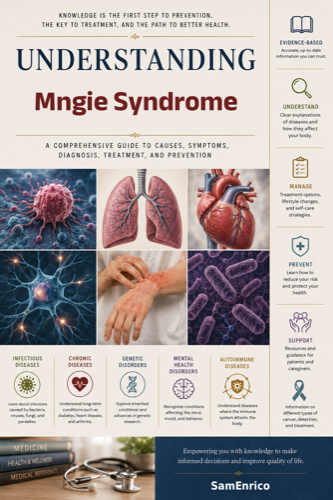 Understanding Mngie SyndromeKeefer Louanne$17.99
 Release Notes Automation GuideKeefer Louanne$12.99
 Space Logistics Capital GuideKeefer Louanne$12.99
 How to Become a Laborer - Chemical ProcessingKeefer Louanne$11.99
You may also like
 Hong Kong Handover 1997Dunn Johnnie$11.99
 Zumba For Postnatal Recovery CourseNeal Christian$11.99
 Zumba for BeginnersLadner Nikia$11.99
 YouTube Comment Mining GuideHumes Pandora$12.99
 Worry Box MeditationCarlin Rudy$11.99
 Workplace Stress MeditationNguyen Lynn$11.99
 Workplace Stress and Sleep RepairHawley Ivory$11.99
 Workplace Perfectionism CureDelaney Jeffry$11.99
 Workplace Injustice Anger GuideWallen Isabelle$11.99
 Work Addiction and Burnout LinkGreenwood Ester$11.99
 Women in Yoga and WellnessBeattie Galina$11.99
 Women in Stand Up ComedyChun Evangeline$11.99