
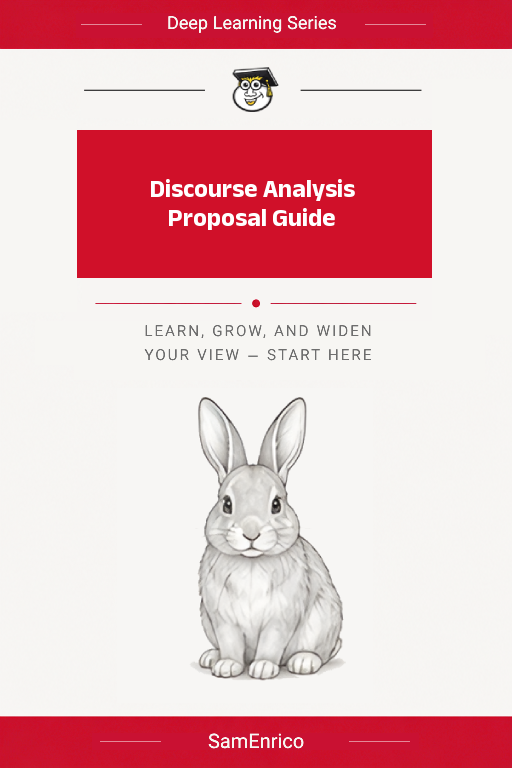
Non-FictionStudent's ShortcutDiscourse
Discourse Analysis Proposal Guide Audiobook
Write critical discourse analysis proposals for gr
Write critical discourse analysis proposals for grad research. Describe text selection, analytic procedures, and attention to power and social context.
Formats
Free sample
Chapter 1: The Invisible Architecture--–- Every political speech, every news headline, every corporate memo, every social media post, every policy document, every classroom interaction contains an invisible architecture of power. Most people read for information, entertainment, or persuasion. They absorb content, evaluate arguments, form opinions, and move on. Critical discourse analysts do something fundamentally different. They read for the architecture itself—the hidden structural choices that silently shape what can be said, who can say it, what counts as knowledge, and whose interests are served.
This chapter is not a general introduction to discourse analysis. It is a targeted, rigorous foundation for graduate students who need to write a defensible, committee-ready proposal using critical discourse analysis (CDA). By the end of this chapter, you will understand what makes CDA distinct from other forms of discourse analysis, why those distinctions matter for proposal writing, how to choose among major CDA frameworks, and how to argue convincingly that CDA is the right tool for your specific research question. The invisible architecture of power in texts has a counterpart: the invisible architecture of assumptions that must undergird any credible CDA proposal. This chapter lays those foundations brick by brick.The Crisis That Demands This Book Before diving into CDA theory, consider a scenario that motivated this entire book.
A doctoral student submits a dissertation proposal with a methods section that reads, in its entirety: “I will conduct critical discourse analysis on a sample of news articles about immigration policy. I will analyze the language carefully to understand how power operates in media discourse. The findings will contribute to our understanding of media bias.” The committee’s feedback is swift and devastating: “What exactly will you analyze? Which specific linguistic features? How will you trace power—through word choice, grammar, narrative structure, or something else?
Which CDA framework are you using? Fairclough? Van Dijk? Wodak? Why that framework rather than another?
Why CDA rather than content analysis, conversation analysis, or Foucauldian discourse analysis? How will you ensure your analysis is systematic rather than selective? What is your sampling strategy? How many texts? Why those texts?
How will you connect micro-linguistic observations to macro-social claims about power?” The student realizes too late that “critical discourse analysis” is not a single, self-explanatory method that can be invoked like a magic spell. It is a complex, contested tradition encompassing multiple frameworks, each with different assumptions about language…
This is the end of the free sample. Get the Audiobook to keep going. Buy now
About this book
Details
- Author
- Richie Gearldine
- Publisher
- SamEnrico
- Language
- English
- Genre
- Non-Fiction, Student's Shortcut, Discourse
- Released
- 2026-05-29
- Pages (approx.)
- 157
- Available as
- eBook, Audiobook

Listen in the VoxFlicks app
Audiobooks and audio dramas wherever you go. Sign in with your SamEnrico account and press play.
More by Richie Gearldine
 Self Empathy NVC PracticeRichie Gearldine$11.99
 Harvard Extension School Grading SystemRichie Gearldine$11.99
 The Sauna Detox GuideRichie Gearldine$11.99
 Cold War Embassy EscapeRichie Gearldine$11.99
 The Siege of Chigirin: The Cossacks' Last Stand Against the TsarRichie Gearldine$11.99
 How to Produce Bicycle JerseysRichie Gearldine$11.99
 SAP Functional AnalystRichie Gearldine$11.99
 How to Start a Non-alcoholic Beverages (commission Agent) Business (Beginners Guide)Richie Gearldine$11.99
You may also like
 Hong Kong Handover 1997Dunn Johnnie$11.99
 Zumba For Postnatal Recovery CourseNeal Christian$11.99
 Zumba for BeginnersLadner Nikia$11.99
 YouTube Comment Mining GuideHumes Pandora$12.99
 Worry Box MeditationCarlin Rudy$11.99
 Workplace Stress MeditationNguyen Lynn$11.99
 Workplace Stress and Sleep RepairHawley Ivory$11.99
 Workplace Perfectionism CureDelaney Jeffry$11.99
 Workplace Injustice Anger GuideWallen Isabelle$11.99
 Work Addiction and Burnout LinkGreenwood Ester$11.99
 Women in Yoga and WellnessBeattie Galina$11.99
 Women in Stand Up ComedyChun Evangeline$11.99