
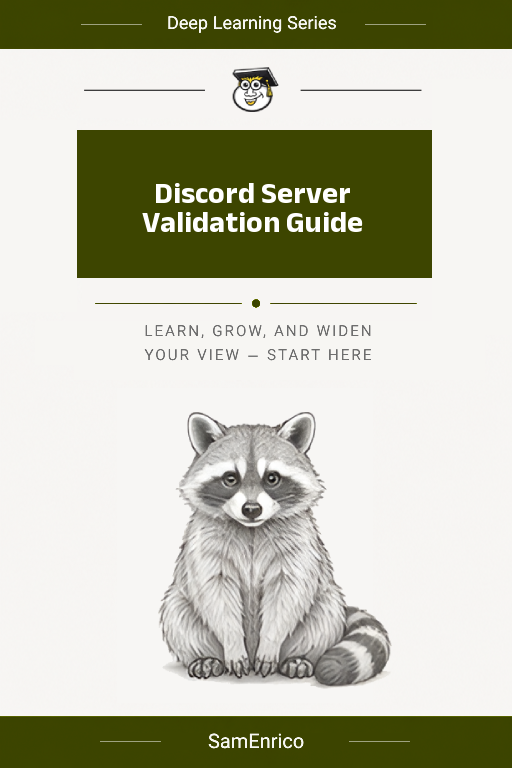
Non-FictionStartup GuideDiscordGaming Community
Discord Server Validation Guide eBook
Create free Discord server for potential users to
Create free Discord server for potential users to discuss your idea and measure engagement before building.
Formats
Free sample
Chapter 1: The Conversation Before the Code...--Every failed product begins with a question asked too late. Not the question of how to build it, or how to market it, or how to price it. Those questions come later, and by then, the damage is already done. The question that kills more startups than any other is this: "What should we build?" Asked in isolation, surrounded by co-founders who already agree with you, in a conference room that has never contained a single paying customer—that question is a death sentence dressed up as strategy.The founders who lose the least money, waste the least time, and suffer the fewest sleepless nights are not the ones with the most brilliant ideas. They are the ones who ask a different question first.
They ask: "What are people already talking about?" Not what they might buy. Not what they say they would buy in a survey. But what they are already discussing, complaining about, and trying to solve—right now, without any incentive, without any product, without you.This chapter is about finding that conversation. It is the single most important chapter in this book because if you get it wrong, nothing else matters. You can build the perfect server architecture from Chapter 2.
You can master the sourcing tactics from Chapter 3. You can track every metric from Chapter 4 with spreadsheet perfection. But if you build your validation server around the wrong conversation, you are not validating a product. You are curating a ghost town.I have watched dozens of founders make this mistake. They come to me with a Discord server that has three hundred members, a beautiful welcome channel, custom emojis, and absolutely zero messages in the past seventy-two hours.
They ask: "Why isn't anyone talking?" And every time, the answer is the same. You built the server around what you want to sell, not around what they want to discuss.The server is not the product. The server is a magnifying glass held over an existing conversation. If that conversation does not exist yet, the magnifying glass shows nothing but empty space. You cannot create a conversation from scratch.
You can only facilitate one that is already happening somewhere else.Let me tell you about Sarah. Sarah was a founder who came to me with an idea for a productivity tool. She wanted to build an app that helped remote teams visualize their emotional state—a kind of mood tracker for Slack. She had a prototype, a landing page, and thirteen thousand dollars of credit card debt from hiring a freelance developer. She also had a Discord server with forty-seven members and exactly four messages, all from her.She asked me: "What am I doing wrong?"I asked her: "What do remote workers talk about when they are not in a survey?"She did not have an answer.
She had feature lists, user personas, and a roadmap. But she could not tell me the last time she had heard two remote workers complain to each other about mood tracking. She could not point to a Reddit thread where people were begging for a solution. She had built a container for a conversation that did not exist.We spent the next hour on Reddit, searching for her target audience. We typed phrases like "remote team feeling burnt out" and "how do you know if your remote employee is struggling." We found complaints, yes.
People were struggling. But they were not struggling with mood tracking. They were struggling with something else entirely. They were struggling with knowing when to check in. They were struggling with the awkwardness of asking "are you okay?" for the third time that week.
They were struggling with the gap between "everything is fine" in Slack and the silent burnout happening in their employees' homes.The conversation was not about mood tracking. The conversation was about permission. Permission to ask, permission to check in, permission to care without being intrusive.Sarah had built a solution to a problem no one was talking about. The real problem was hiding underneath, unrecognized. She scrapped the mood tracker, rebuilt her hypothesis around permission, and within six weeks had two hundred people in her server discussing the exact mechanics of when and how to check in with remote employees.
That server became the foundation of a business that eventually sold for seven figures.But the story is not about the exit. The story is about the pivot that happened before any code was written. Sarah did not validate her original idea. She validated her problem space. And that is what this chapter will teach you to do.The "Daily Conversation" Framework Every healthy validation server is built on top of a pre-existing conversation.
Your job is not to invent that conversation. Your job is to find it, listen to it, and then build a container where it can happen more easily.This is what I call the Daily Conversation Framework. It is a single question, and it is the only question that matters in Chapter 1: If you took away your future product entirely, what would your potential users still want to talk about?Answer that question, and you have the fuel for your server. Fail to answer it, and you will spend weeks inviting people to a room where nothing happens.Let me give you concrete examples. Imagine you want to build a meal planning app for busy parents.
The bad core conversation is: "Let's talk about my meal planning app's features." No one wants to have that conversation. They do not care about your app. They have never heard of your app.The good core conversation is: "How do you currently decide what to cook for dinner when you have thirty minutes and three hungry kids?" That is a conversation parents are already having. They have it in text messages, in group chats, in the pickup line at school. They complain about it.
They share hacks. They trade recipes. The conversation exists. You are simply giving it a new home.Now imagine you want to build a financial coaching platform for freelancers. The bad core conversation is: "Let's talk about my financial coaching platform's pricing tiers." Silence.The good core conversation is: "How did you figure out what to charge your first client, and how did it feel when they said yes?" Freelancers talk about this constantly.
It is anxiety wrapped in a question. They compare notes. They second-guess themselves. They celebrate wins and dissect losses. The conversation exists.Your server is not the starting point.
Your server is the amplification.Most failed validation servers die because they are built around a product category rather than a human problem. A product category is a shelf in a store. "Task management software." "Project management tools." "Email marketing platforms." These are not conversations. These are taxonomies. No one wakes up in the morning and says "I cannot wait to discuss task management software with strangers on the internet."A human problem, on the other hand, is a source of endless conversation.
"I keep forgetting what I promised my team." "I have no idea if my remote employees are actually working." "I am terrified of…
This is the end of the free sample. Get the eBook to keep going. Buy now
About this book
Details
- Author
- Downing Mckinley
- Publisher
- SamEnrico
- Language
- English
- Genre
- Non-Fiction, Startup Guide, Discord, Gaming Community
- Released
- 2026-05-26
- Pages (approx.)
- 140
- Available as
- eBook, Audiobook

Read better in the ZLOADR app
Your eBooks on your phone or tablet. Sign in with your SamEnrico account and start reading.
More by Downing Mckinley
 Meeting Design For Creativity ManualDowning Mckinley$11.99
 Mediterranean Diet Weight LossDowning Mckinley$11.99
 Belgium Green Loan Incentive GuideDowning Mckinley$11.99
 Workplace Stress Reduction for AccountantsDowning Mckinley$11.99
 Sports Betting AddictionDowning Mckinley$11.99
 The Silk Road’s Forgotten Queen: The Untold Story of Lady MeiDowning Mckinley$11.99
 The Last Blockbuster: How a Tiny Town Saved a Dying EmpireDowning Mckinley$11.99
 Mulesoft ArchitectDowning Mckinley$11.99
 How to Start a Motor Fuel Business (Beginners Guide)Downing Mckinley$11.99
 Payment Processor Setup GuideDowning Mckinley$12.99
 Understanding Chromosome 4, Monosomy 4q32Downing Mckinley$17.99
You may also like
 Hong Kong Handover 1997Dunn Johnnie$11.99
 Zumba For Postnatal Recovery CourseNeal Christian$11.99
 Zumba for BeginnersLadner Nikia$11.99
 YouTube Comment Mining GuideHumes Pandora$12.99
 Worry Box MeditationCarlin Rudy$11.99
 Workplace Stress MeditationNguyen Lynn$11.99
 Workplace Stress and Sleep RepairHawley Ivory$11.99
 Workplace Perfectionism CureDelaney Jeffry$11.99
 Workplace Injustice Anger GuideWallen Isabelle$11.99
 Work Addiction and Burnout LinkGreenwood Ester$11.99
 Women in Yoga and WellnessBeattie Galina$11.99
 Women in Stand Up ComedyChun Evangeline$11.99