
Non-FictionStudent's ShortcutAccessibility
Disability Support Services eBook
Compare accessibility, accommodations, and legal p
by Maki Eliseo
Compare accessibility, accommodations, and legal protections for students with disabilities.
Formats
Free sample
Chapter 1: The Day Everything Changed...--–- The phone rang at 2:17 on a Tuesday afternoon. Not the kind of ring that signals a delivery or a wrong number—the kind that makes your stomach drop before you even pick up. It was the school nurse. “Your son had an incident in class. Can you come in?” No details.
Just that hollow, careful tone that means something happened, and they’re not sure whose fault it is yet, and they need a parent in the building before they write anything down.That was seven years ago for Lisa, a mother in Ohio whose son Marcus was then in third grade. Today, Marcus is a high school junior who reads at a fifth-grade level despite an IQ in the superior range. He has been suspended six times. He calls himself “stupid” when he thinks no one is listening. And Lisa has spent over $14,000 on private evaluations, attorneys, and advocates—money she did not have—fighting a school district that insists it is doing everything required by law.She is not alone.There are nearly seven million students with disabilities in the American public school system.
That is one out of every seven children sitting in a classroom right now. Their parents share a common experience: somewhere along the way, someone told them their child did not qualify for services, or that the school had met its legal obligations, or that the problem was not the system but their child’s “behavior.” And most of those parents believed it. Not because they are naive, but because the system is designed to sound authoritative, reasonable, and complete. It is designed, in fact, to make you doubt yourself.This book exists because that doubt is almost always misplaced.The disability support system in the United States is not a single, coherent system at all. It is three separate legal frameworks—IDEA, Section 504, and the ADA—that overlap in some places, contradict each other in others, and leave a gaping hole in the middle where families fall through.
Most school administrators do not fully understand these laws. Most pediatricians do not know how to translate a medical diagnosis into an educational accommodation. Most parents do not learn their rights until their child has already been harmed.By the time you finish this chapter, you will understand why Marcus—a bright, funny, deeply frustrated boy who loves drawing manga and hates school with a burning passion—was failed not by any single person, but by a collision of outdated beliefs, broken laws, and a system that was never designed for him in the first place.And you will understand why the most dangerous word in disability services is not “no.”It is “appropriate.”The Medical Model That Refuses to Die Let us start with a question that sounds simple but is not: what does it mean to have a disability?For most of the twentieth century, the answer came from doctors. The “medical model” of disability viewed impairments as biological defects located inside individual bodies. A person in a wheelchair had a defective spine.
A Deaf person had defective hearing. A child with dyslexia had a defective brain. The goal of medicine—and, by extension, education—was to fix, cure, or mitigate these defects. If fixing was impossible, the person was sent to an institution, a “special” school, or a segregated classroom. The problem was always inside the child.This model has a seductive simplicity.
If the child cannot read, teach them to read. If the child cannot sit still, medicate them. If the child acts out, discipline them. The solution is always directed at the child. And when the solution fails, the conclusion is equally simple: the child must be more broken than we thought.
The parents must not be following through at home. The teacher must not be trying hard enough.Notice what never gets questioned: the environment.The medical model is not just a theory. It is embedded in the physical design of schools. It is embedded in the language of IEPs, which describe a child’s “deficits” and “limitations” across multiple pages. It is embedded in the referral process, where a teacher identifies a problem inside a student rather than a barrier in the classroom.
And it is embedded in the very structure of special education funding, which follows a diagnosis rather than a need.This is the water in which every parent of a child with a disability has been swimming, whether they know it or not.The Social Model That Changed Everything In the 1970s and 1980s, disability activists—many of them former institution residents, many of them wheelchair users who could not enter their own government buildings—proposed a radical alternative. They called it the “social model.”Under the social model, disability is not a biological defect. It is a mismatch between a person’s body or mind and the environment they are expected to navigate. A student in a wheelchair is not disabled by their legs. They are disabled by stairs.
A Deaf student is not disabled by their ears. They are disabled by a school that refuses to provide sign language interpreters. A student with dyslexia is not disabled by their brain. They are disabled by a curriculum that teaches reading only through phonics and never through audiobooks or text-to-speech software.The social model shifts responsibility from the individual to society. If a child cannot access the curriculum, the question is not “What is wrong with this child?” but “What barriers are in this child’s way, and how can we remove them?”This is not merely philosophical.
The social model is the legal foundation of the Americans with Disabilities Act, which Congress passed in 1990 after activists crawled up the steps of the Capitol to demonstrate the physical barriers that excluded them. The ADA defines disability as a condition that “substantially limits one or more major life activities”—but it defines discrimination as the failure to provide “reasonable accommodations” that would remove barriers. The law assumes that the problem is not the person, but the environment that fails to accommodate them.Here is where the confusion begins. IDEA, the special education law that governs K-12 schools, was passed in 1975—fifteen years before the ADA. It was drafted by a different Congress, under a different set of assumptions, and it has never been fully reconciled with the ADA.
IDEA is built on a hybrid model: it uses the medical model for eligibility (your child must have a diagnosed condition that causes educational harm) but the social model for services (once eligible, the school must provide accommodations and modifications to remove barriers). This hybrid creates a trap: your child must be labeled as defective to receive services that treat the environment as the problem.Parents feel this contradiction in their bones. The IEP meeting where the school lists your child’s “deficits” for forty-five minutes is humiliating. The language of “disability categories” and “eligibility criteria” turns your child into a checklist. And yet, without that label, without that deficit-based documentation, your child gets nothing.The Human Rights Model: A Third Way In the twenty-first century, disability scholars have proposed a third framework: the…
This is the end of the free sample. Get the eBook to keep going. Buy now
About this book
Details
- Author
- Maki Eliseo
- Publisher
- SamEnrico
- Language
- English
- Genre
- Non-Fiction, Student's Shortcut, Accessibility
- Released
- 2026-06-01
- Pages (approx.)
- 152
- Available as
- eBook, Audiobook

Read better in the ZLOADR app
Your eBooks on your phone or tablet. Sign in with your SamEnrico account and start reading.
More by Maki Eliseo
 Values And Mission Alignment Board GovernanceMaki Eliseo$11.99
 Binge Eating Relapse PreventionMaki Eliseo$11.99
 Retail Therapy Alternatives CourseMaki Eliseo$11.99
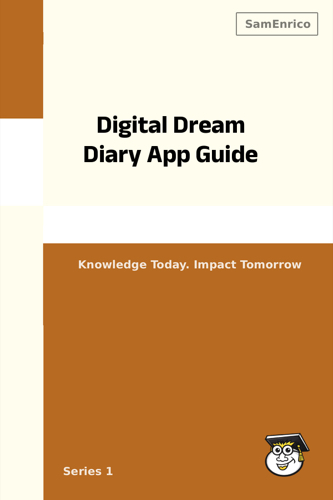 Digital Dream Diary App GuideMaki Eliseo$11.99
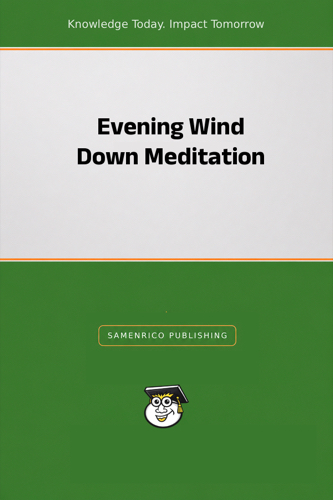 Evening Wind Down MeditationMaki Eliseo$11.99
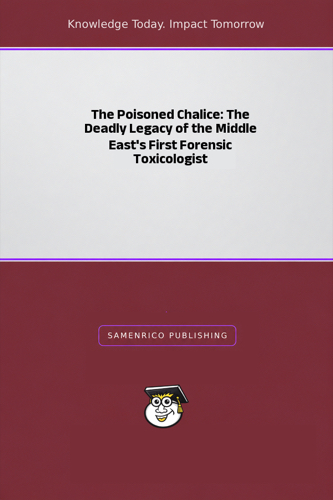 The Poisoned Chalice: The Deadly Legacy of the Middle East's First Forensic ToxicologistMaki Eliseo$11.99
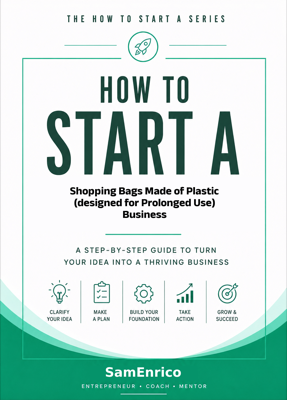 How to Start a Shopping Bags Made of Plastic (designed for Prolonged Use) Business (Beginners Guide)Maki Eliseo$11.99
 Understanding Conductive Deafness Malformed External EarMaki Eliseo$17.99
 Help Desk EngineerMaki Eliseo$11.99
 Pricing For Low Income UsersMaki Eliseo$12.99
You may also like
 Hong Kong Handover 1997Dunn Johnnie$11.99
 Zumba For Postnatal Recovery CourseNeal Christian$11.99
 Zumba for BeginnersLadner Nikia$11.99
 YouTube Comment Mining GuideHumes Pandora$12.99
 Worry Box MeditationCarlin Rudy$11.99
 Workplace Stress MeditationNguyen Lynn$11.99
 Workplace Stress and Sleep RepairHawley Ivory$11.99
 Workplace Perfectionism CureDelaney Jeffry$11.99
 Workplace Injustice Anger GuideWallen Isabelle$11.99
 Work Addiction and Burnout LinkGreenwood Ester$11.99
 Women in Yoga and WellnessBeattie Galina$11.99
 Women in Stand Up ComedyChun Evangeline$11.99