Free sample
Chapter 1: The Time Tax...--–- Every morning, Sarah loses eleven minutes. She doesn't know this because no one tracks minutes like they track dollars. She knows she feels rushed. She knows she snapped at her son for not finding his shoes. She knows she left her coffee on the counter, cold and forgotten, again.
What she doesn't know is that her home—specifically the junk drawer by the phone, the pile of mail on the kitchen counter, and the "chair" in her bedroom—has been quietly stealing from her. Not her space. Her time. This chapter introduces the single most important concept in this book: the time tax. Every object in your home extracts a small, invisible fee from your day.
By the time you finish this chapter, you will have calculated your personal time tax rate, identified your top three time-wasting clutter hotspots, and made the mindset shift from "getting organized" to "buying back your life."The Invention You Never Noticed Let us begin with a simple question. If someone offered you two hundred extra hours a year—the equivalent of twenty-five eight-hour workdays—what would you do with them? Would you sleep more? Learn guitar? Play with your children?
Read novels? Take a vacation? Now consider this: you already have those hours. They are just currently being spent on moving things out of your way, searching for things you own but cannot find, and cleaning around things you do not use. You are paying a tax on your own possessions.The concept of a "time tax" is borrowed from economics, but it applies brutally well to clutter.
When you own an object, you do not just pay for it once at the register. You pay for it continuously. You pay in square footage (rent or mortgage on the space it occupies). You pay in maintenance (dusting, washing, moving to vacuum). You pay in search costs (the minutes spent hunting for it when you need it).
You pay in decision fatigue (the mental energy of seeing it every day and deciding, again and again, not to deal with it). These costs are the tax. And unlike the taxes taken from your paycheck, this tax gives you nothing back.Consider the humble junk drawer. Most homes have one. In the average American household, that drawer contains approximately forty-two items, of which thirty-three are never used.
The annual time tax of that single drawer is about four hours—not because it takes four hours to clean it, but because every time you open it searching for a pen that works, you lose thirty seconds. Thirty seconds here, thirty seconds there. Over a year, it adds up. Over a decade, it adds up to a full workweek spent rummaging through rubber bands and dead batteries.Now multiply that by every drawer, closet, shelf, and flat surface in your home. The numbers become staggering.The Twenty-Four-Hour Time Tax Audit Before we can fix the problem, we must measure it.
This chapter includes a practical exercise that serves as the foundation for everything that follows. You are going to keep a time tax journal for twenty-four hours. Not a week. Not a month. One single day.
The reason is simple: most time tax moments happen in predictable patterns, and one honest day will reveal your biggest leaks.Here is how it works. Carry a small notebook or use a notes app on your phone. Every time you experience any of the following, write it down with a timestamp and an estimate of how many minutes it took:First, any moment spent searching for an item you own but cannot locate. Keys. Phone.
Wallet. Charger. A specific shirt. The scissors. A bill that came in the mail.
A child's permission slip. The remote control. If you spent time looking for it, write it down.Second, any moment spent cleaning around or moving an item you do not use regularly. This is the box of old cables you have to lift to vacuum underneath. The exercise equipment doubling as a coat rack.
The stack of magazines you keep meaning to read. The decorative items on every surface that must be dusted individually. If you touched it specifically because it was in your way, write it down.Third, any moment spent deciding what to do with an item that does not have a clear home. This is the "I'll deal with this later" pile. The mail you set down instead of opening.
The bag of donations sitting by the front door for three weeks. The clothes on the chair. The Tupperware without a matching lid. If you looked at it and felt a small surge of "ugh" because you did not know what to do, write it down.At the end of the twenty-four hours, total your minutes. Then multiply by thirty to get a rough monthly estimate.
Then multiply by twelve to get your annual time tax.Most people are shocked by the result. A client I worked with—let us call her Patricia—did this audit and came back with forty-seven minutes for a single Tuesday. Forty-seven minutes. She had not cleaned her house that day. She had not done a big organizing project.
She had simply lived her normal life. Extrapolated, that was nearly six hours a week, over three hundred hours a year. "That is two full weeks of my life," she said. "Every year. I have been doing this for fifteen years in this house.
That is thirty weeks. I have lost almost an entire year of waking hours to my own clutter."Patricia is not unusual. She is the rule.The Difference Between Tidying and Time Auditing Before we go any further, I need you to understand what this book is not. This is not a book about making your home look like a magazine spread. This is not a book about folding your t-shirts into perfect rectangles (though we will cover efficient folding because it saves time).
This is not a book about achieving a minimalist aesthetic. If you want a home that looks like no one lives there, there are many wonderful books that will help you achieve that. This is not one of them.This book is about one thing and one thing only: getting your time back.The goal of the Clutter Clean Time Guide is not a white-walled, sparsely furnished room. The goal is a home where you walk in the door, put your keys on the hook (because there is a hook and you always use it), and sit down without a to-do list staring at you from every surface. The goal is a kitchen you can clean in five minutes before bed.
The goal is a closet where every shirt is visible at a glance. The goal is a life where you are not late because you spent eleven minutes searching for shoes.This distinction matters because most decluttering advice fails for one simple reason: it asks you to prioritize aesthetics over function. "Does this spark joy?" is a beautiful question, but when you are exhausted and overwhelmed and have not had a full night's sleep in months, joy is not the metric you…
This is the end of the free sample. Get the eBook to keep going. Buy now
About this book
Details
- Author
- Mccurdy Shaunda
- Publisher
- SamEnrico
- Language
- English
- Genre
- Non-Fiction, Self-Help / Decluttering
- Released
- 2026-06-09
- Pages (approx.)
- 131
- Available as
- eBook, Audiobook

Read better in the ZLOADR app
Your eBooks on your phone or tablet. Sign in with your SamEnrico account and start reading.
More by Mccurdy Shaunda
 FODMAP Diet GuideMccurdy Shaunda$11.99
 Contract Abstraction for Legal OpsMccurdy Shaunda$11.99
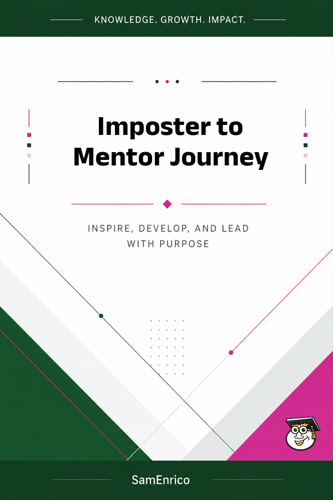 Imposter to Mentor JourneyMccurdy Shaunda$11.99
 Pharmaceutical Anti Bribery CasesMccurdy Shaunda$11.99
 The Hungarian Reformation BattlesMccurdy Shaunda$11.99
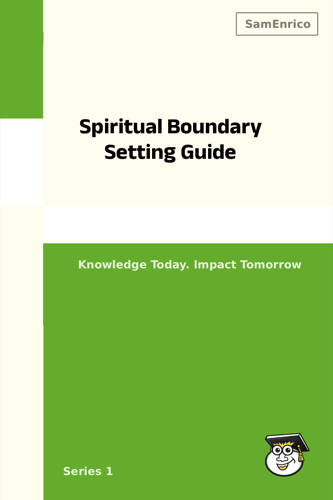 Spiritual Boundary Setting GuideMccurdy Shaunda$11.99
 Mao Long MarchMccurdy Shaunda$11.99
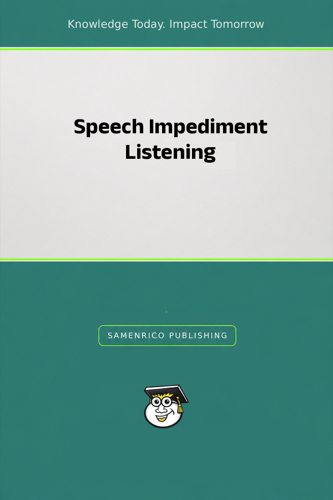 Speech Impediment ListeningMccurdy Shaunda$11.99
 The Rice Fields of the Invisible: Ancient Southeast Asia and the First Germ DiscoveriesMccurdy Shaunda$11.99
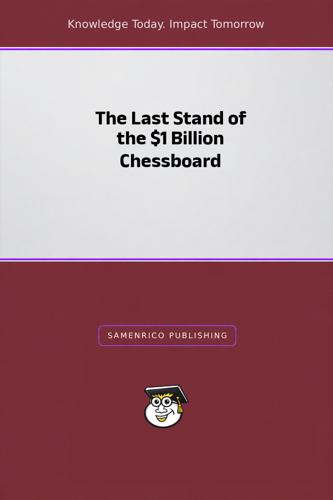 The Last Stand of the $1 Billion ChessboardMccurdy Shaunda$11.99
 Hagia Sophia: The Quantum Dome of ByzantiumMccurdy Shaunda$11.99
 The Dancer's Guide to Country DanceMccurdy Shaunda$11.99