
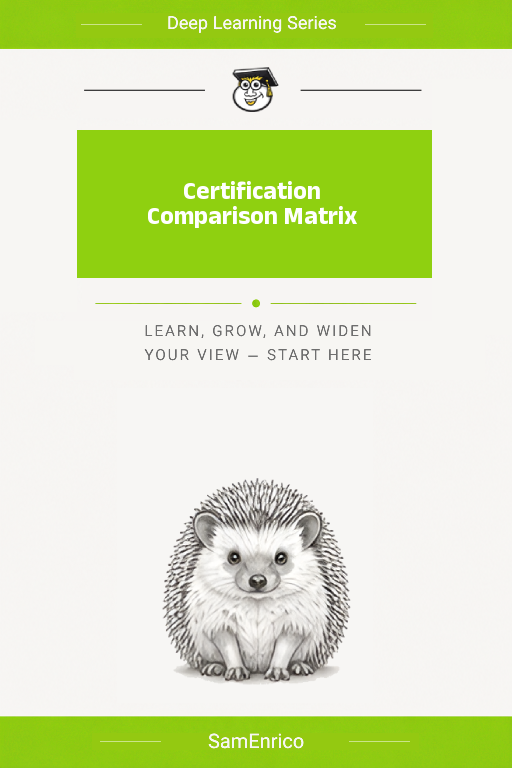
Certification Comparison Matrix eBook
Compare 50 sustainability certifications for expor
Compare 50 sustainability certifications for export by cost, audit frequency, market recognition, and premium value.
Formats
Free sample
Chapter 1: The Sticker Shock--–- On a humid Tuesday morning in March 2024, Tran Thi Mai, the owner of a 15-person coffee export company in the Central Highlands of Vietnam, received an email that would change the trajectory of her business. A German buyer, one she had courted for eighteen months, had finally responded to her sample shipment. The coffee was excellent, the price was competitive, and the logistics were sound. There was just one problem. The buyer required three certifications: Fairtrade, Organic, and Rainforest Alliance.
Mai had none of them. Within six months, she had spent $34,000 on audit fees, consultant retainers, and retrofitting her washing station. Twelve months after that, the German buyer switched to a larger supplier in Peru. Mai’s premiums never materialized. She had fallen into what this book calls the Certification Trap—and she is not alone.This book exists because of Mai, and because of thousands of exporters like her who have been told that sustainability certifications are the golden ticket to international markets, only to discover that the golden ticket costs more than the prize at the end.
The reality is both simpler and more brutal than most consultants admit. Over fifty major sustainability certifications now compete for the attention of global buyers. Each claims to offer market access, price premiums, and reputational benefits. Few disclose their true costs. Almost none publish audited data on the actual premiums their certified suppliers receive.
And yet, exporters continue to pursue these labels as if they were mandatory, often without calculating whether the investment will ever break even.This chapter introduces the problem that the Certification Comparison Matrix solves. It maps the explosion of certifications, explains why buyers demand them (and why that demand is often disconnected from sustainability), and previews the four-dimensional framework—cost, audit frequency, market recognition, and premium value—that will guide every decision in this book. By the end of this chapter, you will understand why the current system is broken and how the tools in this book will help you avoid Tran Mai’s fate.The Alphabet Soup of Modern Trade The first thing to understand is that sustainability certifications are not new, but their proliferation is unprecedented. Forty years ago, an exporter had three choices: organic, fair trade (then a niche movement), or nothing. Today, the International Trade Centre’s Standards Map tracks over 300 sustainability schemes and more than 1,650 individual indicators.
This book focuses on the fifty certifications that actually matter for international trade—the ones that appear in buyer RFQs, retailer scorecards, and government tender documents.The list includes familiar names like the Forest Stewardship Council (FSC), Fairtrade International, Rainforest Alliance, and the Global Organic Textile Standard (GOTS). It includes industry-specific schemes like the Roundtable on Sustainable Palm Oil (RSPO), the Marine Stewardship Council (MSC), and the Better Cotton Initiative (BCI). It includes social compliance audits like SA8000, Sedex, and B Corp. It includes biofuel certifications like ISCC, RSB, and REDcert. And it includes cross-sector environmental management standards like ISO 14001.Fifty certifications might not sound like many until you realize that they operate independently, each with its own fee structure, audit protocol, chain-of-custody model, and renewal cycle.
A coffee exporter selling to three different buyers might need three different certifications. A garment factory selling to five retailers might need five. A forestry operation selling both pulp (industrial) and furniture (consumer) might need two entirely separate chains of custody. The combinatorial explosion is staggering.More importantly, these certifications vary wildly in their actual market value. Some, like FSC, are virtually mandatory for certain EU markets.
Others, like BCI, offer low-cost entry but negligible premium. Some, like GOTS, are expensive and rigorous but command significant price uplifts in niche segments. And some, as Tran Mai discovered, are expensive, rigorous, and financially ruinous for small producers.Why Buyers Demand Certifications (It’s Not About Saving the Planet)Before we dive into the matrix, we must understand the demand side of this equation. Why do buyers—retailers, manufacturers, and government agencies—demand certifications in the first place? The honest answer is uncomfortable, and it shapes every decision in this book.Buyers demand certifications for three reasons, ranked from most common to least common.
First, regulatory compliance. The European Union has passed a series of due diligence laws—the Deforestation Regulation, the Corporate Sustainability Reporting Directive, and the upcoming Due Diligence Directive—that effectively require importers to prove that their supply chains are free from environmental and social harm. Certifications are the cheapest way for buyers to outsource this verification. Instead of auditing every farm themselves, they accept FSC or Rainforest Alliance as a proxy. The buyer is not paying for sustainability; they are paying for legal cover.Second, brand protection.
Large retailers have learned that NGOs and investigative journalists love to expose supply chain scandals. A single viral report about child labor or deforestation can wipe out millions in brand value. Certifications function as insurance. If a scandal occurs, the retailer can point to the certification and say, “We did our due diligence; the certification body failed.” This is cynical but effective. The buyer is not paying for sustainability; they are paying for a liability shield.Third, actual sustainability.
A small minority of buyers genuinely want to improve environmental and social outcomes. These buyers tend to be mission-driven companies, cooperatives, or government agencies with sustainability mandates. They are the most likely to pay meaningful premiums. They are also the rarest.Why does this matter for your certification strategy? Because each buyer motivation creates a different willingness to pay.
A buyer seeking regulatory compliance will accept the cheapest certification that meets the legal standard. They will not pay a premium. A buyer seeking brand protection will prefer highly credible certifications (ISEAL members, unannounced audits) but will still push for the lowest cost. A buyer seeking actual sustainability is your ideal partner—but you must identify them before investing in expensive certifications.The implication is brutal but liberating. Most certifications are not tools for sustainability.
They are tools for risk transfer. And once you understand that, you stop treating certifications as badges of honor and start treating them as investments with calculable returns.The ITC Standards Map: A Tool That Almost Works Before building the Certification Comparison Matrix, we must acknowledge the existing resource that comes closest to solving this problem. The International Trade Centre’s Standards Map is a remarkable database. It tracks over 300 sustainability schemes, their geographic coverage, their product scope, and their governance structures. You can filter by sector, by country, and by specific criteria (e.g., “does this certification prohibit child labor?”).
For researchers and policy analysts, it is indispensable.For exporters, it is nearly useless.The Standards Map has three fatal flaws for decision-making. First, it does not contain cost data. You cannot find out how much FSC certification costs per auditor-day, or whether Rainforest Alliance has lower fees than Fairtrade. Second, it does not track audit frequency. You cannot compare schemes by how often they require renewal, or whether audits are announced or unannounced.
Third, and most critically, it does not provide premium value data. There is no column in the Standards Map that tells you, “Exporters with this certification…
This is the end of the free sample. Get the eBook to keep going. Buy now
About this book
Details
- Author
- Veal Christeen
- Publisher
- SamEnrico
- Language
- English
- Genre
- Non-Fiction, Business Brief
- Released
- 2026-06-01
- Pages (approx.)
- 132
- Available as
- eBook, Audiobook

Read better in the ZLOADR app
Your eBooks on your phone or tablet. Sign in with your SamEnrico account and start reading.
More by Veal Christeen
 Body Scan for Leg RestlessnessVeal Christeen$11.99
 Alternative Explanation AngerVeal Christeen$11.99
 Self Talk HandbookVeal Christeen$11.99
 Sale Addiction Recovery GuideVeal Christeen$11.99
 The Growth Hormone for Muscle GuideVeal Christeen$11.99
 The Siege of Ostend: A Dutch Lion Roars in the StormVeal Christeen$11.99
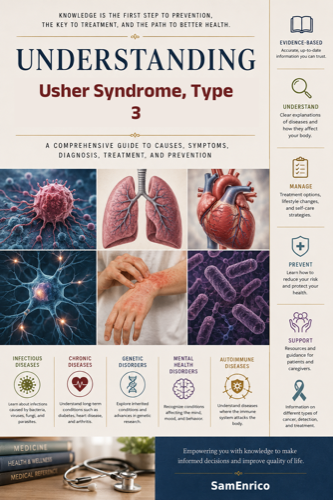 Understanding Usher Syndrome, Type 3Veal Christeen$17.99
 BOP Social Capital GuideVeal Christeen$12.99
 Human Capital ManagerVeal Christeen$11.99
 How to Start a Domestic Non-electric Cooking Equipment Business (Beginners Guide)Veal Christeen$11.99
You may also like
 Hong Kong Handover 1997Dunn Johnnie$11.99
 Zumba For Postnatal Recovery CourseNeal Christian$11.99
 Zumba for BeginnersLadner Nikia$11.99
 YouTube Comment Mining GuideHumes Pandora$12.99
 Worry Box MeditationCarlin Rudy$11.99
 Workplace Stress MeditationNguyen Lynn$11.99
 Workplace Stress and Sleep RepairHawley Ivory$11.99
 Workplace Perfectionism CureDelaney Jeffry$11.99
 Workplace Injustice Anger GuideWallen Isabelle$11.99
 Work Addiction and Burnout LinkGreenwood Ester$11.99
 Women in Yoga and WellnessBeattie Galina$11.99
 Women in Stand Up ComedyChun Evangeline$11.99